You just brought home your new parrot. The cage is set up, the toys are hanging, and you're buzzing with excitement. But your feathered friend is huddled in a corner, eyes wide, refusing to touch the beautiful chop you made. Panic sets in. Is this normal? What do you do now?
This is where the 3-3-3 rule for parrots comes in. It's not a training manual. It's a psychological roadmap. I've seen too many new owners, flush with enthusiasm, torpedo their long-term relationship by missing the subtle cues this rule highlights. It's the single most useful concept for setting realistic expectations during those critical first months.
What's Inside This Guide?
What Exactly is the 3-3-3 Rule for Parrots?
Let's cut through the vague descriptions. The 3-3-3 rule is a timeline framework that predicts the general emotional and behavioral phases a parrot goes through after a major life change—most commonly, coming to a new home. The numbers stand for:
- 3 Days of initial decompression and shock.
- 3 Weeks of learning the new environment and routines.
- 3 Months of starting to feel truly "at home."
The biggest misconception? People think it's a countdown to a cuddly bird. It's not. It's a guide for your patience. A rescue Grey with a traumatic past might stretch the "3-day" phase to three weeks. A hand-fed, well-socialized conure might breeze through it. The rule gives you context, not a deadline.
Think of it this way: You've just been dropped, without warning, into a foreign country where you don't speak the language. The first few days (3), you're just trying to find food and not get hurt. Over the next few weeks (3), you start to learn some basic customs, figure out who is friendly, and test what you can get away with. After a few months (3), you might finally feel comfortable enough to crack a joke or explore on your own. Your parrot is going through the same thing.
The First 3 Days: Survival Mode
This phase is about one thing: reducing terror. Your bird's primary drives are safety and sustenance. Everything else—play, bonding, training—is noise.
What your parrot is feeling: Pure adrenaline. The world is loud, smells wrong, and is full of giant, unpredictable creatures (you and your family). Its instinct is to freeze, hide, and be silent to avoid predators. Not eating much, not drinking, and staying fluffed on one perch are all standard.
Your job during these 3 days: Be a boring, predictable, and safe part of the scenery.
- Location is everything. Place the cage in a quiet corner where the bird can see the room's activity without being in the middle of it. Avoid high-traffic areas or right next to a TV.
- Minimize direct interaction. No sticking your hand in the cage. No forcing it to step up. Talk to it in a calm, low voice as you pass by, but don't stare. Just go about your business.
- Offer familiar food. Ask the breeder or previous owner for a few days' worth of the old diet. A sudden food change on top of everything else is a gut punch. Mix in your new, healthier food gradually later.
- Resist the photo op. I know it's tempting. But the flash and the big eye of a camera/phone looming at them is terrifying. Give it time.
A critical nuance most miss: "Quiet" doesn't mean deadly silent. Complete silence can be just as alarming as sudden noise. Play soft music or have the TV on at low volume in another room. It masks scary, unpredictable household sounds and provides a steady auditory baseline.
The First 3 Weeks: Observation & Testing
If the first phase was about "what is this place?", this phase is about "who are you people and what are the rules?" The bird's survival isn't in immediate doubt, so curiosity cautiously emerges.
What your parrot is doing: It's watching you like a hawk. It's learning your daily rhythms—when you wake up, when meals happen, when the house gets quiet. You'll see more activity: preening, playing tentatively with a toy, eating more robustly. This is also when minor behavior issues might pop up. A single loud scream that got your attention yesterday might be repeated today as an experiment.
Your strategy for these 3 weeks: Establish predictable routines and start building positive associations.
- Introduce your hand—slowly. Not inside the cage yet. Start by resting your hand on the outside of the cage near a favorite perch while you talk softly. Then, offer a high-value treat (like a piece of walnut or pine nut) through the bars. Don't force it; if they don't take it, leave it and walk away.
- Create daily rituals. A morning greeting, a fresh food dish at the same time, a "good night" cover routine. Parrots thrive on predictability. It makes their world feel secure.
- Ignore the testing. That experimental scream? If you come running, you've just trained them to scream for attention. Instead, reward the quiet moments with your presence or a kind word.
- Expand the environment. If the bird seems calm, you can open the cage door (in a secure room) and let it choose to come out on its own. Place a play stand nearby with treats to encourage exploration.

The First 3 Months: Settling In (For Real)
This is where the foundation you've been building gets tested. The bird is no longer a guest; it's a resident starting to assert its personality. This is often when the "honeymoon period" ends and real bonding begins—or when stubborn problems cement if handled poorly.
Your parrot's mindset: "This is my house now." You might see more territorial behavior around the cage, clearer food preferences, and distinct likes/dislikes for people. The bird will have decided if you are a source of good things or stress. Real trust-building happens here.
Focus for the 3-month mark and beyond: Deepen trust through respect and clear communication.
- Start real training. Not complex tricks, but basics like "step up" onto a perch you're holding, then eventually onto your hand. Use target training. Keep sessions short (2-5 minutes) and always end on a positive note. Resources from trusted animal behaviorists like Barbara Heidenreich are invaluable here.
- Learn their body language. Pinned eyes, raised neck feathers, a slight lean forward—these are subtle signs of excitement or agitation that precede a bite. Recognizing and respecting a "no" (by backing off) builds more trust than forcing an interaction.
- Don't get complacent. Just because they step up willingly one day doesn't mean they will the next. Parrots are emotional. Respect their off days as you would a person's.
- Introduce new experiences slowly. A new toy, a car ride, a new person. Keep it controlled and positive.
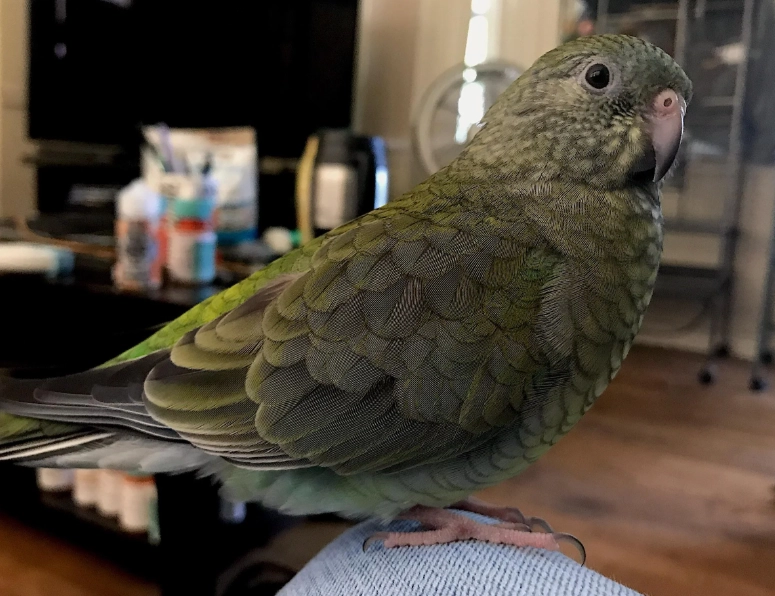
| Phase | Parrot's Mindset | Key Owner Action | Red Flag (What to Avoid) |
|---|---|---|---|
| First 3 Days | "I must survive." Fear, shock, observation. | Be a calm, non-threatening presence. Provide safety and familiar food. | Forcing interaction, moving the cage, loud gatherings. |
| First 3 Weeks | "What are the rules here?" Cautious curiosity, testing boundaries. | Establish routines. Build positive associations (treats + your presence). | Reacting strongly to negative testing behaviors (screams, nips). |
| First 3 Months | "This is my home." Building trust, showing personality. | Start respectful training. Learn and honor their body language. | Assuming the bond is permanent and becoming pushy or inconsistent. |
Where Most People Go Wrong (And How to Avoid It)
I've made some of these mistakes myself. The excitement of a new parrot clouds judgment.
Mistake 1: Treating the Rule as a Passive Waiting Game
The first 3 days aren't about ignoring your bird. It's active non-interaction. You're not hiding; you're being present but harmless. Sit near the cage and read a book aloud in a monotone voice. This does more to build comfort than tiptoeing around.
Mistake 2: Rushing Physical Contact
The urge to pet that beautiful head is strong. But a parrot's head is a vulnerable area. Letting you touch it is a sign of immense trust, not a day-one privilege. Forcing it creates a fear of hands that can take years to undo. Let them initiate the first gentle beak touch to your finger.
Mistake 3: Misreading "Quiet" as "Happy"
A silent, still parrot in the early days is often a scared parrot. Conversely, the first time you hear them grind their beak (a soft crunching sound) or see them take a nap with one foot tucked up, celebrate internally. Those are the true first signs of relaxation and contentment.
Your Top Questions on the 3-3-3 Rule
The 3-3-3 rule won't solve every problem. But it will give you the one thing every new parrot owner desperately needs: perspective. It replaces anxiety with understanding. When you see your bird frozen on a perch, instead of worrying, you'll think, "Ah, right. Day two. Survival mode. I'll just sit here and be boring." And that quiet, patient presence is the first and most important gift you can give your new companion.



Join the Conversation