Quick Guide
If you've spent any time around professional groomers or deep in dog care forums, you've probably stumbled across the term "the rule of 5." It sounds almost like a secret code, doesn't it? I remember the first time I heard it from a veteran groomer at a show. She just dropped it casually, like everyone should know it. I nodded along, then rushed home to figure out what on earth she was talking about.
Turns out, it's not a secret at all. It's just a brilliantly simple, systematic framework that professional groomers use to ensure they don't miss a single step. It breaks down the entire grooming process into five logical, sequential phases. Think of it as a checklist for perfection. A roadmap. Instead of jumping from brushing to nails randomly, you follow a path that makes sense for the dog's comfort and the quality of the finish.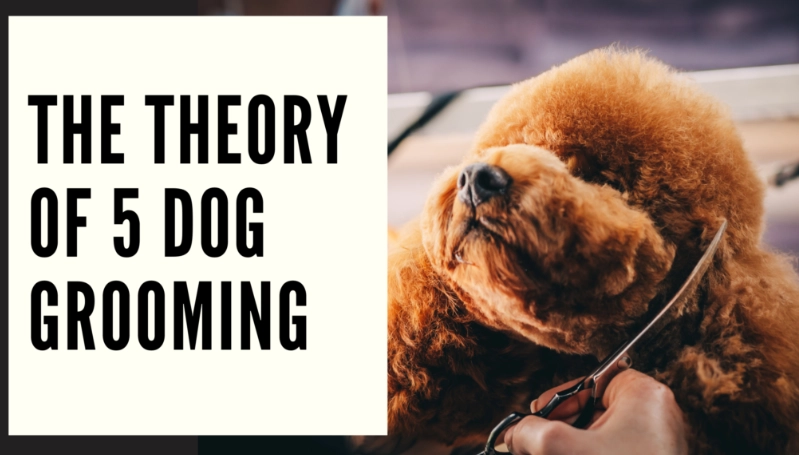
And honestly? It's a game-changer. Whether you're a pro looking to streamline your table time or an owner trying to get better results at home, understanding what is the rule of 5 dog grooming can completely transform your approach. It turns a chaotic, stressful ordeal into a calm, predictable routine for you and your dog.
At its core, the rule of 5 dog grooming is a sequential methodology: Prep, Clean, Dry, Style, and Finish. It's the backbone of a professional groom, designed for efficiency, thoroughness, and canine comfort.
The Five Pillars: Breaking Down Each Step of the Grooming Rule
Let's pull this rule apart, piece by piece. This is where we go from a vague concept to actionable steps you can follow today.
Pillar One: The Pre-Grooming Prep (The Foundation)
This is everything you do before the bath. Rushing this step is the biggest mistake I see. You wouldn't paint a wall without sanding it first, right? Same idea.
First, a thorough health check. Run your hands over your dog's entire body. You're feeling for lumps, bumps, hot spots, ticks, or any signs of skin irritation. Check ears for redness or odor. Look at the eyes. This isn't just grooming; it's preventative care. I found a small, hidden tick on my own dog during this step once. It had nothing to do with his haircut, but everything to do with his well-being.
Next, the brush-out. And I mean a *proper* brush-out, down to the skin. For a double-coated breed like a Husky, this means using an undercoat rake. For a Poodle, a slicker brush and comb. The goal is to remove all loose hair and mats. Bathing a matted dog is a disaster—the mats tighten, become impossible to remove, and can trap moisture against the skin, leading to sores. If you find a small mat, try working it out with a detangling spray and a slicker brush. For severe matting, shaving is often the safest, kindest option. It's a tough call, but comfort trumps cosmetics every time.
Finally, pre-clipping. Some groomers do a rough trim of very long hair or sanitary areas before the bath to make washing and drying easier and more effective. It's a matter of preference, but it can save time later.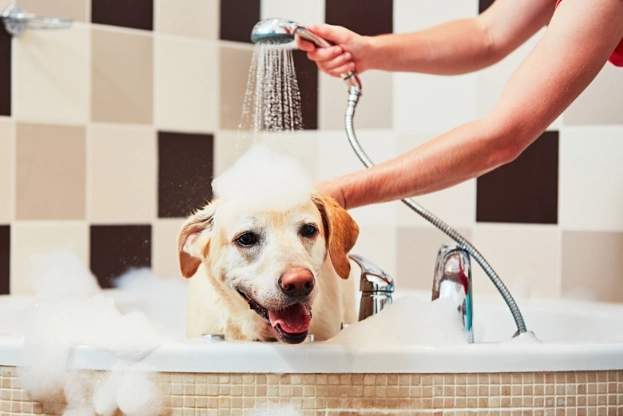
I'll admit, I used to skimp on the prep. I'd think, "The bath will clean it, let's just get going." Big mistake. I'd spend twice as long trying to demat wet, soapy hair. Learning to respect the prep phase was my first real lesson in professional grooming.
Pillar Two: The Bath & Clean (The Reset)
This seems obvious, but there's an art to it. It's not just about getting wet and soapy.
Water temperature is huge. Lukewarm is the key. Too hot is uncomfortable and can dry the skin; too cold is just miserable. Test it on your inner wrist.
Product choice is critical. You wouldn't use dish soap on your hair. Don't use human shampoo on your dog. Their skin has a different pH balance. Use a quality, dog-specific shampoo. For specific needs, you might use a medicated shampoo (for skin issues), a whitening shampoo (for white coats), or a conditioning shampoo (for dry coats). A good rule is to lather twice. The first wash breaks down oils and dirt; the second wash actually cleans.
Technique matters. Start at the neck and work back, avoiding the eyes and ears. A rubber grooming brush is fantastic here—it massages the skin and helps work the shampoo down to the skin. Pay special attention to often-missed spots: between toes, under the tail, the armpits.
Rinsing is 90% of the bath. Incomplete rinsing is a cardinal sin. Leftover shampoo residue is a direct ticket to itchy, flaky skin. Rinse until the water runs completely clear, then rinse for another minute for good measure. Lift the coat to check the skin.
Conditioner is next for many coats. It detangles, adds moisture, and makes the next steps easier. Apply, let it sit for a few minutes (check the label), and rinse thoroughly again.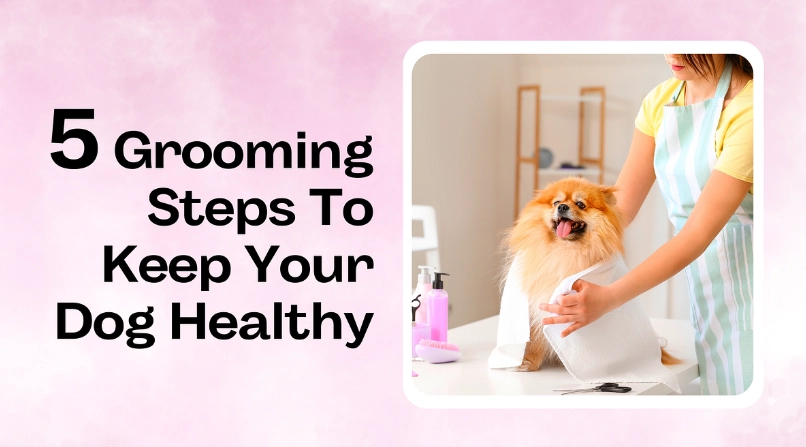
Pillar Three: The Dry (The Make-or-Break)
How you dry your dog determines the final look more than anything else. A bad dry job can ruin a perfect cut.
First, towel dry aggressively. Don't just pat. Squeeze and press sections of the coat to wick away as much water as possible. You can use a super-absorbent microfiber towel or a specialized drying towel. I'm a fan of the "plopping" method for curly coats—wrapping the dog in a towel for a few minutes to absorb moisture.
Now, the force dryer (also called a velocity dryer). This is the pro tool that makes all the difference. It's not just a loud hairdryer. It blows water *out* of the coat, rather than evaporating it with heat. This is how you get that incredibly fluffy, stand-up finish on Poodles and Bichons. It also helps blow out loose undercoat on shedding breeds.
Start on a low setting to let the dog acclimate. Keep the nozzle moving and never concentrate heat on one spot. Use your hand as a buffer between the nozzle and the skin to feel the temperature. Dry the dog 90% of the way with the force dryer, following the direction of hair growth to lay the coat flat.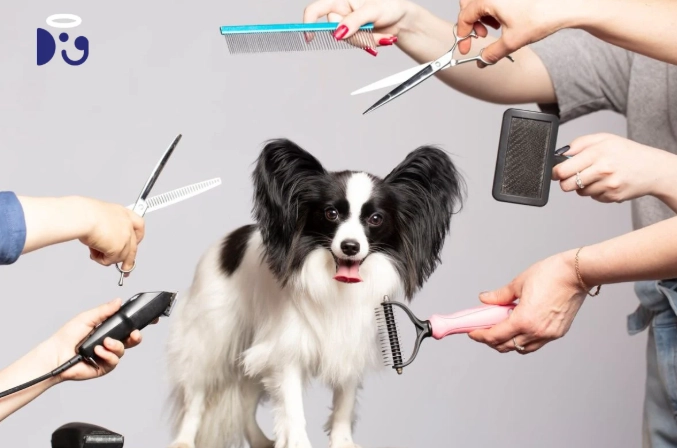
For the final touch-up and styling, you can switch to a stand dryer or a handheld dryer with a comb attachment. The goal is bone-dry, especially for scissor work. Any dampness will make the hair curl or fall differently, and your perfect trim will look wonky in an hour.
Never, ever cage-dry a dog and walk away. This is a major welfare red flag. Dogs can overheat, and the damp, warm environment is a breeding ground for bacteria. Proper drying is hands-on.
Pillar Four: The Style & Trim (The Artistry)
This is the part everyone sees. But by following the rule of 5, you've set the stage for success. The coat is clean, tangle-free, and perfectly dry.
Start with the feet and sanitary areas. Getting the tricky, sensitive bits out of the way first is a common pro tip. The dog is still fresh and patient.
Then, move to the body clip. Whether you're using clippers with a guard comb for an all-over length or just tidying up, work with the lay of the coat. Stretch the skin taut for an even clip. Go over the same area multiple times from different angles to catch missed hairs.
Finally, the scissor work. This is for refining the outline—the legs, the tail, the head, the skirt on a Spaniel. Use sharp, high-quality shears. Thinning shears are your friend for blending and creating a soft, natural look. My personal philosophy is to scissor with the dog standing naturally on the floor, not just on the table. The fall of the coat changes with posture.
Constantly check your work from all angles. Get down to dog-level. What looks good from above might look choppy from the side.
Pillar Five: The Finishing Touches (The Polish)
You're not done when the haircut is done. This phase is about polish, comfort, and safety.
Nail trimming or grinding. Overlong nails affect a dog's gait and posture. Trim just before the quick (the pink part containing blood vessels). If your dog has black nails, trim tiny bits at a time. A nail grinder can smooth sharp edges. The American Kennel Club has a great, fear-free guide on how to trim your dog's nails safely.
Ear cleaning. Use a vet-recommended ear cleaner on a cotton pad or gauze. Never use cotton swabs deep in the ear canal. Just clean the parts you can see. Check for any concerning discharge or smell.
Teeth brushing or offering a dental chew. Oral health is part of overall health.
The final brush and spritz. A light mist of a finishing spray or conditioner can help control static, add shine, and make the coat smell lovely. Give the dog one last full-body brush with a soft bristle brush to remove any stray clipped hairs.
And there you have it. That's the complete answer to what is the rule of 5 dog grooming. It's a cycle of preparation, cleansing, setting, shaping, and perfecting.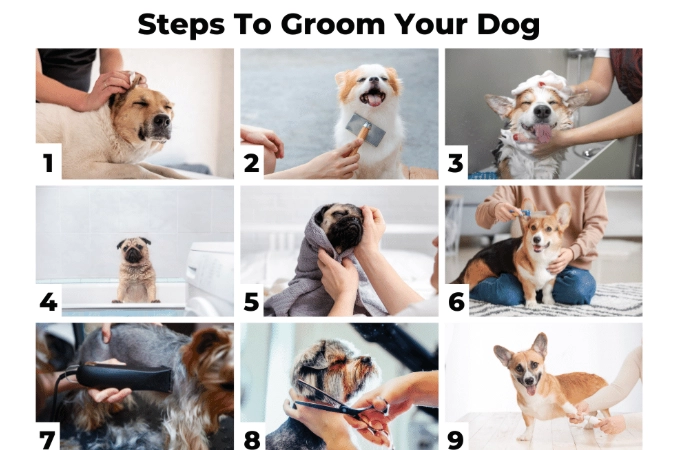
Why This Rule Beats a Random Approach Every Time
You might think, "I already groom my dog. Why do I need a rule?" Well, let's talk results.
First, efficiency. When you have a system, you waste less time backtracking. You're not halfway through drying and realizing you missed a massive mat behind an ear that now needs to be cut out. The process flows.
Second, quality. Each step builds on the last. A perfect dry makes for a precise cut. A thorough prep ensures a clean, healthy bath. The finish is consistently better.
Third, and most importantly, stress reduction—for you and the dog. Dogs thrive on predictability. When the process is the same every time, they learn what to expect and often become more cooperative. For you, having a plan eliminates the "what do I do next?" anxiety. You're in control.
I've groomed dogs whose owners said they "hated" being groomed. Often, it wasn't the grooming they hated; it was the chaotic, stressful, sometimes painful (from pulling mats) *process*. Implementing a calm, structured rule of 5 approach changed everything for those dogs.
Your Rule of 5 Toolkit: What You Actually Need
You don't need a salon's worth of gear, but having the right tool for each phase is non-negotiable. Here’s a breakdown of the essentials, categorized by the rule of 5 phase they serve.
| Grooming Phase | Essential Tools | Pro-Tier Upgrades | Why It Matters |
|---|---|---|---|
| Prep | Slicker brush, Undercoat rake, Metal comb, Detangling spray | Mat splitter, High-velocity dryer (for pre-bath blow-out) | Prevents bathing mats, ensures shampoo reaches skin, is the foundation of safety. |
| Bath & Clean | Dog-specific shampoo/conditioner, Non-slip mat, Spray hose attachment | Rubber grooming brush, Dog bathing tub, Water temperature gauge | Proper cleansing without skin irritation. Safety and comfort during the wash. |
| Dry | Absorbent microfiber towels, Human hair dryer (on cool/coolest setting) | Force/Velocity dryer, Stand dryer, Drying crate with warm air (supervised!) | Bone-dry coat is critical for a good cut. Force drying promotes skin/coat health. |
| Style & Trim | Pet clippers with guide combs, Straight shears, Nail clippers | Professional-grade clippers (Andis, Oster), Thinning shears, Curved shears | Sharp, quality tools give cleaner results, are safer, and are less likely to pull. |
| Finish | Ear cleaner, Cotton pads, Soft bristle brush, Nail file | Finishing spray/cologne, Dental scaling tool, Styptic powder (for nails) | Completes the groom, addresses health basics (ears, nails), adds polish. |
My must-have splurge? A good force dryer. It's expensive, but it cuts drying time by 75% and does a better job than any towel or regular dryer ever could. For clippers, you don't need the absolute top end, but avoid the cheapest plastic ones from the pet aisle—they tug hair and overheat quickly.
Real Talk: Common Questions and My Honest Answers
Over the years, I've heard every question about this method. Here are the real ones that come up again and again.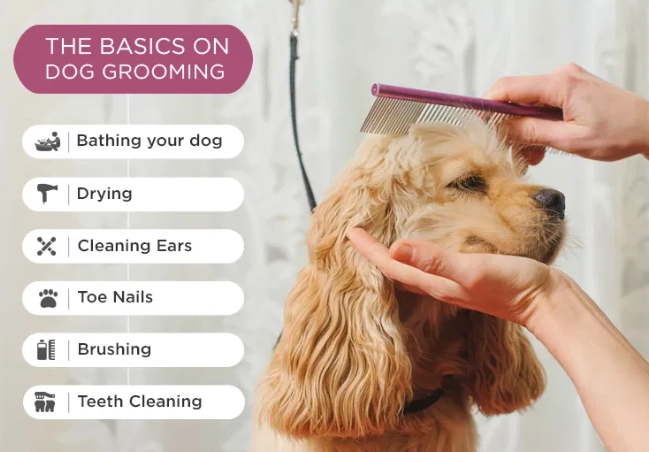
What is the rule of 5 dog grooming if not adaptable? It's a universal principle.
Mistakes I've Made (So You Don't Have To)
Let's get humble for a second. I didn't learn this in a vacuum. I learned by messing up.
Mistake 1: Skipping the thorough brush-out before the bath. I told you this was my old habit. The result was a matted, miserable Cocker Spaniel and an hour of painful, careful scissor work after the bath that could have been two minutes of brushing before. Lesson seared into my brain.
Mistake 2: Using cheap shampoo to save money. It dried out a client's dog's skin, leading to flaking and itching. The owner thought it was a new allergy. It was my cheap product. I now only use reputable, professional-grade brands. The cost per wash is pennies more, and the difference is night and day.
Mistake 3: Not getting the coat 100% dry before scissoring. I was tired, the dog was wiggly, the coat was "mostly dry." I scissored a beautiful round pompom on a Bichon's head. An hour later, as the last bits of moisture evaporated, it shrunk and looked lopsided. The entire haircut was thrown off. Now, I dry until I can run a comb through it and hear a slight squeak. That's the dry sound.
Mistake 4: Neglecting the finishing touches. I once did a beautiful trim on a Schnauzer but forgot to clean his ears properly. The owner called a day later about an ear infection (it was probably brewing, but my cleaning might have caught it). That was a professional embarrassment I never repeated. The finish is part of the service, not an optional extra.
Seeing these mistakes listed out, they all boil down to rushing or cutting corners on one of the five rules. The system exists to prevent these exact errors.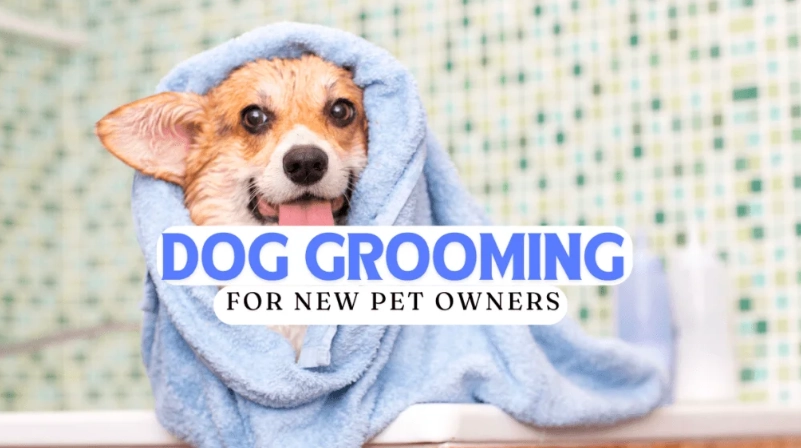
Wrapping It Up: Your New Grooming Mindset
So, what is the rule of 5 dog grooming really about? It's not just a checklist. It's a mindset shift. It's about moving from a reactive, messy chore to a proactive, caring ritual. It's about viewing grooming not as just haircuts, but as integrated care that includes health monitoring, skin and coat maintenance, and bonding time.
It gives you, the person holding the brush or clippers, confidence. You have a plan. You know what comes next. That calm energy transfers directly to your dog.
Start small. Next time you groom, just focus on nailing the Prep phase. Really commit to that health check and brush-out. Then, the next time, focus on mastering the Bath and Dry. Build the habit one pillar at a time.
Before you know it, you'll be performing the entire rule of 5 dog grooming sequence without even thinking about it. Your dog will be healthier, look better, and the whole experience will be smoother for everyone involved. And honestly, that's the ultimate goal.
Now go grab your brush. Prep time.

Join the Conversation