You've got the empty tank. You've got the excited reptile (or the plan to get one). Now comes the fun, slightly daunting part: turning that glass box into a home. It's more than just throwing in some sand and a plastic plant. A great reptile tank setup mimics a slice of the wild, meets your pet's biological needs, and honestly, looks pretty cool in your living room. Let's move past the basic care sheets and get into the creative, practical details of building habitats that work.
Your Quick Jump-Start Guide
- The Non-Negotiables: Planning Your Setup
- The Bearded Dragon Oasis
- The Leopard Gecko Aridscape
- The Ball Python Jungle Gym
- The Crested Gecko Vertical Paradise
- The Corn Snake Active Enclosure
- The Red-Foot Tortoise Forest Floor
- The Blue-Tongue Skink Burrow System
- The Tree Frog Bioactive Canopy
- The Hermit Crab Coastal Crabitat
- The Mixed Paludarium (Advanced)
- What Most Guides Don't Tell You: Common Pitfalls
- Your Questions, Answered
The Non-Negotiables: Planning Your Setup
Before we dive into the pretty pictures in your head, let's ground ourselves. Every single one of these reptile tank setup ideas rests on three pillars you can't ignore. Skip these, and you're building a prison, not a home.
1. Size & Shape: A 20-gallon "long" tank is worlds apart from a 20-gallon "tall" for habitat purposes. Research your species' adult size and primary behavior. Is it a climber (crested gecko, green tree python)? Go tall. Is it a terrestrial roamer (blue-tongue skink, uromastyx)? Go long and wide. Is it semi-aquatic (turtles, some newts)? You need water depth. The Reptile & Amphibian Advocacy Group often recommends enclosure dimensions based on the animal's snout-to-vent length, which is a more scientific starting point than just "gallons."
2. Heating & Lighting: This is where I see the most heartbreak. A heat lamp isn't just a bulb; it creates a thermal gradient. One end warm (the basking zone), one end cool. Your reptile needs to move between them to regulate its body temperature. For many species, especially diurnal lizards like bearded dragons, UVB lighting is non-optional. It's how they synthesize vitamin D3 to process calcium. No proper UVB = metabolic bone disease, a painful and crippling condition. Don't guess. Use a thermometer and a hygrometer. Actually, use two—one for the warm side, one for the cool.
3. Substrate & Safety: The floor matters. Sand for a bearded dragon? Controversial and risky for impaction if not managed perfectly. Cedar or pine shavings? Toxic. I lean towards practicality and safety: paper towel for quarantine/sick tanks, textured tile for easy cleaning in arid setups, and reputable, species-specific mixes (like coconut coir or cypress mulch) for humidity-loving animals. Always, always consider if your choice could be accidentally eaten and cause a blockage.
Got those fundamentals locked in? Good. Now let's get inspired.
Idea 1: The Bearded Dragon Oasis
The Vibe: Australian outback rocky outcrop.
Beardies need to climb, bask, and dig. This setup focuses on creating distinct, usable zones.
- Basking Zone: A broad, flat sandstone-colored slate or resin "rock" directly under the heat/UVB lamp. Surface temp should hit 100-110°F. This is their dining table and sunbed.
- Cool Zone: The other end of the tank. Here, place a sturdy, low branch for climbing and a hideout (like a half-log or ceramic cave). Temperature here should be in the mid-70s to 80s°F.
- Substrate Debate: For adults, a 50/50 mix of topsoil and playsand can work if you're vigilant about feeding in a dish. For beginners or juveniles, slate tile or reptile carpet is safer. Loose substrate needs spot-cleaning daily.
- Key Decor: Vertical elements! They love to perch. Use secure stacks of rocks (glued with aquarium silicone), driftwood, or commercial climbing backgrounds. Provide at least one fully enclosed hide on the cool side.
I made the mistake early on of giving my beardie a hammock. He loved it, but his nails constantly got caught in the threads. Switched to a textured ramp instead—problem solved.
Idea 2: The Leopard Gecko Aridscape
The Vibe: Dry, rocky Asian foothills.
No UVB required (controversial, but they are crepuscular), but heat and humidity are crucial in specific spots.
- The Three-Hide System: This is non-negotiable. 1) A warm, dry hide over the under-tank heater (regulated by a thermostat!). 2) A cool, dry hide on the opposite side. 3) A humid hide in the middle, filled with damp sphagnum moss or paper towel, essential for shedding.
- Substrate: Avoid sand. Paper towel, tile, or a non-particulate shelf liner are perfect. Some keepers use a “solid substrate” with a dig box filled with eco earth for enrichment.
- Floor Space over Height: A 20-gallon long is the classic minimum. They explore at night. Create a landscape with flat rocks, cork bark tunnels, and fake plants to break sight lines and encourage natural foraging behavior.
Idea 3: The Ball Python Jungle Gym
The Vibe: Dense, humid West African forest floor.
The goal here is security and consistent humidity (60-70%). Ball pythons are shy, heavy-bodied snakes that stress easily in open spaces.
- Clutter is Your Friend: Fill the vertical space! Use tall, fake foliage, vines, and branches. They will climb more than you think, especially at night. The tank should look “busy” from above, making the snake feel hidden.
- Sturdy, Enclosed Hides: Two identical hides—one on the warm end, one on the cool end. “Identical” is key to prevent them from choosing security over thermoregulation. The hide should be snug, with the snake touching the sides when coiled.
- Substrate for Humidity: Cypress mulch, coconut husk, or orchid bark. These hold moisture well. Pour water into the corners of the substrate (not the middle) to boost humidity without making the surface soggy.
- Water Bowl: Large enough for soaking, placed on the cool side to avoid rapid evaporation from heat.
Idea 4: The Crested Gecko Vertical Paradise
The Vibe: New Caledonian rainforest canopy.
Think up, not out. A tall enclosure (18x18x24" minimum) is a must. They live in trees.
- Vertical Pathways: Create a highway of branches, vines, and cork bark tubes running at various angles from top to bottom. Use suction cup plants and magnetic ledges to utilize the glass walls.
- Foliage Density: The top 2/3 of the tank should be densely planted with broad-leafed artificial or live plants (like Pothos or Philodendron) to provide hiding spots and catching surfaces for their jumps.
- Feeding Ledges: Install magnetic or suction cup feeding ledges in the upper third of the tank for their CGD (Crested Gecko Diet) food. They rarely come to the ground to eat.
- Substrate: Simple. Paper towel for easy cleaning, or a bioactive mix with a cleanup crew for a more natural look.
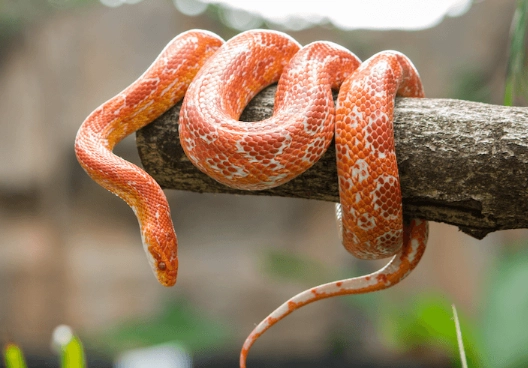
Idea 5: The Corn Snake Active Enclosure
The Vibe: Overgrown North American field and forest edge.
Corn snakes are active, curious, and excellent climbers. They use every inch of space.
- Horizontal & Vertical Exploration: Provide multiple levels. Use branches that connect to shelves or rock formations. A background with ledges or plant pockets adds depth.
- Multiple Hides & Burrows: Besides warm and cool hides, provide “ambient” hides in the middle and plenty of loose substrate (aspen shavings are classic) that's deep enough (3-4 inches) for them to burrow in.
- Enrichment Items: Cork bark rounds, PVC piping sections (sand the edges), and even cardboard tubes make for great exploring tunnels. Rotate a couple of these items occasionally to keep things interesting.
Idea 6: The Red-Foot Tortoise Forest Floor
The Vibe: Humid South American woodland floor.
This is a large, terrestrial setup. Think indoor tortoise table or a very large custom enclosure.
- Space is Everything: A hatchling needs room to roam; an adult needs a small room. The general rule is 10x the tortoise's length in floor space. For a 10" tortoise, that's a 100"x100" area.
- Diverse Microclimates: A basking spot (85-90°F), a warm humid hide box filled with sphagnum moss, and cooler, shaded areas with damp substrate (cypress mulch or topsoil mix).
- Sturdy, Edible Plants: Use live, non-toxic plants in pots sunk into the substrate. Spider plants, hibiscus, and certain grasses can be eaten and provide cover. They will be trampled, so choose hardy ones.
- Soaking Area: A shallow, heavy water dish large enough for the tortoise to sit in, sunk flush with the substrate to prevent flipping.
Idea 7: The Blue-Tongue Skink Burrow System
The Vibe: Australian woodland floor with loose soil.
These are stout, powerful lizards that love to dig and root around.
- Deep, Diggable Substrate: A 6-8 inch deep mix of topsoil, coconut coir, and cypress mulch. This allows them to construct their own burrows, which is incredibly enriching natural behavior.
- Sturdy Surface Decor: Everything on top of that substrate needs to be heavy and secure. Flat rocks for basking, thick pieces of cork bark, and heavy ceramic or stone hides. They will bulldoze anything light.
- Humid Hide: Even Northern species appreciate a humid hide (like a plastic box with a hole and damp moss) to aid shedding, especially for their thick toes.
Idea 8: The Tree Frog Bioactive Canopy
The Vibe: A self-cleaning slice of tropical rainforest.
This is where reptile tank setup ideas get advanced and rewarding. A bioactive setup introduces a “cleanup crew” (isopods, springtails) to break down waste.
- The Foundation: A drainage layer (clay balls), a mesh separator, then a bioactive substrate (like ABG mix). This supports live plant roots and the cleanup crew.
- Live Plant Selection:
- Live Plant Selection: Choose hardy, humidity-loving plants: Pothos, Philodendron, Ficus pumila, Bromeliads (for water pockets!). Let them grow in densely.
- Water Feature: A small, filtered water section or a large water bowl is essential for hydration and humidity. Frogs absorb water through their skin.
- Vertical Hardscape: Use ghostwood, spiderwood, or bamboo to create climbing structures before planting. Mist the enclosure daily to maintain high humidity.
The payoff? A stunning, living piece of art that almost manages itself. You spot-clean feces, but the bugs handle the rest. It smells like fresh earth, not a cage.
Idea 9: The Hermit Crab Coastal Crabitat
The Vibe: Tropical beach and jungle fringe.
Often overlooked as reptiles, they need complex setups! They require both land and salt/freshwater pools.
- Deep Substrate for Molting: A sandcastle-worthy mix of 5 parts playsand to 1 part coconut fiber, moistened and at least 6-8 inches deep, or 3x the height of your largest crab. They bury themselves to molt for weeks and need stability.
- Two Pools: One for dechlorinated freshwater, one for marine-grade saltwater (mixed with aquarium salt like Instant Ocean, not table salt). Both must be deep enough for the largest crab to fully submerge.
- Climbing & Hiding: Cholla wood, cork bark, nets, and fake plants. Provide multiple empty shells of various sizes (natural, unpainted) for changing.
- Heat & Humidity: A sealed lid (glass or acrylic) to trap 70-80% humidity, with heat provided via an under-tank heater on the side of the tank, not the bottom.
Idea 10: The Mixed Paludarium (Advanced)
The Vibe: A riverbank or flooded forest.
The ultimate project: part aquarium, part terrarium. Not for beginners, but the most breathtaking of all reptile tank setup ideas.
- Water/Land Division: Use aquarium-safe silicone and glass or acrylic to create a sealed water section, typically 1/3 to 1/2 of the tank. The land area is built up behind it with rocks, egg crate, and foam.
- Filtration & Waterfall: A small canister filter or powerful internal pump circulates water and can be used to create a waterfall or stream flowing into the aquatic zone.
- Planting Both Worlds: Aquatic plants in the water, semi-aquatic plants (like Peace Lilies, Pothos with roots in water) at the edge, and humidity-loving terrestrials on the land.
- Potential Inhabitants: Fire-bellied toads, vampire crabs, mudskippers, or newts in the water, with small, non-aggressive geckos or tree frogs in the terrestrial zone. Extensive research on compatibility is mandatory.
What Most Guides Don't Tell You: Common Pitfalls
After setting up dozens of tanks over the years, here are the subtle errors that sneak up on you.
The "Center Heat" Problem. Placing your primary heat source in the middle of the tank destroys the thermal gradient. Everything becomes lukewarm. Heat must be at one end. Always.
Glass is a Poor Insulator. That beautiful glass tank loses heat and humidity fast. For animals requiring stable, high humidity (ball pythons, dart frogs), you'll fight constant battles. PVC, ABS plastic, or wood enclosures are far superior for climate control. It's worth the investment.
Underestimating the Power of Water. A large water bowl evaporates, raising humidity. Placing it under the heat lamp causes it to evaporate rapidly, sometimes spiking humidity too high in one spot and causing condensation. Place water bowls on the cool side for more stable evaporation.
"It Looks Empty" Panic. New keepers often feel their tank looks barren and add too much decor at once, leaving no open floor space for the animal to move. Others add too little, causing stress. It's a balance. Observe your animal. If it's always hiding or never uses an area, adjust.
| Common Mistake | Why It's a Problem | The Expert Fix |
|---|---|---|
| Using a red "night" heat bulb | Reptiles can see red light. It disrupts their day/night cycle and can stress them. | Use a ceramic heat emitter (CHE) or deep heat projector (DHP) for 24/7 heat without light. |
| Sticking gauges with suction cups | They fall down constantly, giving false readings, and the adhesive can be toxic if ingested. | Use digital probe thermometers/hygrometers or place analog gauges at substrate level, secured with zip ties or safe putty. |
| Misting with cold tap water | Spraying a cold mist can dramatically drop the ambient temperature, shocking the animal. | Use lukewarm water in your spray bottle. It holds temperature better and is less jarring. |
| Not having a backup plan for power outages | During a winter blackout, tropical reptiles can succumb to hypothermia in hours. | Keep chemical hand warmers or Uniheat packs in your emergency kit to place near (not in) the enclosure temporarily. |
Your Questions, Answered
What is the most common mistake when setting up a first reptile tank?
The most common and dangerous mistake is prioritizing decoration over environmental control. New keepers often spend their budget on fake plants and fancy hides but skimp on a proper thermostat for their heat source or a high-quality UVB light for species that need it. An unregulated heat mat can cause severe burns, and incorrect lighting leads to metabolic bone disease. Always budget for the essential life-support equipment first: heating, lighting, thermostats, and hygrometers. The decorations can be added later.
How do I make a reptile tank escape-proof, especially for snakes?
Snakes are escape artists. The key is weight and latch quality. For glass tanks with mesh lids, you need heavy-duty lid clips on all sides, not the flimsy ones that come in the box. For PVC or plastic enclosures, ensure the sliding or swinging doors have a secure locking mechanism. Run your finger along every seam and gap. If you can feel a draft or see light, a determined snake can find it. I've had a young corn snake push up a lid secured with only two clips; four heavy-duty ones solved it. Always assume your reptile is smarter and stronger than it looks.
Can I use real plants from a garden center in my reptile's tank?
Almost never. Plants from nurseries and garden centers are routinely treated with systemic pesticides, fertilizers, and fungicides that are absorbed into the plant tissue. These chemicals can be toxic to reptiles that nibble on leaves or simply absorb them through their vent skin when resting on the soil. Always source plants from reputable vendors who grow them specifically for terrarium or vivarium use, guaranteeing they are free of harmful chemicals. It's a cost that ensures your pet's safety.
How often should I completely redesign my reptile's tank setup?
Frequent, complete overhauls are stressful and usually unnecessary. Spot-cleaning and replacing soiled substrate should be your daily/weekly routine. A deep clean where you remove and disinfect all items might happen every few months. A full redesign? Maybe once a year, if that. The exception is for growing juveniles who need larger enclosures. Stability is comforting for most reptiles. Instead of constant redesigns, focus on enrichment: rotating a few decor items in and out, offering food in puzzle feeders, or adding a new, interesting branch for climbing can provide mental stimulation without the stress of a total habitat upheaval.
The best reptile tank setup ideas start with your pet's wild instincts and build from there. It's a mix of science and art. Get the temperatures right, the humidity stable, and the space secure. Then layer in the climbing branches, the hiding spots, the textural variety. Watch how your animal uses the space. Tweak it. A thriving reptile is an active, curious one that uses all the features of its home. That's the real sign you've nailed it.

Join the Conversation