Quick Navigation Highlights
- Step Zero: It All Starts With Your Reptile
- The Foundation: Choosing the Right Enclosure
- The Nuts and Bolts: Non-Negotiable Equipment
- Furnishing the Home: Substrate & Decor
- The Advanced Frontier: Bioactive Setups
- Putting It All Together: Your Step-by-Step Setup Day
- Common Mistakes to Avoid (Learn From My Failures)
Let's be honest. When you first bring home that bearded dragon or leopard gecko, the excitement is real. You've got the pet, you've done some reading, and you're ready to build its forever home. Then you walk into a pet store, or start browsing online, and the sheer number of options for a reptile habitat setup hits you like a ton of bricks. Tanks, bulbs, substrates, hides, thermostats... it's enough to make your head spin. I've been there. My first setup for a corn snake was, in hindsight, a bit of a disaster zone. Too small, wrong heat source, the works.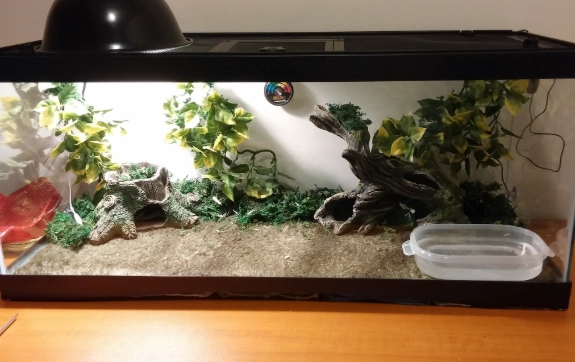
But here's the good news. Getting it right isn't about magic or spending a fortune. It's about understanding what your specific reptile actually needs to thrive, not just survive. Think of their enclosure as their entire world. Every single element in it impacts their health, behavior, and happiness. A proper reptile enclosure setup is the absolute foundation of good reptile keeping. Skip this step, and you're setting yourself up for vet bills and a stressed-out pet.
This guide is the one I wish I had. We're going to strip away the confusion and walk through the entire process, step-by-step. We'll talk about choosing the right stuff, common pitfalls (I'll share my own blunders), and how to create an environment where your scaly buddy can truly flourish. Whether you're setting up for a desert-dwelling lizard, a tropical snake, or something in between, the core principles are the same. Let's build a home, not just a box.
Step Zero: It All Starts With Your Reptile
This might seem obvious, but you'd be surprised how many people buy the tank first and choose the pet later. Big mistake. The single most important factor in your reptile habitat setup is the species you plan to keep. A setup for a moisture-loving crested gecko is the polar opposite of what a dry-land Russian tortoise needs.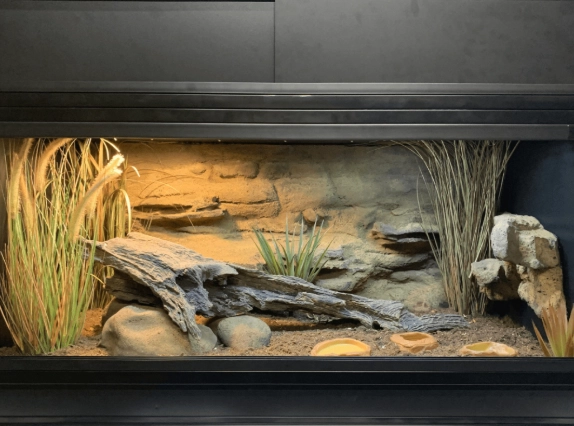
Before you spend a single dollar, research is key. And I don't mean just a quick Google search. Dive deep. Reputable care guides from places like the Society for the Study of Amphibians and Reptiles or species-specific forums where long-time keepers share their experiences are gold mines. Look for consensus among experienced owners, not just one person's opinion.
Ask yourself these questions:
- What's its native habitat? Is it from the arid outback or a humid rainforest canopy? Your setup must mimic this.
- How big will it get? Buying an enclosure for its baby size is the most common rookie error. Plan for the adult size from day one.
- Is it arboreal (lives in trees), terrestrial (lives on ground), or fossorial (burrows)? This dictates whether you need a tall tank or a long, low one.
- What are its specific temperature and humidity needs? Get the numbers, not just "warm" or "kind of humid."
Once you have a solid profile of your future pet, you can start shopping with purpose. Everything else flows from this knowledge.
The Foundation: Choosing the Right Enclosure
Alright, you know your reptile. Now, let's talk about its house. The enclosure is the canvas for your entire reptile habitat setup. Get this wrong, and everything else becomes an uphill battle.
Size Matters (A Lot)
The old rule of thumb was "the length plus width of the tank should be equal to or greater than the snake's length." Frankly, that's outdated and often results in cramped quarters. The modern philosophy is to provide as much space as you possibly can. For active lizards like bearded dragons or monitors, bigger is always better. A 120-gallon tank for an adult bearded dragon is a great starting point, not a luxury. For snakes, the enclosure should allow them to fully stretch out along at least one side. Imagine living in a room where you can never fully extend your legs. Not great, right?
Material World: Glass, PVC, or Wood?
Each material has its pros and cons, and your choice depends heavily on your pet's needs.
| Material | Best For | Pros | Cons | My Take |
|---|---|---|---|---|
| Glass Aquariums | Desert species, display pets, beginners on a budget. | Widely available, inexpensive, great for viewing. | Poor insulation (hard to keep heat/humidity in), heavy, often only front-opening. | Fine for a leopard gecko or bearded dragon, but you'll fight to keep humidity up for a tropical species. The screen top is a heat and humidity killer. |
| PVC (Plastic) Cages | Almost all species, especially tropical/high-humidity snakes and lizards. | Excellent insulation, lightweight, easy to clean, often front-opening. | More expensive upfront, less "display" aesthetic for some. | This is my go-to for 90% of my pets now. The ability to hold stable temps and humidity is a game-changer. Worth the investment. |
| Melamine/Wood Cages | Large constrictors, monitors, custom-built setups. | Super strong, can be fully custom-sized, good insulation. | Very heavy, can warp with moisture if not sealed perfectly, difficult to move. | Great for a permanent, large installation. But sealing it properly is critical—I learned this the hard way with a warped cabinet. |
The trend is definitely moving towards PVC enclosures. Companies are making them more aesthetically pleasing, and the husbandry benefits are undeniable. A front-opening door is also a huge plus for reducing stress on the animal compared to reaching in from above like a predator.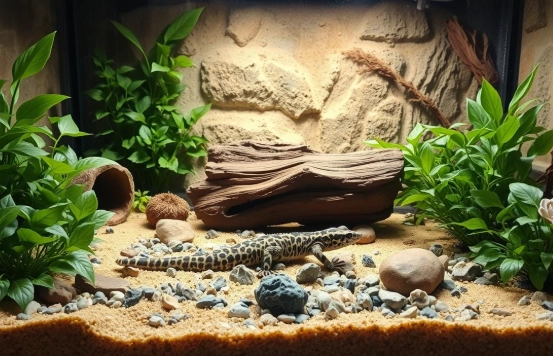
The Nuts and Bolts: Non-Negotiable Equipment
This is where the magic (and science) happens. Your reptile habitat setup needs to recreate key environmental parameters. Here's the essential gear you can't skip.
Heating: Creating the Sun
Reptiles are ectotherms. They don't make their own body heat; they rely on their environment. Your job is to provide a temperature gradient. This means one end of the enclosure is warm (the basking spot) and the other end is cooler. This allows the animal to thermoregulate—move to where it needs to be to digest, be active, or cool down.
- Overhead Heat Sources (The Best Choice): This mimics the sun. Options include Halogen heat bulbs, Deep Heat Projectors (DHPs), or Ceramic Heat Emitters (CHEs). DHPs and halogens provide infrared-A and B, which penetrate tissue better for deeper warmth. A CHE only emits infrared-C, which heats the surface air—it's good for maintaining ambient heat but isn't ideal as a sole basking source.
- Under Tank Heaters (UTHs): These pads stick to the bottom glass. They're okay for providing a gentle belly heat spot for some snakes, but they don't warm the air effectively. Never use them as the primary or sole heat source, and always, always control them with a thermostat.
- Heat Rocks: Just Don't. I'm putting this in bold because it's important. Unregulated heat rocks are notorious for causing severe thermal burns. They create a concentrated, often unpredictable hot spot that a reptile can't escape from. Avoid them entirely.
Lighting: More Than Just Seeing
Lighting in a reptile habitat setup serves two main functions: vision/day-night cycles, and specific health needs.
- UVB Lighting: For many reptiles (bearded dragons, most diurnal lizards, turtles), UVB is non-negotiable. It allows them to synthesize vitamin D3, which is crucial for calcium absorption. Without it, they develop Metabolic Bone Disease (MBD), a painful and crippling condition. You need a linear fluorescent tube or compact bulb that provides the correct UVB percentage for your species (e.g., 10.0 for desert, 5.0 for forest). Change these bulbs every 6-12 months, as their UV output declines even if the bulb still lights up. The UV Guide UK is an fantastic resource for understanding UVB requirements and bulb ratings.
- Basking Lights: Often separate from the UVB bulb, this provides the intense heat for the basking zone.
- LED or Full-Spectrum Lights: These provide bright, white light for plant growth (in planted tanks) and enhance the natural colors of your pet and decor.
All lights should be on a timer. A consistent 12-hours-on, 12-hours-off cycle is a good starting point, mimicking a natural day/night rhythm.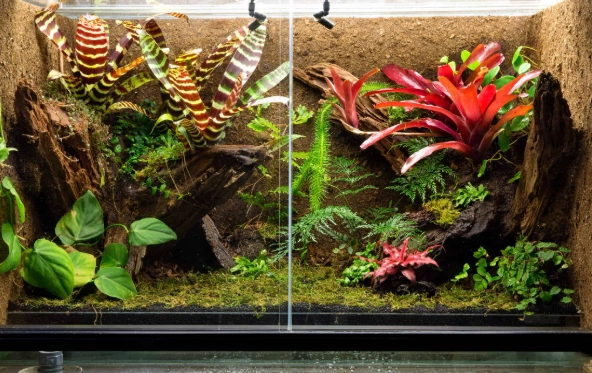
Humidity & Hydration
This is the number one thing people get wrong. You can't guess humidity. You need a digital hygrometer (those analog dial ones are notoriously inaccurate). Place the probe in the middle of the enclosure, off the ground.
To raise humidity: use a larger water bowl, mist the enclosure manually or with an automatic mister, use a substrate that holds moisture (like coconut fiber or cypress mulch), or cover part of a screen top with glass or acrylic. For very high humidity species (e.g., chameleons, dart frogs), a fogger or a dedicated misting system might be necessary.
To lower humidity: increase ventilation, use a drier substrate (paper towel, reptile carpet), use a dehumidifier in the room, or switch to a PVC/glass tank with less screen area.
I struggled for months with my ball python's humidity in a glass tank. Constant shedding issues. Switching to a PVC enclosure with a deep layer of cypress mulch solved it overnight. Sometimes the enclosure itself is the problem.
Furnishing the Home: Substrate & Decor
Now for the fun part—making it look like a home and not a laboratory. Every item you add should serve a purpose.
Choosing a Substrate (The Flooring)
Your substrate choice ties directly back to your reptile's natural habitat and needs.
- Paper Towel/Butcher Paper: The king of quarantine and hospital tanks. Cheap, sterile, easy to spot-clean. Zero aesthetic value, but supremely practical.
- Reptile Carpet: Reusable and looks okay. Can harbor bacteria if not washed frequently, and claws can get snagged.
- Coconut Fiber (Eco Earth), Cypress Mulch, Orchid Bark: Excellent for tropical and temperate species that need moisture and burrowing. They look natural and hold humidity well.
- Play Sand/Soil Mixes: Great for desert species that like to dig. Never use pure calcium sand (it clumps when wet and can cause impaction if ingested). A mix of topsoil and playsand is a popular, safe choice for bearded dragons and uromastyx.
- Aspen Shavings: Good for temperate, low-humidity snakes like corn snakes and kingsnakes. It allows for burrowing but molds easily if it gets wet.
Essential Decor Items
These aren't just decorations; they're environmental enrichment.
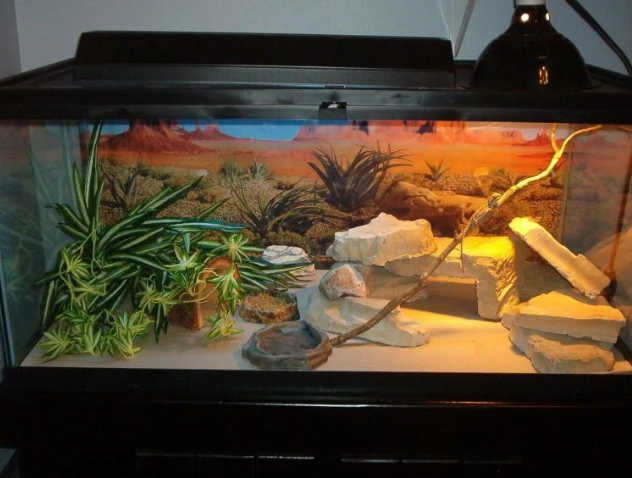
- Hides: At least two—one on the warm end and one on the cool end. They should be snug, making the reptile feel secure and touching its sides and back. A hide that's too big is useless. You can use commercial hides, cork bark rounds, or even opaque plastic food containers with a hole cut in them (sand the edges!).
- Climbing Structures: For arboreal species, this is critical. Use sturdy branches, vines, and ledges. Ensure everything is secure and won't collapse.
- Basking Platform: Under the heat lamp, provide a flat rock, slate tile, or sturdy branch where the reptile can perch to soak up the heat. The surface should get to the perfect basking temperature for your species.
- Plants (Live or Fake): Provide visual barriers and additional hiding spots. Live plants can help with humidity and air quality in a bioactive setup, but they require appropriate lighting. Fake plants are easier to clean and maintain.
- Water Bowl: Large enough for the animal to soak in if it needs to (for hydration or aiding sheds), but not so deep it's a drowning risk for small animals. Keep it clean and change the water daily.
The Advanced Frontier: Bioactive Setups
This is the hot topic in reptile keeping right now. A bioactive reptile habitat setup is a self-sustaining mini-ecosystem. It involves a drainage layer, a soil substrate, live plants, and a "clean-up crew" (CUC) of microfauna like springtails and isopods (woodlice).
The CUC eats decaying plant matter, mold, and most importantly, the reptile's waste. They break it down into natural fertilizer for the plants. In theory, you never have to fully clean the substrate—just spot-clean solid waste.
The Pros: It's the most natural and beautiful setup. It maintains stable humidity, provides mental stimulation for the reptile, and drastically reduces deep cleaning chores.
The Cons: It has a higher initial cost and complexity. It requires research to get the right plant/CUC combo for your animal's environment. It's not suitable for all species (large, destructive reptiles will trash it). For a beginner, it can be overwhelming.
I love my bioactive crested gecko tank. Watching the isopods scurry around is almost as fun as watching the gecko. But my bearded dragon's tank? Not bioactive. He'd dig up and eat everything in sight. It's not a one-size-fits-all solution.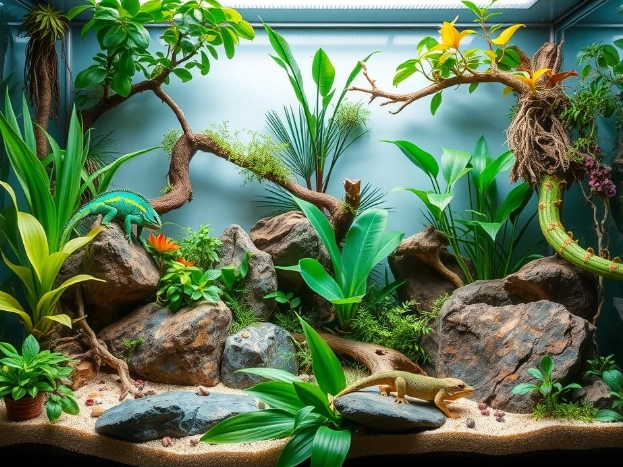
Putting It All Together: Your Step-by-Step Setup Day
- Assemble & Place the Enclosure: Choose a location away from direct sunlight, drafts, and excessive noise. On a sturdy, level stand.
- Install Equipment FIRST: Before any substrate or decor, set up your lighting fixtures on the lid or install interior mounts. Run cords and plan cable management.
- Add Substrate: Pour in your chosen substrate to the appropriate depth.
- Place Hardscape: Position heavy items like rocks, hides, and the water bowl. Make sure they're stable.
- Plant & Add Final Decor: Add live or fake plants, vines, and other lightweight items.
- Turn On & Dial In: Turn on your heat and lights. Wait at least 24-48 hours. Use your digital thermometer and hygrometer probes to monitor. Adjust thermostat settings, bulb height, or misting frequency until you have a perfect, stable gradient and humidity level. This is the most critical waiting period. Your setup must be stable BEFORE the animal goes in.
- The Grand Introduction: Gently introduce your reptile to its new home. Then, leave it completely alone for at least a week to settle in, only disturbing it to change water. No handling, no fussing.
Your Reptile Habitat Setup Questions, Answered
Common Mistakes to Avoid (Learn From My Failures)
Let's wrap this up by talking about where things go wrong. I've made more than a few of these errors myself.
- Guessing Temperatures: "It feels warm" is not a measurement. Digital probe thermometers are cheap. Use them.
- Overcrowding with Babies: Housing multiple reptiles together, especially juveniles, almost always leads to stress, competition for resources, and sometimes cannibalism. Don't do it unless you are an expert breeding a specific, known-to-be-communal species.
- Using a Heat Source Without a Thermostat: I said it before, I'll say it again. This is how pets die. It's not worth the risk.
- Focusing Only on Heat, Forgetting About Humidity: A perfect basking spot is useless if your ball python is stuck in a bad shed because the air is too dry.
- Not Letting the Setup Stabilize: Putting the animal in the same day you set up the tank is a recipe for stress. Let the equipment run and the environment settle.
- Choosing Substrate Based on Color, Not Function: That bright red calcium sand might look cool in the desert scene, but it's a potential health hazard for your bearded dragon who might ingest it.
Creating the perfect reptile habitat setup is a journey. You'll tweak things, learn what works for your specific animal, and upgrade over time. Start with solid research, invest in the right foundational equipment (especially that thermostat!), and always prioritize the animal's biological needs over what looks coolest on Instagram.
The goal is to see your reptile exhibiting natural, healthy behaviors—basking confidently, exploring at night, eating well, and shedding in one perfect piece. When that happens, you'll know you've built more than just a tank. You've built a home.



Join the Conversation