Let's be honest. My cat, Whiskers, spent his first few indoor years perfecting the art of the couch potato. He'd sleep, eat, stare out the window, and occasionally bat at a feather toy with the enthusiasm of someone checking their email. Then I noticed the slow creep of weight gain and the late-night zoomies that felt less like play and more like pent-up frustration. That's when I realized a few toys weren't enough. He needed a consistent, engaging way to exercise that matched his natural instincts. The journey into indoor cat exercise equipment began, and it completely changed our dynamic.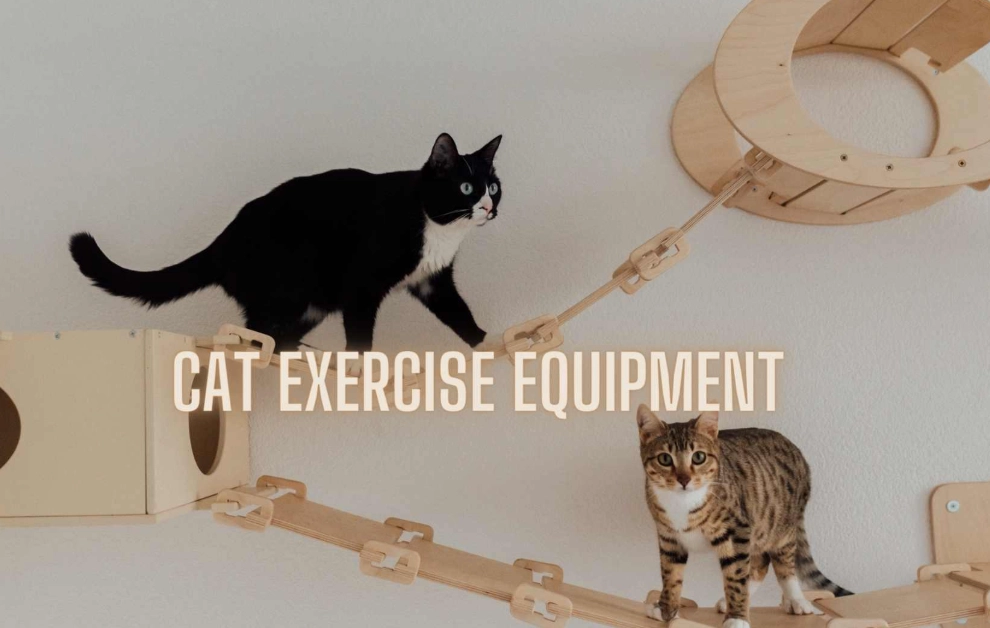
This isn't about turning your apartment into a feline amusement park overnight. It's about understanding what your cat needs to thrive physically and mentally, and finding the tools that make it happen. The right equipment can prevent obesity, curb destructive behavior, and deepen your bond. The wrong purchase gathers dust in the corner.
What You'll Find in This Guide
- Why Just Toys Aren't Enough: The Case for Dedicated Equipment
- Breaking Down the Gear: From Cat Wheels to Climbing Walls
- How to Choose the Right Equipment for YOUR Cat
- Budget-Friendly & DIY Cat Enrichment Ideas
- The 3 Biggest Mistakes Cat Owners Make (And How to Avoid Them)
- Your Indoor Cat Fitness Questions, Answered
Why Just Toys Aren't Enough: The Case for Dedicated Equipment
You drag out the laser pointer for five minutes. Your cat goes wild. You put it away. What does he do for the other 1,435 minutes of the day? Interactive toys are fantastic, but they require your participation. Dedicated exercise equipment provides self-directed enrichment.
The American Association of Feline Practitioners consistently highlights environmental enrichment as a core component of feline health. It's not a luxury; it's a necessity for preventing stress-related illnesses and obesity. A study published in the Journal of Feline Medicine and Surgery linked environmental complexity to reduced anxiety and improved overall welfare.
Think of it this way: a toy is a single game. A well-chosen piece of equipment, like a tall cat tree by a window, is a permanent part of his environment that offers climbing, perching, scratching, and bird-watching—all on his own schedule.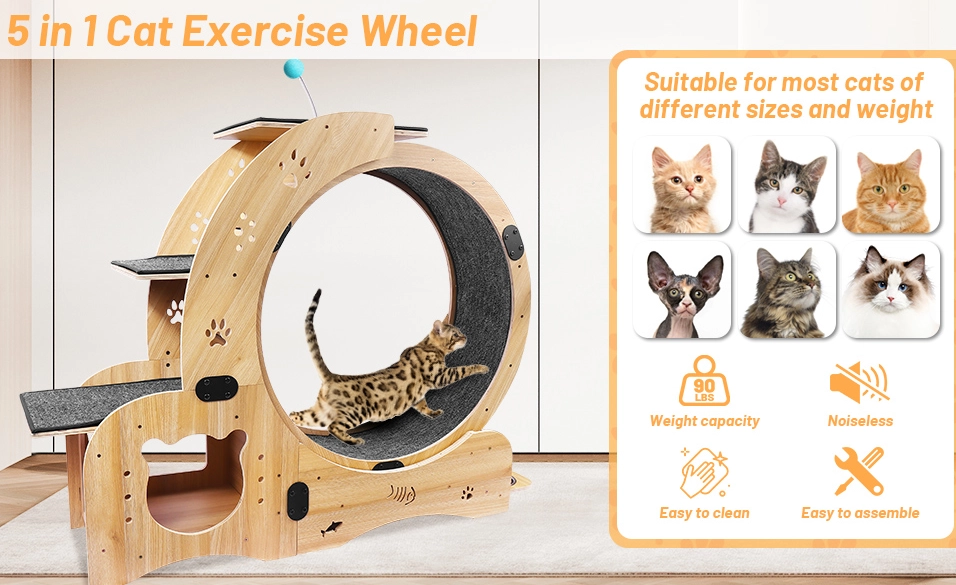
Breaking Down the Gear: From Cat Wheels to Climbing Walls
Not all equipment is created equal. What works for a hyperactive Bengal might intimidate a laid-back Persian. Here’s a realistic look at the major categories.
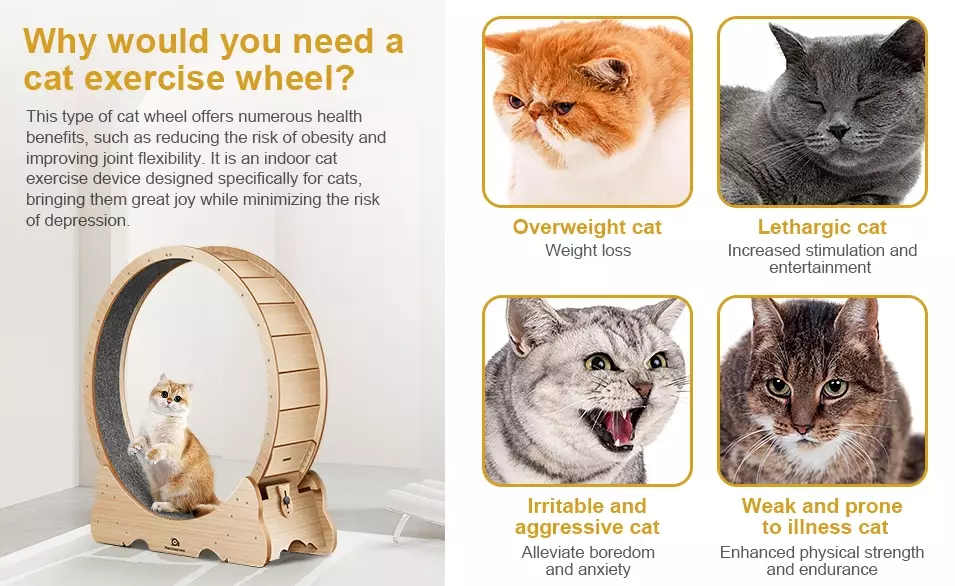
The Cat Exercise Wheel: Not Just for Hamsters
This is the big-ticket item everyone thinks of. A giant, sturdy wheel that lets your cat run full-tilt safely indoors. Brands like One Fast Cat and Ziggy Doo popularized this. The pros are obvious: incredible cardio in a small footprint. The cons? The price tag ($200-$600) and the fact that not every cat will use it instinctively.
I made a classic mistake. I assembled the wheel, plopped Whiskers on it, and expected him to run. He sniffed it and walked away. Success with a wheel requires patient training using treats and toys, often over weeks. It's a commitment.
Cat Trees & Climbing Towers: The Classic for a Reason
More than a scratching post, a great cat tree offers vertical territory. Cats feel secure up high. Look for stable construction (wobbly towers are useless), varied textures (sisal, carpet, wood), and multiple platforms. The best placement is in a socially significant area, like the living room, near a window if possible.
Don't just buy the tallest one on Amazon. Consider your ceiling height and your cat's age. A senior cat might prefer a tree with easier, staggered steps rather than a single huge leap.
Modular Cat Wall Systems & Shelves
This is where feline interior design gets exciting. Companies like Catastrophic Creations or simple DIY floating shelves let you create a custom superhighway on your walls. It utilizes dead airspace, looks modern, and satisfies a cat's need to traverse a room off the ground.
Start small. Install two or three shelves in a path leading to a favorite perch. Use brackets rated for at least 3-4 times your cat's weight. The initial setup takes effort, but the payoff is a permanently enriched environment.
Interactive Feeders & Puzzle Toys
Exercise isn't just physical; it's mental. Slow feeder bowls, snuffle mats, or puzzle balls that dispense kibble turn mealtime into a foraging activity. This slows down fast eaters and provides crucial cognitive work. The Catit Digger or products from Nina Ottosson are great examples. It's low-cost, high-impact enrichment.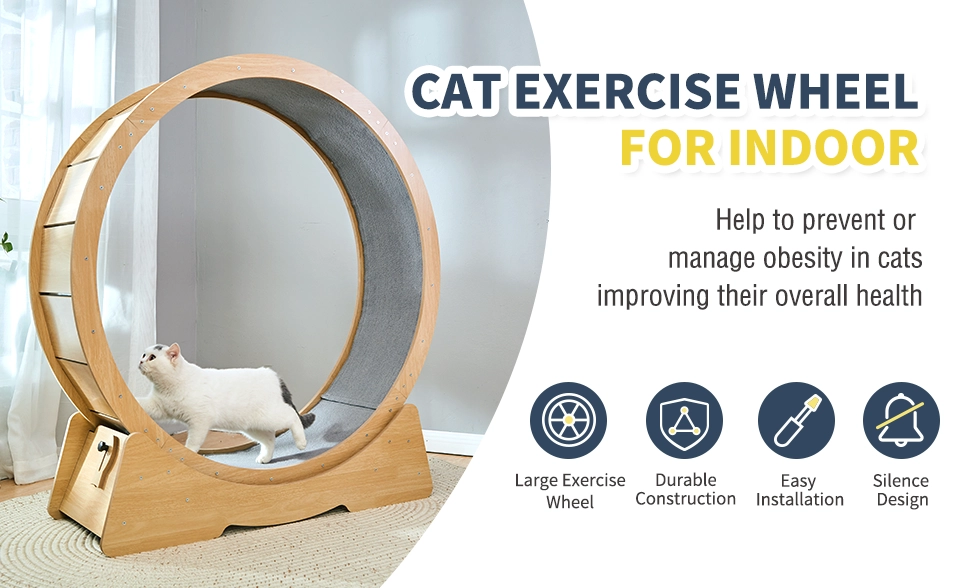
How to Choose the Right Equipment for YOUR Cat
This is the part most guides gloss over. Throwing money at the problem doesn't work. You need to be a detective for your own cat.
First, observe their natural play style. Are they a "chaser" who loves darting after things? A "stalker" who prefers pouncing from hiding? A "climber" who's always on top of the fridge? A chaser might love a wheel or a flirt pole. A stalker might prefer a puzzle box they can ambush. A climber needs vertical space.
Second, consider your space and budget realistically. A 6-foot cat tree in a studio apartment might dominate the room. A wall system requires landlord approval and drilling skills. Be honest about what you can accommodate.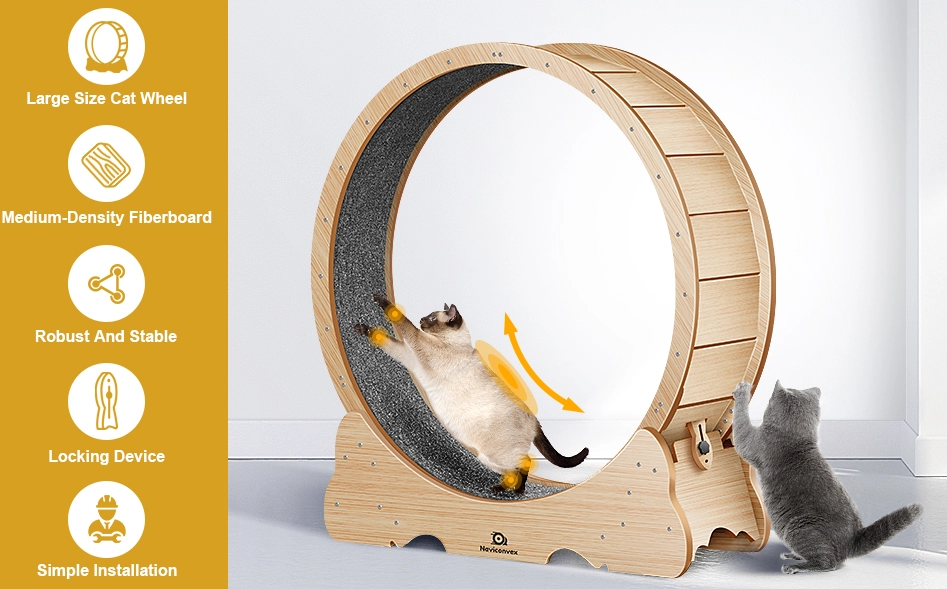
This table might help narrow things down:
| Equipment Type | Best For Cat Personality | Space Needed | Key Consideration |
|---|---|---|---|
| Cat Exercise Wheel | High-energy breeds, chasers, cats with weight goals. | Moderate floor footprint (circle ~4-5ft diameter). | Requires training. Check noise levels and stability reviews. |
| Tall Cat Tree/Condo | Most cats, especially climbers and observers. Good for multi-cat households. | Varies. Can be large. | Stability is non-negotiable. Wobble = fear. Material should be easy to clean. |
| Wall Shelves & Systems | Adventurous cats, small spaces, modern home aesthetics. | Vertical wall space. | Installation permanence. Must be securely anchored into studs. |
| Puzzle Feeders & Toys | All cats, especially fast eaters or intellectually curious ones. | Minimal. | Start with easy puzzles to build confidence. Some can be frustrating. |
Budget-Friendly & DIY Cat Enrichment Ideas
You don't need to spend hundreds. Some of the best enrichment is homemade.
The Cardboard Box Fortress: Save delivery boxes. Cut holes in different sides, tape a few together to create tunnels and chambers. Sprinkle catnip inside. Free, recyclable, and most cats love it.
Muffin Tin Puzzle: Take a muffin tin. Place kibble or treats in a few of the cups. Cover all the cups with tennis balls or crumpled paper balls. Your cat has to remove the balls to find the food. Simple, effective mental work.
Window Perch Upgrade: If you have a basic window sill, secure a comfortable bed or a simple shelf there. Ensure it's safe and can't fall. Add a bird feeder outside the window (safely out of reach) for the ultimate "Cat TV" channel.
DIY Scratching Ramp: Take a sturdy plank of wood. Wrap it tightly with sisal rope, securing the ends with staples or glue. Lean it securely against a wall or the side of a couch at a gentle angle. A new scratching angle for the cost of a plank and rope
The 3 Biggest Mistakes Cat Owners Make (And How to Avoid Them)
After a decade of cat ownership and talking to veterinarians, I see these patterns constantly.
Mistake 1: Buying for the cat you WISH you had, not the cat you DO have. You see a viral video of a cat running on a wheel and buy one for your shy, 10-year-old cat. He's terrified of it. Money wasted. Match the equipment to your cat's observed personality, not your fantasy.
Mistake 2: Setting it and forgetting it. You install a shelf. Great. But if the only thing on that shelf is the cat, it becomes boring. Rotate toys onto it. Place a treat there occasionally. Move a bed from the floor to the shelf. Keep the environment dynamic.
Your Indoor Cat Fitness Questions, Answered
 The goal isn't to exhaust your cat. It's to provide channels for their natural behaviors—stalking, climbing, scratching, exploring, foraging. When you do that, you're not just buying equipment. You're building an environment where your indoor cat can truly be a cat. Start with one piece. Observe. Adapt. The investment in their environment pays back in purrs, health, and a happier coexistence.

Join the Conversation