What You'll Learn in This Guide
I've kept parrots for over a decade, and if there's one thing that trips up new owners, it's diet. You might think a seed mix from the pet store is fine, but it's like feeding a kid candy for every meal. The best diet for a parrot isn't a single magic food; it's a balance of pellets, fresh produce, and careful treats. Let's cut through the noise and get into what really works.
Why Diet Matters for Parrots
Parrots live long—some species up to 80 years. A poor diet shortens that lifespan fast. I've seen birds develop fatty liver disease from seed-heavy diets, a common issue vets like those at the Association of Avian Veterinarians warn about. Nutrition affects everything: feather quality, behavior, even their ability to mimic.
Common Health Issues from Poor Nutrition
Obesity is huge. Parrots on seeds pack on weight because seeds are high in fat. Then come beak deformities or vitamin A deficiency, which leads to respiratory infections. My friend's African Grey started plucking feathers; turns out, it was a diet low in protein and variety. Switching foods stopped the plucking in weeks.
The Core Components of a Balanced Parrot Diet
Think of a parrot's plate in thirds. Not literally, but as a mental guide.
Pellets: The Foundation
Pellets are formulated to be complete nutrition. Brands like Harrison's or Roudybush are top-tier—I use Harrison's for my cockatiels. But here's a nuance many miss: not all pellets are equal. Some are dyed or sugary. Look for organic, non-GMO options. Pellets should make up most of the diet because they prevent picky eating.
Fresh Foods: Fruits and Vegetables
Variety is key. Rotate veggies daily. My go-tos:
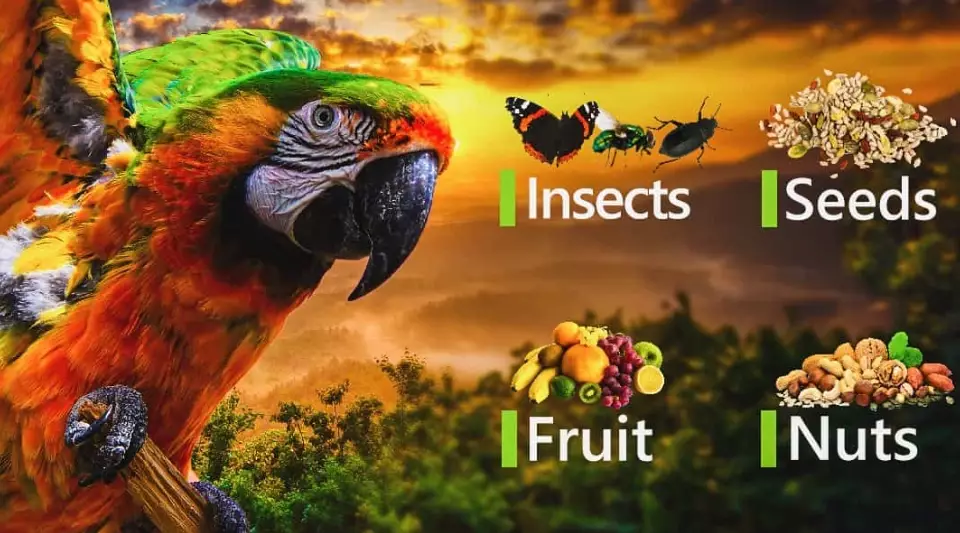
- Leafy greens: Kale, spinach, Swiss chard—packed with calcium.
- Colorful veggies: Carrots, bell peppers, sweet potatoes. Red peppers have more vitamin C than oranges.
- Fruits: Berries, apples (no seeds), mango. Limit fruit to a few times a week; sugar adds up.
Wash everything thoroughly. Pesticides can harm birds.
Seeds and Nuts: Use Sparingly
Seeds are like junk food—high in fat, low in nutrients. Sunflower seeds are the worst offender. Use them as training rewards. Nuts like almonds or walnuts are better, but still treats. A macaw might get one almond a day, not a handful.
How to Transition Your Parrot to a Healthier Diet
If your bird is hooked on seeds, switching cold turkey can backfire. They'll starve themselves out of stubbornness. I learned this the hard way with my rescue Amazon.
Step-by-Step Transition Plan
Week 1: Mix 25% pellets with 75% old food. Week 2: 50-50. Week 3: 75% pellets, 25% old food. By week 4, aim for full pellets. Offer fresh veggies separately—chop them small. Some birds prefer cooked sweet potato; mine loves it mashed. Patience is everything.
Foods to Avoid: The Dangerous List
This isn't just about avocado and chocolate. Common household foods can be lethal.
| Food | Why It's Dangerous | Safer Alternative |
|---|---|---|
| Avocado | Contains persin, causes heart failure | None—avoid completely |
| Chocolate | Theobromine toxicity, seizures | Carob chips (sparingly) |
| Onions & Garlic | Damage red blood cells, anemia | Bell peppers |
| Caffeine | Cardiac issues, hyperactivity | Herbal teas (cooled) |
| Salty Snacks | Kidney strain, dehydration | Unsalted popcorn |
I once saw a parrot get into guacamole at a party—emergency vet trip. Keep human food out of reach.
Feeding Schedule and Portion Control
Parrots do well with routine. Feed twice a day: morning and evening. Remove uneaten fresh food after a few hours to prevent spoilage.
Daily Feeding Guidelines by Parrot Size
- Small parrots (budgies, cockatiels): 1-2 tablespoons pellets, plus a teaspoon of chopped veggies.
- Medium parrots (Amazons, African Greys): 3-4 tablespoons pellets, a quarter cup veggies.
- Large parrots (macaws, cockatoos): Half cup pellets, up to a half cup fresh foods.
Adjust based on activity. My macaw flies daily, so he gets a bit more. Monitor weight monthly; a kitchen scale helps.
FAQ: Your Top Parrot Diet Questions Answered
Personal Insights from a Parrot Owner
When I got my first parrot, a Congo African Grey, I fed him seeds because that's what the breeder recommended. Big mistake. He became lethargic, his feathers lost shine. After consulting an avian vet and reading resources from the World Parrot Trust, I switched to pellets and fresh foods. The change was slow—he threw his pellets at me for weeks—but now he's vibrant at 15 years old.
One thing I wish I knew earlier: parrots need foraging. Hide veggies in toys to mimic wild feeding. It keeps them mentally sharp.
Diet isn't just about food; it's about engagement. A bored parrot on a great diet still suffers. Mix it up, observe your bird's preferences, and don't be afraid to tweak. Your vet is your best ally here.
If you take away one thing, let it be this: pellets as base, fresh foods for variety, seeds as treats. It's simple, but execution matters. Start today—your parrot's health depends on it.

Join the Conversation