Let's cut to the chase. An animal careers list isn't just a nice-to-have; it's your roadmap out of a job you tolerate and into one you're passionate about. Most lists online are repetitive, vague, and don't tell you the gritty details—like the fact that "animal trainer" can mean teaching dolphins tricks for a theme park or helping reactive dogs not bite strangers, two worlds with completely different pay and daily realities. This guide is different. We're going beyond the job titles to the actual work, the paths in, and the stuff nobody talks about (like the smell, the paperwork, and the emotional toll). Think of this as the conversation you'd have with a mentor who's been in the trenches for a decade.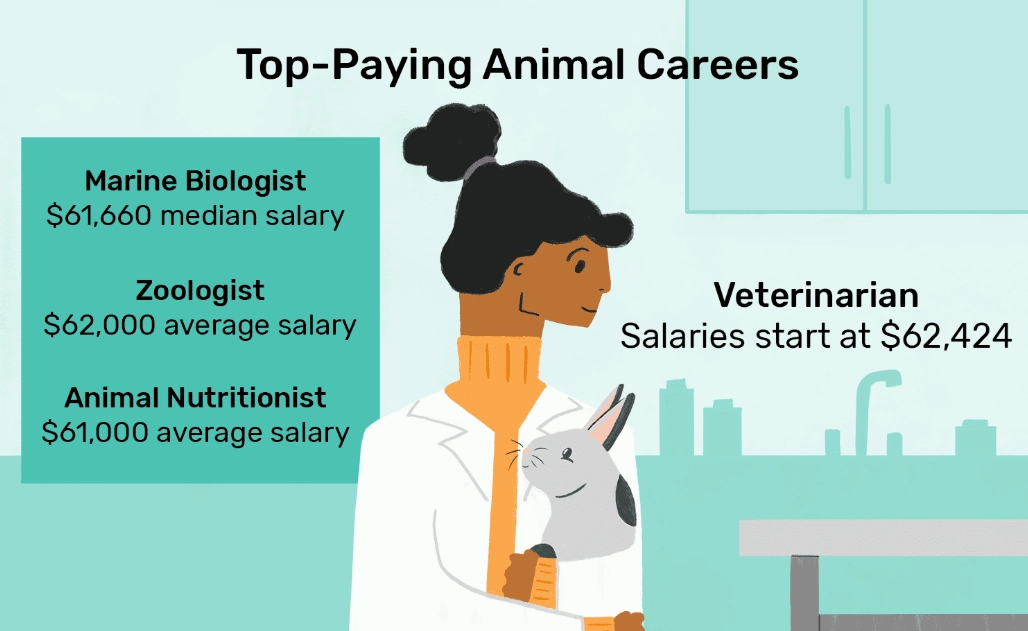
Your Quick Guide to Animal Careers
- What is an Animal Careers List, Really?
- Hands-On Animal Care & Veterinary Paths
- Animal Science, Behavior & Training Careers
- Conservation, Wildlife & Advocacy Roles
- Support, Business & Niche Animal Jobs
- How to Choose the Right Animal Career for You
- Your First Steps: How to Break into Animal Work
- Your Animal Career Questions, Answered
What is an Animal Careers List, Really?
It's a navigation tool. You come here with a feeling—"I love animals"—and you leave with a direction. A good list does three things: it shows you options you didn't know existed (like a laboratory animal technologist ensuring ethical research standards), it demystifies the ones you've heard of (what does a "zookeeper" actually do all day?), and it connects titles to tangible next steps. The goal isn't to just read it; it's to use it to make a decision.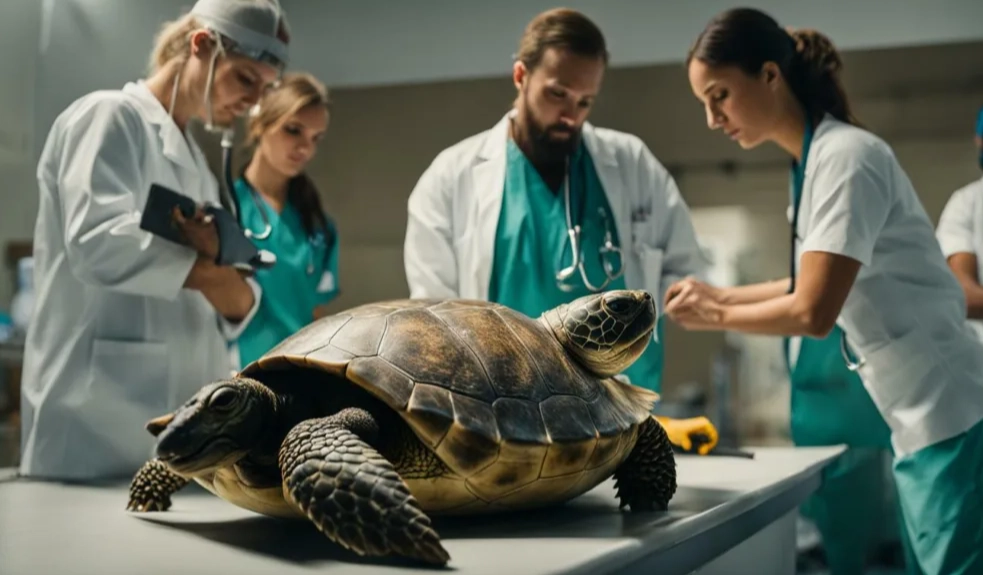
Before you dive in: Loving animals is the prerequisite, but it's not the job description. The job is often about cleaning, data entry, client education, and following strict protocols. The love is the fuel, but the work is a skill. Be honest with yourself about what parts of animal interaction you truly enjoy and which you'd find draining.
Hands-On Animal Care & Veterinary Paths
These are the jobs where you're physically interacting with animals daily, often in a caregiving or medical capacity. This is where most people's minds go first.
Veterinary Medicine Track
The most structured path. It's a hierarchy, and where you fit depends on your tolerance for school and debt.
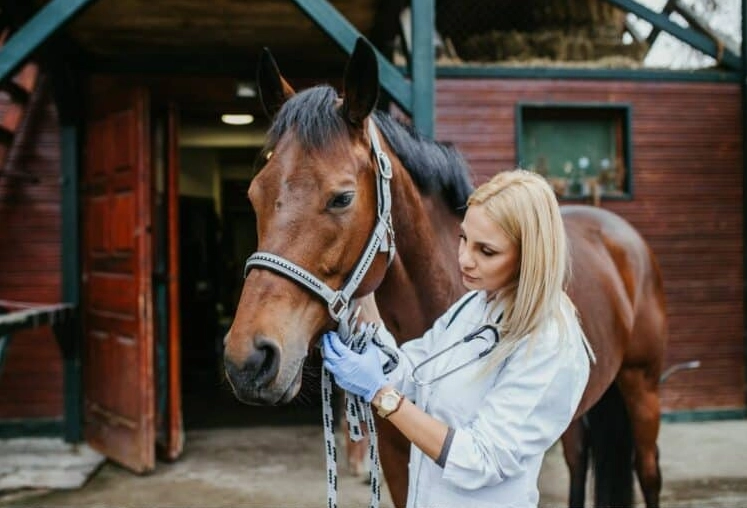
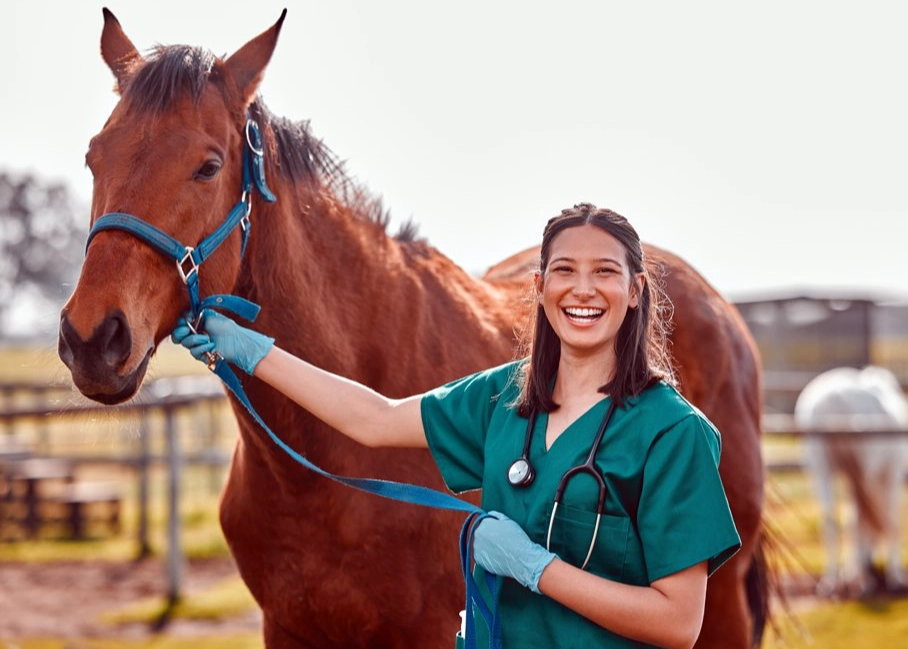
- Veterinarian (DVM/VMD): The doctor. Requires 8+ years of education, a brutal curriculum heavy on science, and significant debt (often $150,000+). The payoff is high responsibility, diagnosis, surgery, and a median salary around $110,000 (according to the U.S. Bureau of Labor Statistics). Burnout is real, dealing with euthanasia, difficult clients, and business management.
- Veterinary Technician/Nurse (LVT, RVT, CVT): The nurse/anesthetist/radiology tech/phlebotomist. This is a 2-4 year degree (Associate's or Bachelor's) followed by a national exam. You do almost everything except diagnose, prescribe, and perform surgery. You're the one holding the crying pet while the vet draws blood. Median salary is around $40,000. It's physically and emotionally demanding but incredibly hands-on.
- Veterinary Assistant: The backbone of the clinic. This role often requires on-the-job training or a short certificate program. Duties include cleaning kennels, restraining animals, feeding, and basic clerical work. It's the most common entry-level job in the field. Pay is often near minimum wage to start. It's the best way to test if you can handle the veterinary environment. Honestly, when I was an assistant, cleaning the kennels was the least glamorous but most honest part of the job.
Direct Animal Caretaking
Less medical, more daily husbandry and management.
- Zookeeper/Aquarist: Not just playing with pandas. It's diet preparation, exhibit cleaning, behavioral observations, record-keeping, and public talks. It requires a Bachelor's degree in biology or a related field, and you'll likely start as a seasonal intern or volunteer for little to no pay. Full-time jobs are competitive. Specialization is key—herpetology, aviculture, marine mammals.
- Animal Shelter/Rescue Attendant/Counselor: This work is equal parts animal care (feeding, cleaning, medicating) and people work (adoption counseling, managing surrenders). It's emotionally intense, dealing with abuse cases and overcrowding. Resilience is the most important skill here. Pay is typically low, driven by non-profit budgets.
- Kennel/Stable Attendant, Dog Daycare Supervisor: The logistics managers of the animal world. Focus is on safety, sanitation, and managing group dynamics. Certifications in pet first aid and canine behavior are huge pluses. It's shift work, often weekends and holidays.
Animal Science, Behavior & Training Careers
This is where psychology meets biology. Less about daily cleaning, more about understanding why animals do what they do and modifying it.
| Career | Core Focus | Typical Path & Notes |
|---|---|---|
| Animal Behaviorist | Scientific study of animal behavior under natural or controlled conditions. Often research-based. | Requires a PhD in biology, psychology, or zoology. You might work for a university, a zoo (research department), or a government agency. This is the academic track. |
| Certified Professional Dog Trainer (CPDT) | Applied behavior modification for dogs (and often their humans). Solving problems like aggression, fear, and basic obedience. | No universal license, but certifications like CPDT-KA are industry gold. Build hours through apprenticeships. Income varies wildly: group classes, private sessions, board-and-train. |
| Marine Mammal Trainer | Using positive reinforcement to care for animals and conduct educational presentations at aquariums. | Extremely competitive. A Bachelor's degree in marine biology or psychology is standard. You must be an exceptional swimmer. Expect years of unpaid internships. The public perception of this field is shifting. |
| Service Animal Trainer | Training dogs (or miniature horses) to perform specific tasks for individuals with disabilities. | Often involves working for or founding a non-profit. Requires deep knowledge of both advanced training protocols and the legalities (ADA). Patience is measured in years per dog. |
A common mistake new trainers make? Focusing too much on the "cue and reward" and not nearly enough on the human on the other end of the leash. Your client is the human; you're just using the dog to teach them.
Conservation, Wildlife & Advocacy Roles
Your office might be a forest or a policy meeting. These jobs are about populations and species, not individual pets.
- Wildlife Biologist/Rehabilitator: Biologists study animals in the wild—tracking populations, assessing habitat, working for agencies like the U.S. Fish and Wildlife Service. A Master's degree is often the entry point. Rehabilitators treat injured wild animals for release. It's mostly volunteer-run; making a full-time living is very difficult and usually involves running a non-profit.
- Conservation Officer (Game Warden): A law enforcement role. You enforce hunting/fishing regulations, protect endangered species, conduct search and rescue, and educate the public. Requires police academy training and a strong outdoor skill set.
- Animal Welfare Advocate/Lobbyist: Works for organizations like the ASPCA or Humane Society Legislative Fund. The job is research, public campaigning, and influencing legislation. It's writing, public speaking, and networking. A background in law, political science, or communications is more valuable here than a biology degree alone.
Support, Business & Niche Animal Jobs
These careers prove you don't have to get your hands dirty (unless you want to) to build a life around animals.
- Mobile Groomer: Run your own business. You need grooming skills (certification from a school like Nash Academy is respected), business acumen, and a strong tolerance for driving. You set your rates. It's physically hard on your body.
- Animal Physical Therapist (Canine Rehabilitation): A growing field. You must first be a licensed physical therapist (for humans) or a veterinarian, then get specialized certification. You help animals recover from surgery or injury. High cost for clients, so often located in affluent areas.
- Pet Photographer, Blogger, or Product Developer: The entrepreneurial route. You merge another skill (photography, writing, marketing) with the animal niche. Success depends on your business skills, not just your love of animals. The market is saturated, so a unique angle is critical.
- Animal Control Officer: The misunderstood first responder. It's not just "dog catching." It's public safety, cruelty investigation, disaster response, and community outreach. It can be traumatic but is one of the most direct ways to protect animals in a municipality.
How to Choose the Right Animal Career for You
Stop asking "What job would be cool?" Start asking these questions:
- What's your tolerance for bodily fluids, death, and suffering? Veterinary and shelter work has it daily. Conservation biology deals with it on a population scale. A dog trainer might see less.
- Do you prefer working with people or alone with animals? A vet tech interacts with worried owners constantly. A night-shift kennel attendant might work mostly solo. A trainer's success is 70% people skills.
- What's your financial reality? Be brutally honest. Can you afford 8 years of school and debt? Are you willing to work for $15/hour to get your foot in the door? The passion doesn't pay the bills.
- Do you crave variety or routine? An emergency vet tech's day is unpredictable. A lab animal tech's day is governed by strict, repeatable protocols.
My friend thought she wanted to be a zookeeper. She loved the idea of enrichment activities. The reality was hours of scrubbing concrete and chopping vegetables, with rare, fleeting moments of "connection." She switched to writing educational content for the zoo's website and is much happier. The animal was still the subject, but the work played to her strengths.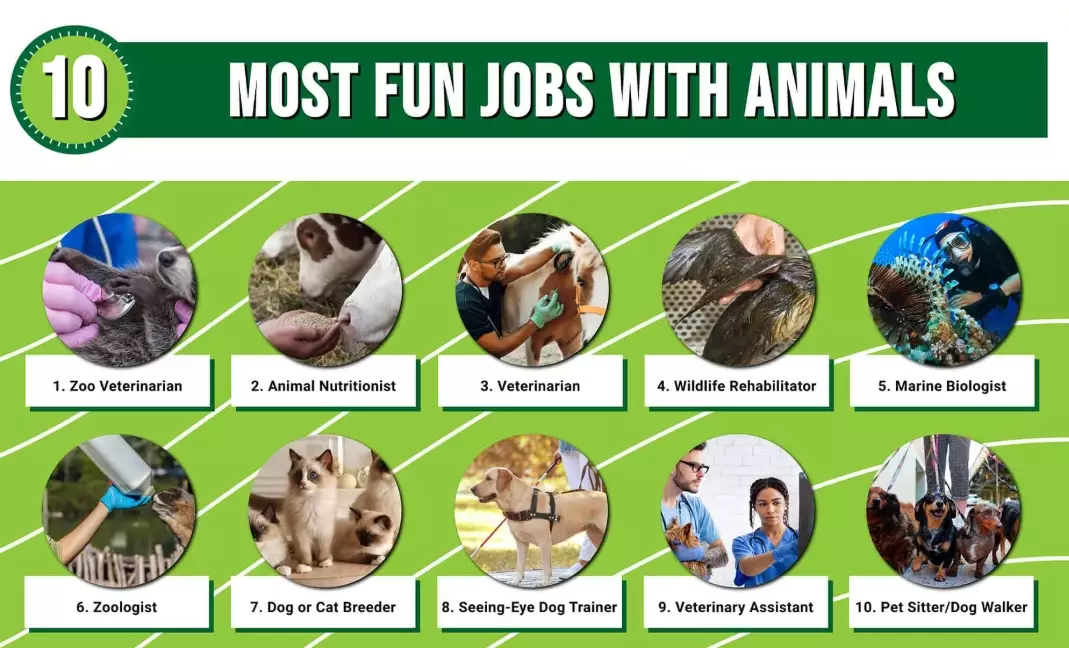
Your First Steps: How to Break into Animal Work
You don't apply for these jobs with just a resume. You build a resume for these jobs.
- Volunteer, but strategically. Don't just show up at the local shelter to walk dogs (though that's fine). Ask for projects: "Can I help with your social media?" "Can I observe a training session?" "Can I clean the surgical instruments?" Document what you learn.
- Get certified in something tangible. Pet First Aid & CPR (from Red Cross or similar). Fear Free certification for handling animals with minimal stress. These are cheap, quick, and show initiative.
- Find a mentor, not just a boss. When you volunteer or get an entry-level job, identify someone who knows more than you and ask specific questions. "How did you handle your first euthanasia?" "What's the one thing you wish you knew starting out?"
- Build a portfolio, even if you're not a photographer. Keep a journal of cases you observed, behaviors you logged, protocols you learned. It becomes talking points in interviews.
- Network in person. Go to local veterinary conferences, dog training workshops, or conservation meetups. The animal world is small. People hire who they know and trust.
Your Animal Career Questions, Answered
I love animals but I'm scared of blood. What animal careers can I do?
Plenty. Look away from the medical track. Animal training (dog, horse, service animals) involves minimal blood. Animal behavior consulting is about observation and strategy. Roles in animal welfare policy, advocacy, or education (like a museum or nature center educator) let you champion animals without clinical procedures. Grooming involves minor nicks but not deep trauma. The key is to identify the aspect of animals you love—is it their behavior, their conservation, their companionship?—and find a career that centers that.
What's the biggest mistake people make when switching to an animal career later in life?
They romanticize the work and underestimate the grunt work. A 40-year-old accountant used to a salary and an office can't just become a zookeeper because they love visiting the zoo. The path starts at the bottom—cleaning, low pay, physical labor. The successful career-changers I've seen treat it like an apprenticeship. They keep their day job and volunteer/part-time for a year to truly test the reality. They also leverage their previous skills. That accountant could aim for a role managing the finances of an animal sanctuary, merging their old expertise with their new passion.
Is a college degree absolutely necessary for working with animals?
It depends on the ceiling you want. For hands-on caretaking roles like senior keeper, veterinary technician, or wildlife biologist, a relevant Bachelor's degree is increasingly the baseline. For skilled trades like grooming or dog training, a degree is less important than a reputable certification and a proven portfolio of work. However, for any role involving research, management, or policy, a degree (often an advanced one) is the ticket. Think of it this way: the degree gets you past the HR filter for competitive jobs; proven skills and experience get you the job.
 Which animal careers actually pay a living wage without massive student debt?
This is the real question. Skilled trades with direct client payment often have the best debt-to-income ratio. A talented and business-savvy mobile groomer or dog trainer in a good market can clear $60,000-$80,000. Certified Veterinary Technicians in specialty or emergency hospitals in metropolitan areas can reach $60,000+. Government jobs like Conservation Officer or Animal Control Supervisor have set pay scales, benefits, and pensions, often requiring a degree but not doctorate-level debt. The lowest-paying sectors are typically non-profits (shelters, rescues, rehab centers) and entry-level zookeeping, where passion is often exploited as a currency.
How do I know if I'm really cut out for the emotional side of animal work?
You don't, until you're in it. The best test is to volunteer in the hardest environment you can find for at least 3-6 months. Work the Saturday shift at the busiest animal shelter, where you see surrenders and euthanasias. Assist in the ICU of an emergency vet clinic. If you can find meaning in providing comfort during suffering, if you can compartmentalize enough to do the job without taking every case home, you might be cut out for it. If it consumes your thoughts and ruins your week, that's a valid sign to look at the support or business-side roles. There's no shame in protecting your mental health; the field needs stable, long-term advocates in all roles.
The final word? This animal careers list is a starting point, not the finish line. Pick one or two paths that resonate. Then go out and get your hands dirty, one way or another. Talk to someone doing the job. Try it on for size through volunteering. The difference between a dream and a plan is research and action. Your path is out there.





Join the Conversation