Quick Navigation
So you've got a new snake. The enclosure is set up, the heat mat is humming, and you're just staring at this beautiful creature coiled in its hide. Your fingers are literally itching to pick it up. I get it, completely. The urge to interact, to bond, to just *hold* your new pet is overwhelming. But here's the thing—and I learned this the hard way with my first corn snake years ago—rushing this process is probably the single biggest mistake a new keeper can make. It's not about your schedule; it's about the snake's well-being. The question of when to start handling a new snake isn't just about a date on the calendar. It's about reading a room, or in this case, a terrarium.
This whole guide is built on one core idea: minimizing stress to build trust. Stress for a snake isn't just "being a bit nervous." It's a physiological state that can suppress their immune system, make them refuse food, and lead to a host of health problems. Your goal in the first few weeks isn't to make a friend; it's to not be seen as a predator. Let's break down how to do that.
The Golden Rule: Why the Waiting Period is Non-Negotiable
Almost every seasoned keeper and reputable care guide will tell you the same thing: leave the snake completely alone for the first 5 to 7 days. No handling, no poking, no rearranging the decor just for fun. Just top up the water and maybe spot clean if absolutely necessary. Why is this so critical?
Think about what your snake has just been through. It was shipped across the country, or driven home from an expo or pet store. It's been dumped into a completely new environment with unfamiliar smells, sights, and temperature gradients. Its whole world is upside down. For an animal whose primary instincts are to hide, eat, and not get eaten, this is massively stressful. A study on reptile stress physiology, like those referenced by the Association of Reptilian and Amphibian Veterinarians (ARAV), highlights how chronic stress can lead to increased susceptibility to disease. You're essentially giving its system time to reset and its cortisol levels (the stress hormone) to drop.
This initial quarantine period is also your baseline observation window. Is it drinking? Is it exploring at night? Where does it choose to thermoregulate? This quiet time gives you invaluable data about its normal behavior, so you can later spot when something is *actually* wrong.
The Biological Impact of Stress
It's easy to anthropomorphize and think a hiding snake is just shy. But stress in reptiles has real, measurable consequences:
- Appetite Suppression: A stressed snake will often go off food. No amount of wiggling a mouse will convince it otherwise.
- Immune Suppression: A compromised immune system opens the door for respiratory infections, scale rot, and parasites to take hold.
- Defensive Behaviors: Constant stress can make a snake more prone to striking, musking, or tail vibrating as a default, even when not truly threatened.
So, when considering when to start handling your new snake, the first answer is always: only after it has had a solid period of zero disturbance.
Is Your Snake Actually Settled? Key Signs to Watch For
The 7-day mark is a guideline, not a green light. A calendar doesn't decide if your snake is ready—your snake does. Before you even think about opening that enclosure door for handling, you need to see consistent signs of settlement. Here’s your checklist:
- It has eaten at least one meal reliably. This is the big one. A snake that eats is a snake that feels secure enough in its environment to perform a vulnerable act. I usually insist on two successful feeds before handling begins.
- It exhibits a regular activity cycle. You notice it moving about, exploring, and drinking during its normal active periods (usually evening/night for most common pet species).
- It uses its hides predictably. It thermoregulates by moving between warm and cool hides, rather than perpetually balled up in a corner out in the open (a sign of fear) or permanently buried under substrate.
- It displays calm, curious tongue flicks when you're near. Rapid, jerky tongue flicks or a frozen, staring posture can indicate alarm.
If you're ticking these boxes, you're in a good place. If not, give it more time. There's no penalty for waiting longer. A common question I see is, "What if my snake is hiding 24/7?" That's normal for many species! Ball pythons are famously reclusive. The key is that they should be hiding *in their hides*, not pressed against the glass in a panic.
Patience isn't passive. It's active observation.
The Step-by-Step Guide to Your First Handling Session
Alright, the wait is over. The snake has eaten twice, seems relaxed, and you're ready. Here’s how to approach that first handling session to maximize success and minimize setbacks.
Pre-Handling Prep
- Timing is Everything: Handle during the day when your snake is naturally more lethargic. Never handle right after feeding (wait 48-72 hours) or during a shed cycle (when their vision is impaired and they feel vulnerable).
- Wash Your Hands: Use unscented soap. You don't want to smell like food (like chicken or rodent) or a strong perfume, which can confuse or startle them.
- Plan Your Space: Do it over a soft, secure surface like a bed or a couch. Close the doors, block gaps under furniture. Assume your snake will try to explore and potentially make a dash for it.
The Approach and Lift
Move slowly and deliberately. Don't come straight down from above like a bird of prey—that's a predator's move. Approach from the side at snake-level if possible. Gently slide your hand under the mid-section of its body, using a confident but gentle touch. Support as much of its body as you can immediately. Avoid grabbing or restraining the head or neck. Let it flow over your hands. Its first reaction might be to tense up or move away quickly. That's okay. Stay calm.
During the Handling Session
Keep the first session short. I'm talking 5 minutes, max. The goal is a positive, non-threatening experience. Sit calmly and let the snake move through your hands. Avoid sudden movements or jerky reactions if it moves quickly. Don't put it near your face. Just let it get used to your smell, your warmth, and the sensation of being supported without threat.
What if it musks (releases a foul-smelling liquid) or strikes? Don't panic, and crucially, don't put it back immediately. If you do, you teach it that musking or striking makes the scary thing (you) go away. Gently complete your short session, then return it calmly. It will learn that defensive tactics don't change the outcome.
| Do's | Don'ts |
|---|---|
| Handle for 5-10 minutes initially. | Don't handle for longer than 15-20 minutes, even later on. |
| Support the snake's body fully. | Don't dangle the snake or hold it by just the head/tail. |
| Wash hands before and after. | Don't handle if you smell like food or other pets. |
| Return the snake gently to its hide. | Don't drop it or place it back abruptly after a defensive move. |
| Stay seated in a secure area. | Don't walk around the house with a new snake. |
Figuring out when to start handling a new snake is the first step, but knowing *how* is what makes it stick.
Handling Different Species: A Quick Comparison
Not all snakes are created equal in temperament. Your timeline and approach might shift slightly depending on who's in the tank. Here's a rough, experience-based rundown.
| Species (Common Pets) | Typical Temperament | Notes on Starting Handling |
|---|---|---|
| Corn Snake / Milk Snake | Generally curious, active, and forgiving. | Often the easiest for beginners. May be flighty at first but tame quickly. Good species to learn the basics of when to handle a new snake. |
| Ball Python | Docile but can be shy and stress-prone. | That initial settle-in period is crucial. They are famous for hunger strikes when stressed. Wait for two solid feeds. Be extra patient. |
| King Snake | Often food-driven and can be musky/feisty as juveniles. | Be confident during handling to avoid being mistaken for food. Their strong feeding response means clear handling signals (like hook training) are very useful. |
| Boa Constrictor (e.g., BCI) | Generally calm and slow-moving. | Even though they're often calm, their size as adults demands respect. Establishing calm, trust-based handling from a young age is paramount. The basic principles of when to start handling your new boa are the same, but consistency over years matters more. |
Remember, these are generalizations. Individuals have personalities. I've met feisty corn snakes and puppy-dog tame king snakes. Use the species guide as a starting point, but always let your individual animal's behavior be your final guide.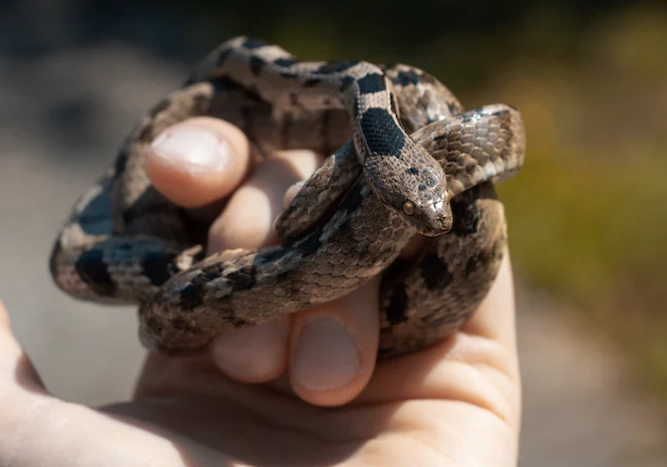
Troubleshooting Common Handling Issues
It rarely goes perfectly. Here are some common hiccups and what to try.
"My snake always tries to run away."
Flightiness is common, especially in active species like corns and ratsnakes. It's not aggression; it's a flight response. Keep sessions short, over a confined space. Let it move through your hands without restraint. Over time, as it learns you're not a threat, the speed will decrease. Don't chase it or try to corral it quickly—you'll just reinforce the fear.
"It struck at me!"
A defensive strike is a bluff. It's saying "BACK OFF!" It happens. The worst thing you can do is flinch violently and drop the snake. Stay calm. If you're bitten (usually a quick tag, not a feeding bite), don't yank your hand back. Gently disengage if needed, but try to continue the handling session calmly if you can. This teaches it that striking doesn't achieve its goal. Always check your husbandry—striking can be a sign of underlying stress from incorrect temps, humidity, or lack of security.
"It musks every single time."
Some snakes, especially garters, kings, and young snakes, are prolific muskers. It's a gross but harmless defense. Same principle: don't reward it by ending the session. Handle calmly, wash up afterwards. Most will grow out of it with consistent, calm handling.
The journey of figuring out when to start handling a new snake is filled with these small negotiations. You're learning its language.
Frequently Asked Questions (FAQs)
Let's tackle some of the specific questions that buzz around in a new keeper's head.
Can handling help with taming?
Yes, but it's not "taming" in the mammal sense. You're not domesticating it. You're habituating it to your presence and touch so it no longer perceives you as a threat. Consistent, calm, and positive handling sessions are the only way to achieve this. There's no shortcut.
How often should I handle my snake once started?
Start with once or twice a week for short sessions. After a month or so of good responses, you can increase to 2-3 times a week for 10-15 minutes. Less is often more. Snakes don't crave social interaction. They tolerate it. Overhandling is a source of chronic stress. I never handle any of my snakes more than every other day, and most only once or twice a week.
What if my snake never seems calm?
First, double-check all husbandry parameters (temps, humidity, hide security) using a reliable guide. The LLLReptile care sheets or species-specific forums are good places to start. If the environment is perfect, you may just have a naturally high-strung individual. Adjust your expectations. Some snakes will always be watchful and quick. Your goal then becomes calm coexistence, not a cuddly pet. There's dignity in that too.
Is there a "best age" to start handling?
With juveniles, the principles are identical—wait for settlement and successful feeding. Their smaller size can make them feel more vulnerable, so be extra gentle and supportive. The benefit of starting young is that they grow up fully habituated to you. An adult snake rehomed to you follows the same new-snake protocol, regardless of its past handling experience. You have to rebuild that trust in the new context.
So, when to start handling a new snake? It's not a mystery. It's a process dictated by observation, patience, and respect for the animal's stress signals. You're building a relationship that could last 20 years or more. What's a few extra days of waiting at the start? Do it right, and you'll have a calm, confident, and healthy companion for a very long time.
Be patient. Observe closely. Move slowly. That's the whole secret.
Join the Conversation