Quick Guide
So you're thinking about getting a snake. That's awesome. I remember when I first brought home my corn snake, a little guy named Ember. I was equal parts excited and completely clueless. The pet store employee gave me some basic advice, but let's be honest, it wasn't nearly enough. I made a few mistakes early on (who hasn't?), and I spent a ton of time digging through forums and old care sheets trying to piece together what I needed to know.
That's why I wanted to put this together. If you're looking for a clear, no-nonsense guide on how to take care of a snake for beginners, you've landed in the right spot. We're going to skip the fluff and get straight to what matters: setting up a great home for your new pet and keeping it healthy and happy. It's not as hard as some people make it seem, but getting the fundamentals right from day one is absolutely crucial.
Think of this as the guide I wish I had.
The Big Picture: Snake care boils down to a few key pillars: the right snake, the right home (enclosure), the right heat and humidity, the right food, and gentle, respectful handling. Nail these, and you're 95% of the way there.
First Things First: Picking Your First Snake
This is the most important decision you'll make. Jumping straight for a giant Burmese python or a fussy, exotic species is a recipe for stress, expense, and potential rehoming. For your first time, you want a snake that's forgiving, has straightforward needs, and generally has a calm temperament.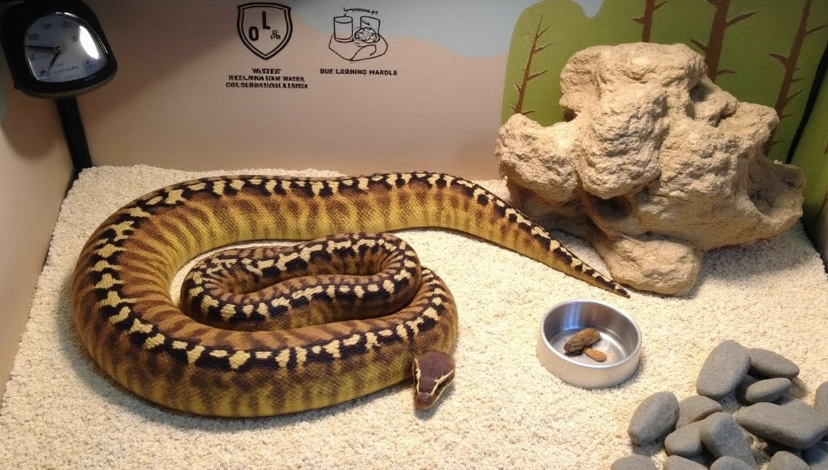
Here’s my personal top picks for beginner friendly pet snakes:
| Snake Species | Adult Size | Temperament | Key Care Point | Why It's Great for Beginners |
|---|---|---|---|---|
| Corn Snake | 4-5.5 feet | Typically very docile, curious | Needs a secure lid (escape artists!) | Incredibly tolerant of handling, huge variety of colors (morphs), almost always eats frozen/thawed rodents. |
| Ball Python | 3-5 feet | Calm, shy, known to "ball up" | Requires specific humidity (50-60%) | Slow-moving, thick-bodied and easy to hold. Can be picky eaters sometimes, but generally manageable. |
| California Kingsnake | 3-4 feet | Active, sometimes feisty as juveniles | Habitual eaters (will eat other snakes) | Extremely hardy, almost never refuses a meal. Their activity level is fun to watch. |
| Rosy Boa | 2-3.5 feet | Remarkably calm and slow | Prefers drier conditions | Small size means a smaller enclosure, very gentle disposition, simple dietary needs. |
I started with a corn snake, and for good reason. They're like the golden retrievers of the snake world—hard to upset, great eaters, and they come in every color imaginable. Ball pythons are wildly popular too, but their humidity needs can trip up a new keeper. If you're not prepared to monitor a hygrometer closely, maybe start with a corn or kingsnake.
Where you get your snake matters too. Avoid big chain pet stores for the animal itself. Their snakes are often stressed, may have parasites, and their lineage is a mystery. Look for a reputable breeder at a reptile expo or online. You'll pay a bit more, but you'll get a healthier animal, know its exact age and genetics, and the breeder is usually a fantastic resource for questions. The United States Association of Reptile Keepers (USARK) website can be a good starting point to understand responsible ownership and connect with the community.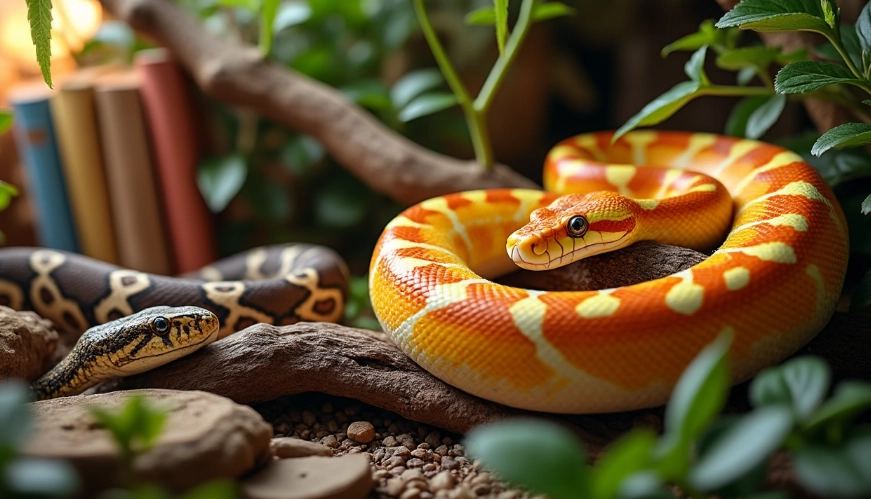
The Heart of It All: The Snake Enclosure Setup
Your snake's tank isn't just a box; it's its entire world. Getting the snake enclosure setup wrong is where most beginners struggle. You can't just throw a snake in a tub with a water bowl and call it a day (well, some breeders do, but that's not pet-keeping). We want to create a habitat.
Let's break down the essentials.
The Enclosure Itself: Glass, PVC, or Plastic?
Glass aquariums with screen lids are the classic choice. They're easy to find and great for display. The downside? They suck at holding heat and humidity. You'll be fighting to keep levels up, especially for a ball python. For a corn snake in a moderately humid home, it might be okay.
PVC or plastic reptile cages are the professional's choice. They're lightweight, excellent at retaining heat and humidity, and often come with built-in ventilation and cable ports. They cost more upfront but save you headaches (and electricity) in the long run. For a true, stable environment, they're worth the investment. A 40-gallon breeder tank or a 36"x18"x18" PVC cage is a good starting size for most of the beginner species listed above.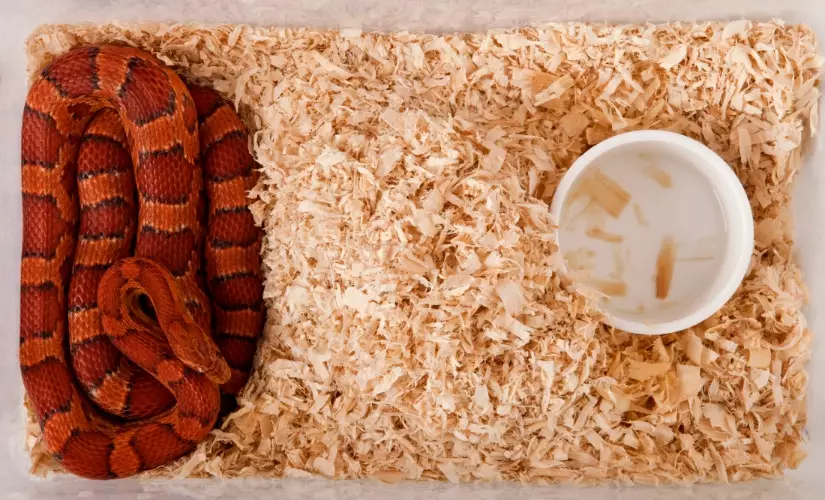
I used a glass tank for Ember for the first year. I was constantly spraying water and worrying about the heat lamp. Switching to a PVC enclosure was a game-changer. The humidity stayed steady, the heat was even, and he seemed visibly more relaxed. Just my two cents.
Heat: Non-Negotiable for a Cold-Blooded Creature
Snakes are ectotherms. They rely on external heat to digest food, stay active, and maintain their immune system. You must provide a temperature gradient.
- Warm side: 85-88°F (29-31°C). This is where you place a heat source under or over the enclosure.
- Cool side: 75-80°F (24-27°C). This gives the snake a place to cool down.
- Basking spot: A surface (like a flat rock under the heat lamp) can be a few degrees warmer than the ambient warm side.
Never use heat rocks. They are notorious for causing severe thermal burns. Just don't.
Your best options are an overhead ceramic heat emitter (produces heat, no light) or a deep heat projector paired with a high-quality thermostat. The thermostat is NOT optional. It plugs between the wall and the heater and regulates the temperature, preventing it from skyrocketing and cooking your pet. This is the single most important piece of equipment you will buy.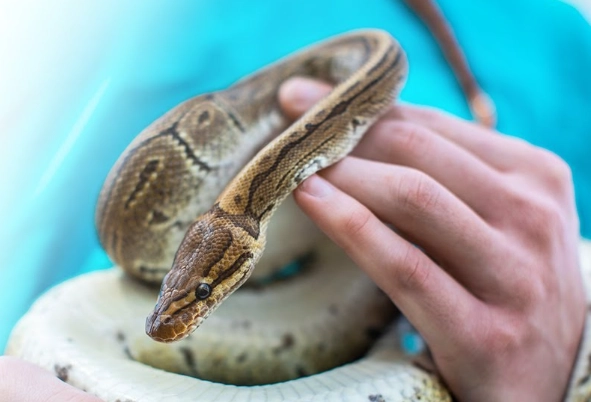
Light, Substrate, and Hides
Snakes don't need special UVB lighting to survive like some lizards do, but a regular day/night light cycle is beneficial for their rhythm. A simple LED light on a timer works wonders.
For substrate (bedding), avoid cedar and pine shavings—the oils are toxic. Good choices include:
- Aspen shavings: Great for corn snakes and other species that like to burrow. Doesn't hold humidity well.
- Coconut fiber or cypress mulch: Excellent for holding moisture, ideal for ball pythons and species needing higher humidity.
- Paper towels: The best choice for a quarantine or hospital enclosure. Boring, but super easy to clean and monitor.
Now, hides. A hide is a secure, enclosed space where your snake can feel completely safe. You need at least two: one on the warm side and one on the cool side. The snake should be able to curl up snugly inside. A hide that's too big is useless. I use simple, opaque plastic food containers with a door cut in the side. They're cheap, easy to clean, and snakes love them. Add some clutter—fake plants, branches—to break up sight lines and make the snake feel more secure moving around.
A stressed snake is a hiding snake. If your new pet is always tucked away, don't panic. It's adjusting. The goal is to provide the security so it feels safe enough to explore when it's ready.
The Day-to-Day: Feeding, Handling, and Health
Once your habitat is dialed in, the daily routine is pretty simple. This is where the rubber meets the road in learning how to take care of a snake for beginners on a practical level.
Feeding Your Snake
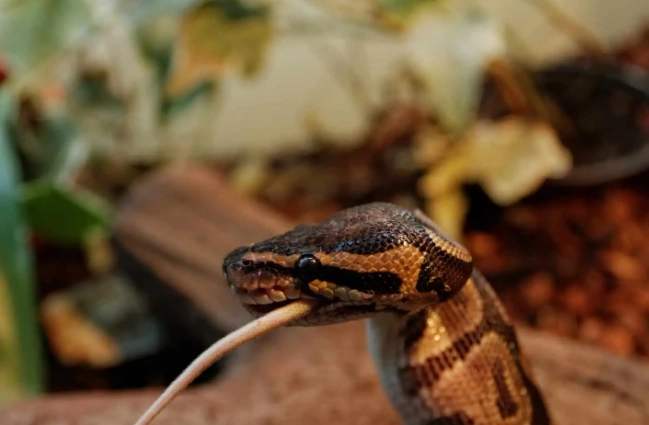
Almost all beginner snakes eat rodents. The golden rule: feed pre-killed, frozen-thawed (F/T) prey. It's safer (no risk of the mouse biting your snake) and more humane. You buy frozen mice/rats, thaw them in warm water, and offer them with tongs.
How often? A good general schedule:
- Hatchlings: Every 5-7 days.
- Juveniles: Every 7-10 days.
- Adults: Every 10-14 days.
The prey item should be slightly wider than the snake's body at its widest point. Don't handle your snake for at least 24-48 hours after feeding to allow for digestion—moving them can cause regurgitation, which is very stressful.
What if it won't eat?
It happens, especially with ball pythons. First, double-check your temperatures—if they're too low, they can't digest. Ensure the prey is fully thawed and warm (not hot). Try feeding at night. For really stubborn cases, you can try "braining" the rodent (a grim but effective method) or offering a different color or size. If a fast lasts more than a few months for an adult, or a few weeks for a baby, consult a reptile vet.
Handling Your New Friend
Give your new snake a full week to settle into its new home with zero handling. No peeking, no touching. Let it de-stress and find its hides.
When you start, be confident but gentle. Don't approach from above like a predator—come from the side. Support its body fully. Start with short, 5-10 minute sessions a couple of times a week, gradually increasing. Always wash your hands before and after.
If it musks (releases a stinky liquid) or strikes, don't take it personally and don't put it back immediately—that teaches it that biting or musking makes you go away. Hold it for another calm minute, then return it. They learn.
The key to handling is reading the snake's mood. If it's tense, moving quickly, or in a tight 'S' curve, it's best to leave it alone. Handle when it's calm and exploratory.
Spotting Health Issues
A healthy snake is alert, has clear eyes (unless in blue/shedding), a rounded body, and no visible ribs or spine. It should flick its tongue regularly when active.
Watch out for these red flags:
- Mites: Tiny black or red bugs moving on the snake or in the water bowl. They look like pepper. A nightmare. Requires thorough enclosure cleaning and mite treatment.
- Respiratory Infection (RI): Wheezing, clicking sounds, mucus in the mouth, holding head up high. Often caused by low temperatures or incorrect humidity.
- Stuck Shed: Patches of old skin not coming off. Almost always a humidity problem. Soaking in shallow lukewarm water and providing a rough surface (like a rock) can help.
- Scale Rot: Blister-like lesions or discolored, mushy scales on the belly. Caused by a dirty, perpetually wet enclosure.
Find a reptile-savvy vet before you have an emergency. The Association of Reptilian and Amphibian Veterinarians (ARAV) has a "Find a Vet" tool that is an invaluable resource. Book a check-up for your new pet within the first few months.
Common Beginner Questions (The Stuff You're Actually Wondering)
How do I know if my snake is stressed?
Constant hiding (beyond the initial adjustment period), frequent attempts to escape, refusal to eat, defensive striking, and excessive musking are all signs. Re-evaluate your setup—are the hides snug? Is the enclosure too open? Is the temperature correct?
My snake hasn't pooped in weeks. Is that normal?
Yes! Snakes have incredibly slow metabolisms. They often defecate shortly after a shed, or once every few meals. As long as they are eating and not showing signs of bloating or discomfort, don't worry.
What about shedding?
Your snake's eyes will turn a milky blue, and its colors will dull. This is the "blue" phase. It can't see well and may be irritable. Do NOT handle during this time. A few days later, the eyes will clear, and then within another day or two, it will shed. Ensure humidity is slightly higher during this process. The shed should come off in one complete piece, including the eye caps. If it doesn't, your humidity is too low.
Are snakes expensive to keep?
The startup cost is the highest. A proper enclosure, thermostat, heater, hides, etc., can run you $300-$500 easily. After that, the monthly cost is very low—just electricity and food (a few dollars per month). It's a high initial investment for a low-maintenance pet.
Can I keep two snakes together?
No. With very few, specific exceptions (like garter snakes), snakes are solitary animals. Cohabitation causes immense stress, competition for resources, and can lead to injury, disease transmission, and even cannibalism. One snake, one enclosure. Always.
Putting It All Together: Your First Month Checklist
To make this super practical, here's a timeline for your first month with a new snake.
- Before Bringing Snake Home: Enclosure fully set up, heated, and stabilized for at least 48 hours. Temperatures and humidity checked with digital gauges (throw away the sticky analog ones). All equipment running via a thermostat.
- Week 1: Snake arrives. Place it gently in the enclosure. Leave it completely alone. Change water daily. Observe from a distance.
- Week 2: Attempt first feed (if it's been at least 5-7 days since its last meal). If it eats, great! Wait 48 hours, then attempt first very short handling session. If it refuses food, don't panic. Remove the rodent after a few hours and try again in 5-7 days.
- Weeks 3 & 4: Establish a routine. Feed on schedule. Handle for short periods 2-3 times per week, avoiding feeding and shedding days. Perform spot cleaning of waste.
- End of Month 1: Do a full, deep clean of the enclosure. Replace substrate, disinfect hides and décor with a reptile-safe cleaner (like a dilute chlorhexidine solution). This is a good habit to get into monthly.
Learning how to take care of a snake for beginners is a journey. You will make mistakes. You'll forget to turn the heat mat back on after cleaning (I've done it), or you'll overreact to a missed meal. It's okay. The fact that you're reading a detailed guide like this means you're on the right track—you care about doing it well.
Snakes are fascinating, beautiful, and surprisingly interactive pets when their needs are met. They don't demand constant attention, but they do demand specific, consistent care. Get the basics of your snake enclosure setup rock solid, choose one of those beginner friendly pet snakes, and you'll be rewarded with a unique companion for many years to come. My corn snake Ember is going on eight years old now, and he's still as curious and calm as the day I got him. It's a deeply satisfying hobby.
Good luck, and welcome to the world of snake keeping!




Join the Conversation