Your Quick Navigation
- Before You Start: Is Your Cat Even a Good Candidate?
- Gathering Your Gear: What You'll Actually Need
- The Step-by-Step Process: No Sugarcoating Allowed
- Teaching the Flush: The Icing on the Cake
- Common Problems & Troubleshooting (The Not-So-Glamorous Part)
- Your Questions, Answered (The FAQ Section)
- The Final Scoop: Weighing the Pros and Cons
Let's be honest. The idea of your cat gracefully using the human toilet, maybe even giving the handle a polite paw-push afterward, sounds like something from a quirky YouTube video or a far-fetched pet owner's dream. I thought the same thing. But after successfully (and unsuccessfully) navigating this process with two very different cats, I'm here to tell you it's not just possible—it's a game-changer for some households. It also comes with a hefty dose of reality that most of those cheerful online guides gloss over.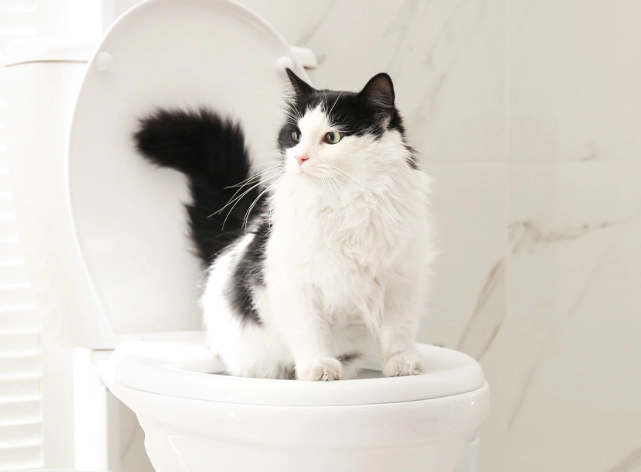
This isn't a magic trick. Learning how to train a cat to use the toilet and flush is a major behavioral modification. It requires patience, the right feline candidate, and a willingness to potentially clean up some very misplaced messes. If you're looking for a "three-day miracle," close this tab now. But if you're prepared for a project that could take weeks or months, and you want to say goodbye to litter dust, tracking, and buying heavy bags forever, you're in the right place.
Before You Start: Is Your Cat Even a Good Candidate?
This is the most critical step, and skipping it is the number one reason for failure. Toilet training is not for every cat. It can be stressful, confusing, and physically challenging for some. Let's break down the ideal profile.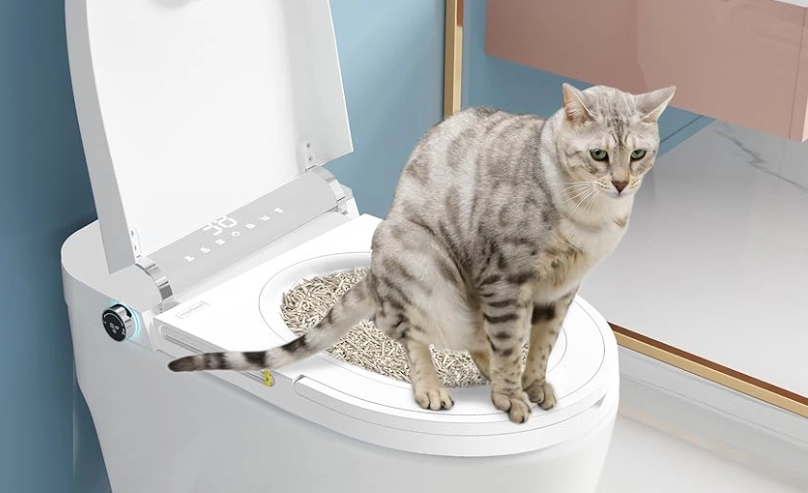
The Perfect Pupil: Traits of a Toilet-Trainable Cat
- Confident and Adaptable: Does your cat handle changes in routine, new furniture, or visitors without hiding for days? A confident temperament is non-negotiable.
- Physically Able: They need good balance, strong hind legs, and no arthritis or mobility issues. Senior cats or kittens are generally poor candidates.
- Comfortable in the Bathroom: If your cat already follows you in or is curious about the toilet, that's a great sign. A cat terrified of the flushing sound has a steep hill to climb.
- Already Uses the Litter Box Reliably: This should be a flawless behavior. Any existing litter box issues (like going outside the box) will only magnify.
The Hard No's: Cats You Shouldn't Even Try With
Seriously, consider this. The American Society for the Prevention of Cruelty to Animals (ASPCA) generally emphasizes providing choices that align with a cat's natural instincts. For some cats, a large, clean litter box is simply a better, less stressful option. It's worth reading their general stance on litter box preferences and problems to understand the foundation you're building on—or potentially working against.
Gathering Your Gear: What You'll Actually Need
You can't just point at the toilet and hope for the best. You need tools. The market is full of kits, but they all follow the same basic principle: a graduated system that transitions the cat from a litter box on the floor to a box over the toilet bowl, to a ring with a hole, and finally to nothing.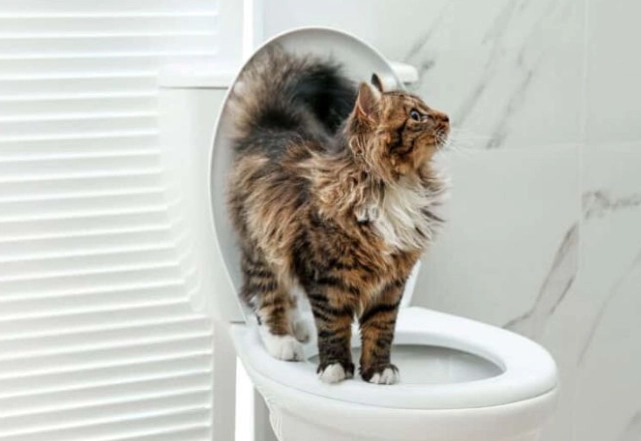
| Item | Purpose & Details | My Experience & Recommendations |
|---|---|---|
| Commercial Training Kit (e.g., CitiKitty, Litter Kwitter) | A multi-stage system with plastic rings/inserts that fit under your toilet seat. They have progressively larger holes. | I used CitiKitty. It's flimsy but gets the job done. The key is ensuring it's secure and doesn't wobble. A scared cat won't use a shaky toilet. |
| Flushable, Clumping Cat Litter | You must use a litter that is specifically labeled as safe for sewer/septic systems. Regular clay litter will clog your pipes. | I liked "Yesterday's News" unscented paper litter during transition. It's lightweight and truly flushable. Avoid heavily scented litters—the bathroom is small, and strong smells can be off-putting. |
| An Old Baking Sheet or Tray | To place under the training seat during early stages to catch any spills or misses. Trust me, you want this. | This was a lifesaver during Stage 2. It catches the litter they inevitably kick out and contains any accidents. Easy to clean. |
| Patience and Consistency | Your mindset. This is not a linear process. There will be setbacks. | More important than any product. If you get frustrated, your cat will sense it. Schedule training for a calm period in your life, not before a big vacation. |
Now, about the flush. The dream is an automatic flush. They do make motion-sensor toilet attachments designed for pets, but reviews are mixed. Some cats are terrified of the sudden sound. The more reliable, low-tech method is training them to associate a cue with you flushing for them, which we'll get to later.
The Step-by-Step Process: No Sugarcoating Allowed
Here's the meat of how to train a cat to use the toilet and flush. I'm laying out the stages clearly, but I'll also tell you where most people (including me the first time) mess up.
Stage 1: The Great Migration (Litter Box to Bathroom)
Start by moving your cat's regular litter box right next to the toilet. Don't change anything else. Just let them get used to doing their business in that new location for about a week. The goal is to make the bathroom the new normal potty spot.
Stage 2: Elevation Station (Raising the Box)
This is the first big hurdle. Over the next week, start raising the litter box a few inches each day until it is level with the toilet seat. You can use stacks of newspapers, magazines, or sturdy boxes. The training kit's tray often sits directly on the toilet rim at this point.
This stage is where balance becomes key.
Watch your cat closely. If they seem hesitant, shaky, or refuse to jump up, pause or even lower the box a bit. Rushing causes fear. My cat Leo didn't care. Mochi, on the other hand, looked at the elevated box like it was a torture device.
Stage 3: The Switch (Box to Training Seat)
Once the box is toilet-seat height and they're using it comfortably, swap it for the training seat (with the smallest hole insert) filled with a shallow layer of flushable litter. This seat should be securely fastened to the toilet.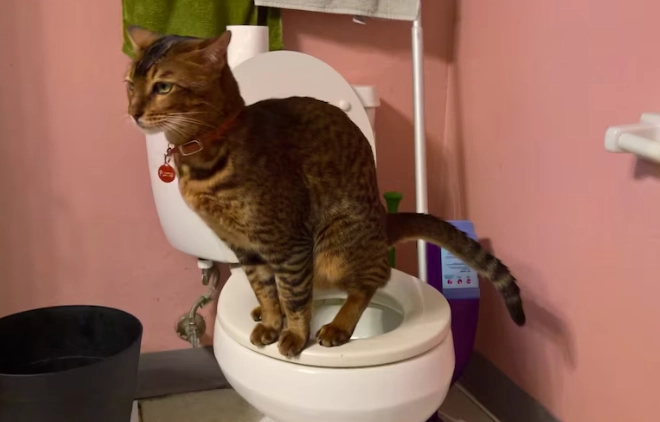
This feels different under their paws—more plastic, less litter. They might scratch at the sides confusedly. That's normal. Give them at least a week, or until they are perfectly comfortable, before even thinking about the next step.
Stage 4: The Hole Gets Bigger (The Gradual Reveal)
Now you follow your kit's instructions, switching to inserts with progressively larger holes. This is the slowest part. The rule of thumb: only move to the next larger hole after at least one week of perfect, accident-free use with the current insert.
What's "perfect use"? No accidents outside the seat, no hesitation, confident entry and exit. If you see any regression, go back a step for another week. This is not a race. The final insert is just a thin ring; the cat is now balancing on the toilet seat itself, with most of their waste going directly into the water.
Stage 5: Going Solo (Removing the Insert)
When they're masters of the final ring, remove it entirely. The toilet is now just a normal toilet (lid up, seat down). You might leave a tiny pinch of litter in the bowl initially as a visual cue, but soon, that's gone too.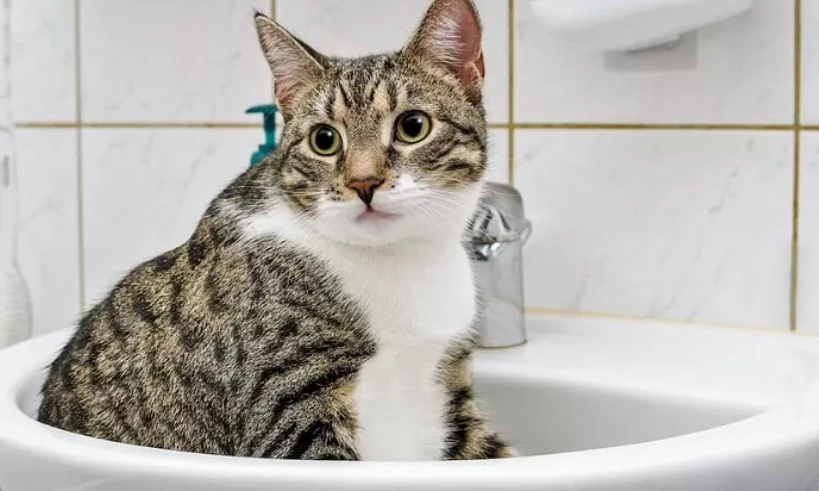
Congratulations. You have now learned the core of how to train a cat to use the toilet. But what about the flush? That's the advanced class.
Teaching the Flush: The Icing on the Cake
This part is more about association than complex training. The physical act of flushing is easy for a cat to perform—it's just pushing a lever or button. The hard part is getting them to want to do it, or at least tolerate it happening.
Method 1: The Manual Flush (Owner-Operated)
This is what I do. After Leo finishes, I wait a minute, then say a specific cue like "All done!" in a happy voice and flush. He has learned this routine. He does his business, I clean up any stray litter (with a dedicated toilet brush), say the cue, and flush. He now associates the sound with the process being complete and gets a treat afterward. He doesn't do it himself, but the result is the same: a clean toilet.
Method 2: Training the Self-Flush
If you want them to physically flush, you need to make the lever/button irresistible.
- First, get them comfortable with the sound while they are not on the toilet. Play with them near the bathroom, flush, give a treat. Desensitize them.
- Use a target stick or a dab of catnip on the flush handle to encourage investigation and pawing.
- The moment they touch it, even accidentally, click (if clicker training) and give a high-value treat.
- Gradually shape the behavior so they apply enough pressure to actually flush.
- Finally, start asking for the behavior after they use the toilet, linking the two actions.
This is tedious and not all cats will generalize the behavior. An automatic flusher is easier but can startle a cat mid-stream, which is a disaster. Personally, I think Method 1 is more than sufficient. The goal is a clean toilet, not a circus trick.
Common Problems & Troubleshooting (The Not-So-Glamorous Part)
Things will go wrong. Here's how to handle the messy realities.
- Your Cat Refuses a Stage: Go back to the previous stage for a longer period. If they still refuse after weeks, they may have hit their limit. Honor that. A cat using a training insert is still a win.
- Accidents on the Floor/Bathmat: This is a protest or confusion. Deep clean the accident spot with an enzymatic cleaner (like Nature's Miracle) to remove the scent. Go back one or two training stages to rebuild confidence. Never punish.
- Fear of the Toilet: If the flush or the bowl itself scares them, pause. Desensitize slowly with treats and play away from the toilet. The International Cat Care organization has excellent resources on managing feline fear and problem behaviour that apply here.
- Not Covering Waste: They can't bury it in water. Some cats adjust; others seem bothered. You can't really fix this instinct. It's a trade-off.
- Multiple Cat Households: This is tricky. You need one toilet per cat, plus one extra, which is rarely feasible. Train one cat at a time, and always keep a traditional litter box available as an option to prevent conflict. Frankly, in multi-cat homes, this process often causes more stress than it's worth.
Your Questions, Answered (The FAQ Section)
The Final Scoop: Weighing the Pros and Cons
Let's wrap this up honestly.
Learning how to train a cat to use the toilet and flush is a major commitment. It's not a trivial lifestyle hack. It worked brilliantly for me with one cat and failed miserably with another. The key takeaway isn't just the steps—it's the emphasis on reading your cat. Their comfort and well-being are the only metrics of success that truly matter. If this guide does nothing else, I hope it convinces you to go slow, watch closely, and be ready to abandon the project if it's not right for your feline friend. The dream of a flushing cat is fun, but a happy, stress-free cat is the real goal.
Good luck. You'll need a little bit of it, along with all that patience.

Join the Conversation