Your Snake Journey Map
I remember the first time I walked into a reptile expo. The smell of coconut husk, the gentle hum of heat lamps, and row upon row of clear tubs. In some, little heads poked out, tongues flicking. That's where the fascination started for a lot of us, isn't it? Pet snakes have this mysterious, elegant aura that's hard to resist. They're not your typical cuddly companion, and that's precisely the point.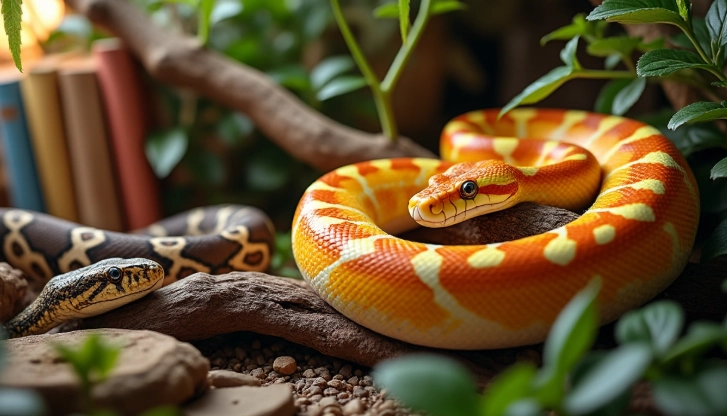
But here's the thing they don't always tell you at the expo: bringing home a pet snake is a long-term commitment to a creature with very specific, non-negotiable needs. It's not like getting a goldfish. Some species live for 20, even 30 years. That's a serious chunk of your life. This guide isn't here to sell you on the idea. It's here to give you the unvarnished, practical truth about snake ownership—the good, the challenging, and the downright fascinating—so you can decide if it's right for you and, if so, how to do it right.
Why even consider a snake as a pet? For starters, they're incredibly low-maintenance once the initial setup is correct. No daily walks, no barking, and they're hypoallergenic. Their feeding schedule is measured in days or weeks, not hours. For people with busy lives or allergies to fur, pet snakes can be a perfect, quiet companion. Plus, observing their unique behaviors—the way they explore, shed their skin, and sense the world—is a constant source of learning.
Picking Your First Snake: Don't Just Go for the Prettiest One
This is probably the most common mistake beginners make. You see a gorgeous, iridescent green tree python or a hulking, patterned boa and your heart skips a beat. I get it. But for your first foray into keeping pet snakes, you need to prioritize temperament, hardiness, and manageable size over sheer looks.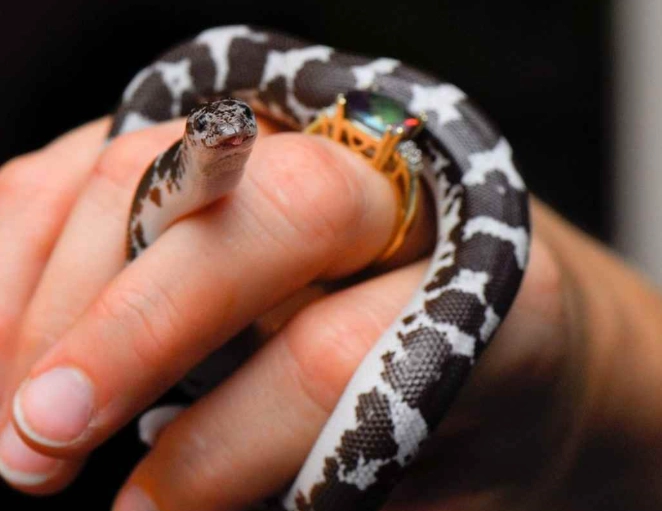
The best pet snakes for beginners are generally docile, slow-growing, and have straightforward care requirements. They forgive the occasional beginner error, which trust me, you will make. Let's break down the top contenders, and I'll throw in my personal two cents on each.
| Species (Common Name) | Adult Size | Temperament | Key Care Need | My Honest Take |
|---|---|---|---|---|
| Corn Snake | 4-5.5 feet | Exceptionally docile, curious | Secure enclosure (they are escape artists) | The golden retriever of snakes. Almost impossible to go wrong. Boring to some, perfect for others. |
| Ball Python | 3-5 feet | Shy, gentle, known to "ball" up | Higher humidity (50-60%) and consistent heat | Incredibly sweet, but notorious for going on hunger strikes for no apparent reason. Tests your patience. |
| California Kingsnake | 3-4 feet | Active, inquisitive, sometimes feisty as juveniles | Sturdy lid (strong and clever) | A fantastic eater and fun to watch. Can be a bit nippy when young, but usually calms down beautifully. |
| Rosy Boa | 2-3.5 feet | Placid, slow-moving | Low humidity, simple heat gradient | An underrated gem. Stays small, is utterly relaxed, and is probably the easiest on this list. Not as flashy, though. |
| Garter Snake | 2-4 feet | Active, diurnal (day-active), can be kept in groups | Varied diet (fish, worms, rodents) | Watching them is like watching a nature documentary. More work diet-wise, but hugely rewarding and social. |
See that last column? That's the stuff you only learn from keeping them or talking to people who have. The ball python hunger strike, for instance, has caused more beginner anxiety than anything else. You'll panic, thinking you've done everything wrong, but often it's just a seasonal quirk. Being prepared for that mentally is half the battle.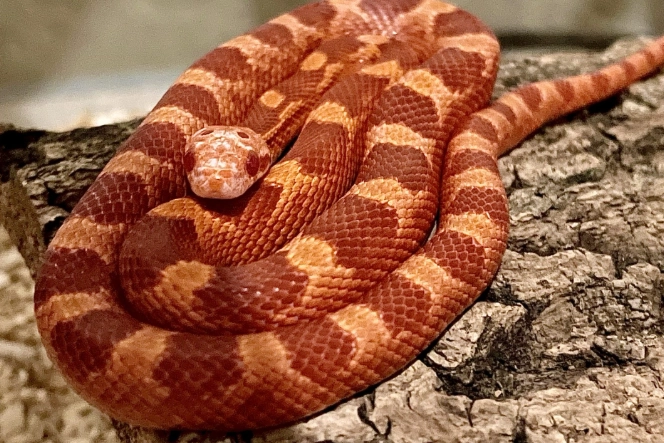
A quick but vital word on where to buy: Always seek out a reputable breeder or a specialized reptile rescue. Avoid chain pet stores for live animals if you can. Breeders know the lineage, can guarantee captive-bred status (which is ethical and healthier), and are a wealth of ongoing advice. A good resource to find ethical breeders is through established reptile organizations, though you'll need to do your own vetting. The Association of Zoos and Aquariums (AZA) website, while focused on larger institutions, can lead you to conservation-minded networks where ethical breeders often participate.
Building a Snake Home: It's More Than Just a Tank
Calling it a "cage" or "tank" doesn't do it justice. You're creating a micro-habitat, a biosecure slice of the environment your particular snake evolved for. Get this part wrong, and nothing else will work. The snake will be stressed, stop eating, and get sick. It's that fundamental.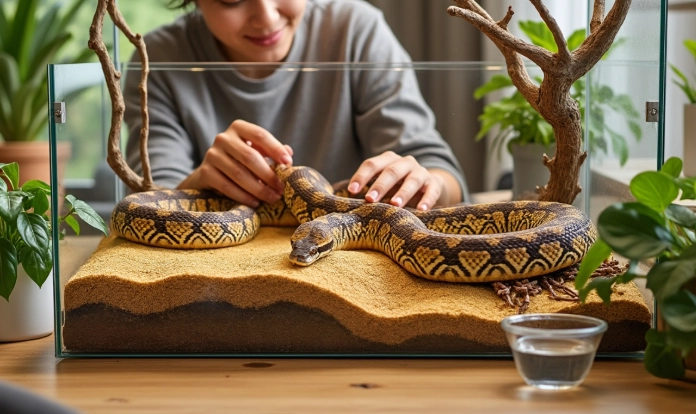
The Enclosure Itself: Size and Security
Forget the old "length + width should equal the snake's length" rule. It's outdated. More space is almost always better, provided it's cluttered. A young snake in a massive, empty vivarium will feel exposed and scared. The key is enrichment—hides, branches, fake plants.
For most beginner pet snakes, a 40-gallon breeder tank (36"x18"x16") is a good starting point for an adult, but a 4-foot corn snake would appreciate a 4-foot long enclosure. Front-opening enclosures made of PVC or wood with glass panels are fantastic. They retain heat and humidity better than all-glass aquariums, which are drafty and stressful for the snake. And the lid? It must lock. Snakes are Houdinis. I've found them in dresser drawers.
The Holy Trinity: Heat, Light, and Humidity
This is the technical heart of snake care. Snakes are ectotherms. They don't make their own heat; they rely on you to provide a temperature gradient.
The Gradient is Non-Negotiable: One end of the enclosure must be warm (the "basking" or warm side), and the other end must be cool. This allows the snake to thermoregulate—to move its body to precisely the temperature it needs for digestion, activity, or rest. A snake without a gradient is a snake in metabolic distress.
- Heat: Use an overhead heat source like a Deep Heat Projector or a Ceramic Heat Emitter on a thermostat. Always, always use a thermostat. An unregulated heat mat can and will cause severe burns. The warm side should be 85-88°F (29-31°C), and the cool side 75-78°F (24-26°C). Measure at the substrate level, where the snake is.
- Light: Snakes don't require UVB light to survive, but a growing body of evidence suggests it benefits their immune system, coloration, and overall well-being. A low-output UVB light, on a 12-hour cycle, is a great addition. It also helps define a day/night cycle.
- Humidity: This is species-specific and critical for healthy sheds. A ball python needs 50-60%, a corn snake 40-50%. Measure with a digital hygrometer (throw away the analog stick-on ones, they're garbage). Maintain humidity through a large water bowl, moisture-holding substrate like coconut fiber, and occasional misting.
You'll mess this up at first. The humidity will plummet, or the heat lamp will blow. It's okay. The key is monitoring. Get digital probes. Check them daily.
Furnishing for Safety and Sanity
At a minimum, you need:
- Two Identical Hides: One on the warm end, one on the cool end. Snakes feel secure in snug, enclosed spaces. If the hide is only on the warm side, they'll choose security over thermoregulation and overheat.
- A Sturdy Water Bowl: Large enough for the snake to soak in if it chooses, heavy enough not to tip. Change water daily.
- Substrate: Avoid cedar and pine shavings—their aromatic oils are toxic to reptiles. Aspen shavings, coconut husk, or cypress mulch are safe, affordable choices for many common pet snakes.
- Clutter: Fake plants, branches, cork bark rounds. This breaks up sight lines, gives climbing opportunities (even for non-arboreal species), and reduces stress.
The Feeding Conversation (It's About Frozen Mice)
This is the part that gives most people pause. Yes, you will be feeding your pet snake pre-killed rodents. Frozen-thawed (F/T) is the only safe, ethical, and convenient method. Live feeding risks severe injury to the snake from bites and scratches and is unnecessary.
The process is simple: buy frozen mice/rats of appropriate size (the prey item should be no wider than the snake's widest part), thaw it in the fridge overnight, warm it up with warm water or a hairdryer (never a microwave), and offer it with long feeding tongs.
How often?
Juveniles eat every 5-7 days. Adults eat every 10-14 days. It feels infrequent because it is. Their metabolism is slow.
What if my snake refuses to eat?
First, don't panic. Check your husbandry: temperatures, humidity, security. Is the snake about to shed (its eyes will look milky blue)? If a ball python skips a meal or three, it's often normal. Just remove the uneaten prey after 24 hours and try again next scheduled feeding day. Never leave a live rodent unattended with a snake.
Health and Handling: Reading the Signs
A healthy snake is alert, has clear eyes (except when in "blue" before a shed), a firm, rounded body, and breathes quietly with its mouth closed. It should shed its skin in one complete piece, including the eye caps.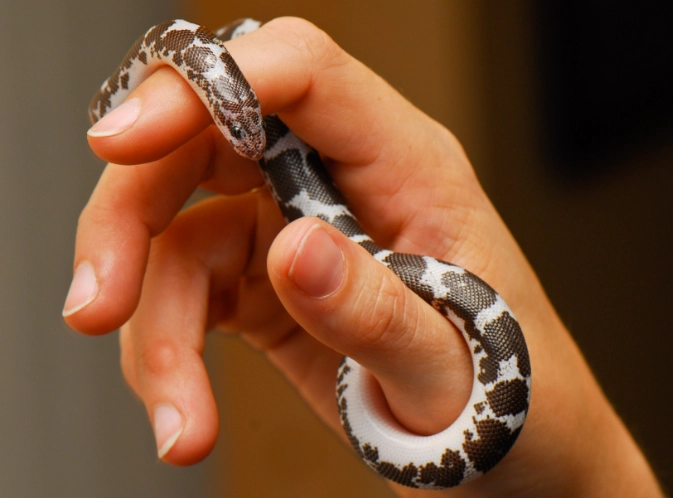
Red Flags That Mean "Vet, Now"
- Wheezing, bubbling at the mouth, or holding mouth open: Signs of a Respiratory Infection (RI), often caused by incorrect temperature or humidity.
- Persistent regurgitation: Not just refusing food, but eating and then throwing it up.
- Stargazing: An unnatural twisting of the head and neck, looking upwards. A serious neurological symptom.
- Mites: Tiny black or red specks moving on the snake or in the water bowl. A major nuisance that requires full enclosure treatment.
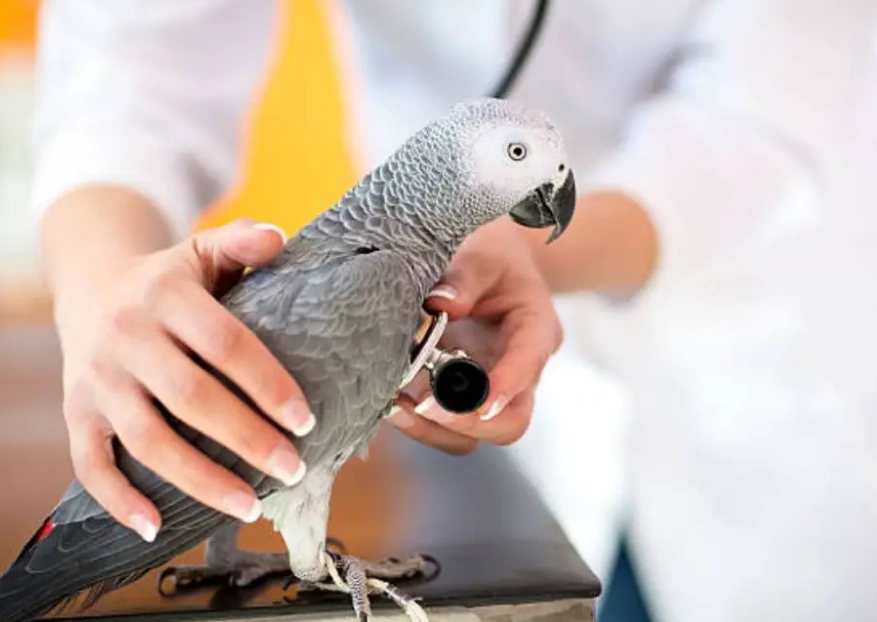
Find an exotic veterinarian who sees reptiles before you get the snake. Don't wait for an emergency. The Association of Reptilian and Amphibian Veterinarians (ARAV) has a "Find a Vet" tool that is invaluable.
Handling Your Pet Snake
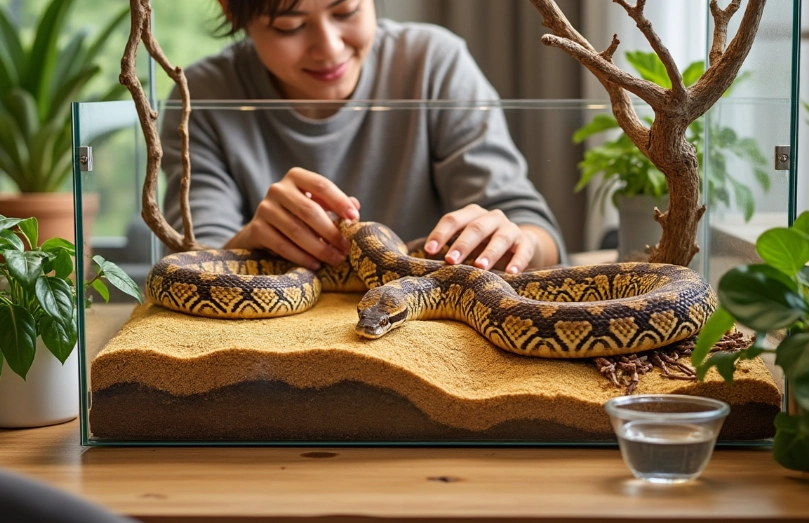
Wait at least 48 hours after a successful feeding to allow for digestion. Approach calmly from the side, not from above (like a predator). Support its body fully. Start with short, 5-10 minute sessions a couple of times a week for a new snake. Never handle during shed—they can't see well and are more defensive.
The goal is not to "tame" in the mammalian sense, but to habituate. You want the snake to learn you are not a threat. Some will always be more flighty, others will become calm lap-snakes (well, arm-snakes). Respect their individual personality.
Diving Deeper: Common Questions from Future Snake Keepers
The Long-Term View: It's a Journey
Keeping pet snakes isn't a hobby you just set and forget. You'll develop a routine: spot-cleaning waste, refreshing water, checking gauges. You'll watch your snake grow from a pencil-thin noodle to a powerful, graceful adult. You'll learn its quirks—maybe it loves to climb on a certain branch after dark, or it always soaks before a shed.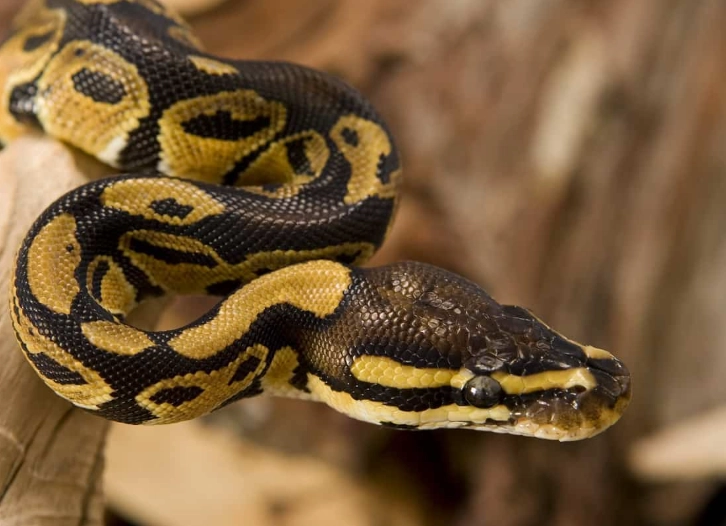
There will be frustrating moments. The escaped feeder mouse you have to catch at midnight. The perfect shed that somehow gets tangled. The time you realize your hygrometer was broken for a week.
But there's a profound peace in it too. In a world of constant noise, sitting and watching a snake methodically explore its world is a form of meditation. You become a steward of a tiny, silent ecosystem. The responsibility is real, but so is the unique connection.
If, after all this, you're still excited and ready for the commitment, then welcome. Do your research, set up the tank perfectly before the animal arrives, and find that good breeder. The world of pet snakes is deep, fascinating, and full of people who started with that same flicker of curiosity at a reptile expo.
Just remember—start simple, prioritize the animal's needs over your wants, and enjoy the slow, quiet ride.



Join the Conversation