Let's cut to the chase. A great reptile heating setup isn't a luxury; it's the difference between a pet that merely survives and one that thrives, displays vibrant colors, eats eagerly, and behaves naturally. Get it wrong, and you're looking at digestive issues, respiratory infections, and a lethargic, unhappy animal. I've seen it too many times in my years keeping everything from bearded dragons to ball pythons. The biggest mistake? Thinking a single heat lamp slapped on top of a tank is enough. It's not. You're building a complete thermal environment.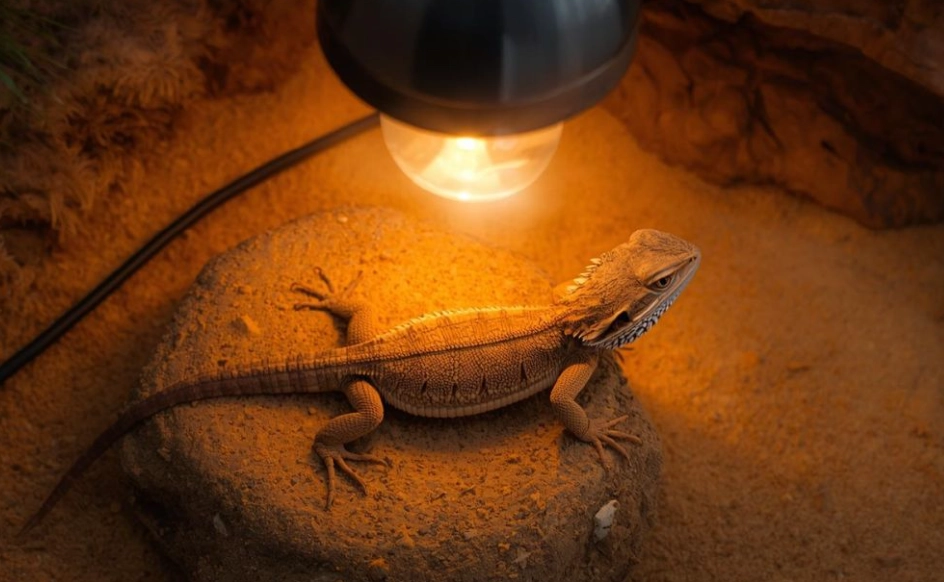
What You'll Learn Inside
- Why Getting Heat Right is Non-Negotiable
- The 3 Non-Negotiable Components of Any Setup
- Heating Device Showdown: Pros, Cons & Best Uses
- Thermostat Mastery: The Brain of Your Operation
- Step-by-Step: Building a Perfect Thermal Gradient
- Quick-Reference: Heating Needs by Species
- Troubleshooting & Expert FAQ
Why Getting Your Reptile's Heat Right is Non-Negotiable
Reptiles are ectotherms. They don't generate internal heat like we do. Their entire physiology—digestion, immune system, metabolism—depends on absorbing heat from their environment. A proper setup replicates their natural world, offering a thermal gradient. This means a warm end (the "basking zone") and a cool end, allowing the animal to self-regulate its body temperature by moving between them.
Without this gradient, you force a terrible choice: stay warm and never digest properly, or cool down and become sluggish. It's a primary cause of stress and illness. The goal isn't just to make the tank "warm"; it's to create a miniature, controllable slice of their native habitat.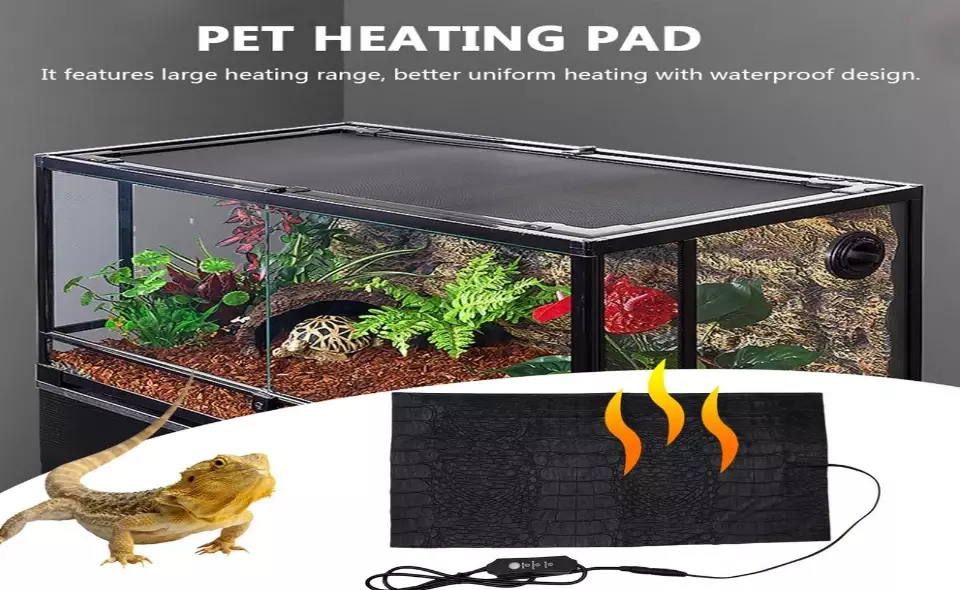
The 3 Non-Negotiable Components of Any Top-Tier Setup
Every effective heating system, regardless of your pet, rests on three pillars. Miss one, and the whole structure is shaky.
1. The Heat Source (The Engine)
This is your lamp, mat, or panel. Its job is to produce heat. But not all heat is created equal. Some provide infrared-A and B (like the sun), which penetrates tissue for deep warmth. Others just warm the air. Your choice here is critical and depends heavily on your animal's needs.
2. The Thermostat (The Brain)
This is the most important piece of equipment you will buy, full stop. A thermostat plugs into the wall, your heat source plugs into it, and a probe measures the temperature, turning the heat on and off to maintain your set point. Running a heat source without a thermostat is like driving a car without a brake or speedometer—dangerous and unpredictable. It prevents overheating (which can be fatal in hours) and ensures consistency.
3. Accurate Thermometers (The Eyes)
You need at least two reliable digital thermometers with probes: one for the warm end/basking spot surface, and one for the cool end ambient air. The cheap stick-on analog gauges are notoriously inaccurate, often off by 10°F or more. Trusting them is a recipe for failure. Digital hygrometer/thermometer combos are inexpensive and essential.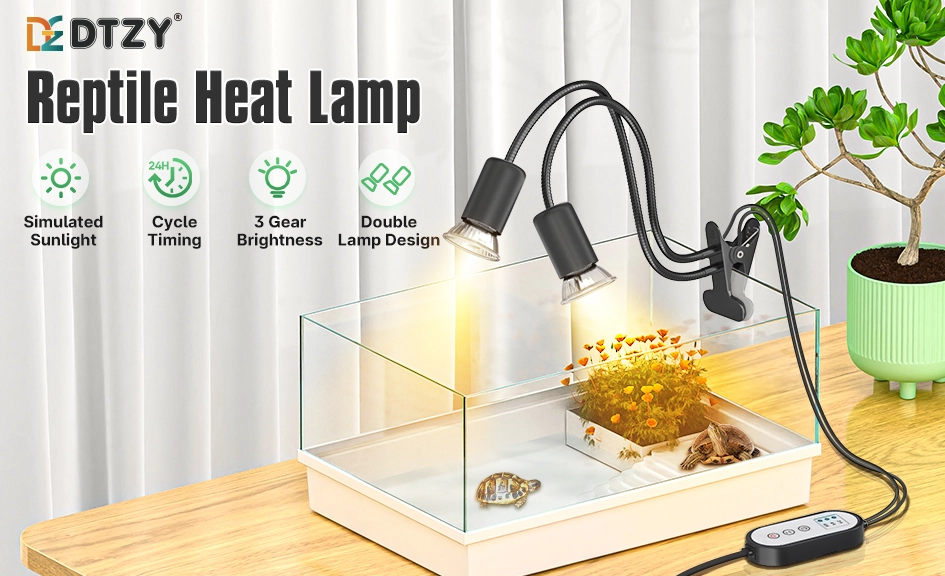
Heating Device Showdown: Pros, Cons & Best Uses
Here’s where we get into the nitty-gritty. Let’s break down the common options. I’ve included some personal opinions here—not every device is created equal.
>Emits infrared-A & B without visible light. Can be used day or night. Excellent for penetrating warmth.>Must be regulated by a thermostat. Does not effectively heat the air in larger tanks. Should be placed on the side or back of glass tanks, not the bottom, to prevent substrate fires and allow for better heat dispersal.>Safe, efficient, wide, gentle heat spread. Mounts to ceiling. Great for humidity-sensitive setups as it doesn't dry air. >Higher upfront cost. Best paired with a basking light for species that need a focused hot spot.| Device Type | Best For | Key Advantages | Limitations & Warnings |
|---|---|---|---|
| Halogen Flood Lamp | Daytime basking for desert species (Bearded Dragons, Uromastyx, some Monitors). | Produces the most natural, sun-like infrared-A & B for deep tissue warming. Encourages natural basking behavior. Highly efficient. | Must be used with a dimming thermostat (pulse proportional won't work well). Only for daytime heat. Can be very hot. |
| Deep Heat Projector (DHP) | 24-hour heat or daytime basking for species sensitive to light (Leopard Geckos, Ball Pythons, nocturnal animals). | More expensive than ceramic heaters. Still needs a thermostat (dimming or pulse). | |
| Ceramic Heat Emitter (CHE) | Supplemental or 24-hour ambient heat increase without light. | Inexpensive, long-lasting, no light emission. Good for raising the overall ambient temperature. | Produces only infrared-C, which only heats the surface of the skin/air. Can severely dry out the enclosure if not paired with humidity management. I find them overused. |
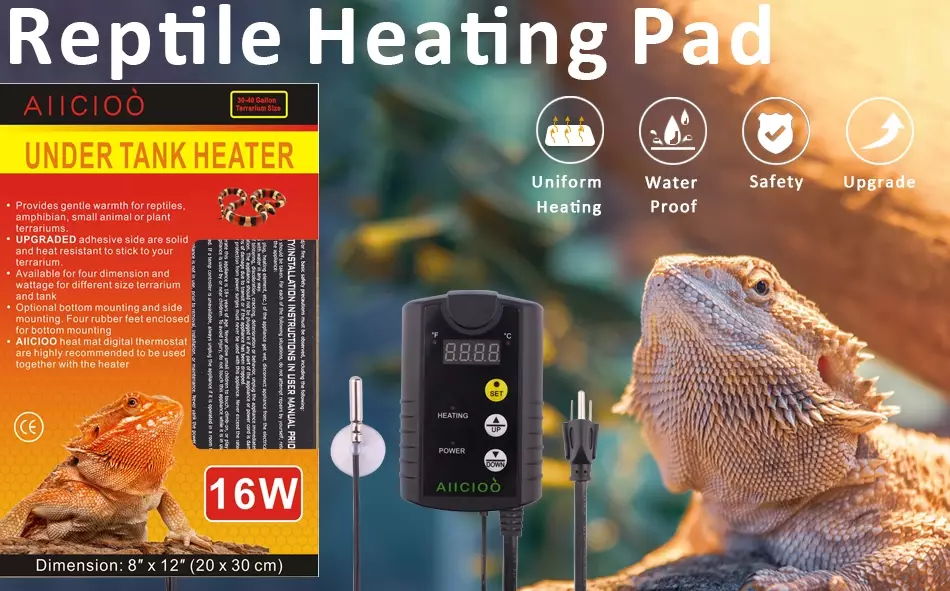
| Under Tank Heater (UTH) / Heat Mat | Supplemental belly heat for tropical or nocturnal species (Snakes, Crested Geckos). Raising ambient temps in small enclosures. | Creates a warm surface for resting/digestion. Inexpensive. | |
| Radiant Heat Panel (RHP) | Primary heat for larger enclosures, PVC cages, or arboreal setups. Excellent for maintaining ambient temps. |
My personal go-to for most diurnal, basking lizards is a halogen flood lamp on a dimming thermostat. It just works better for their physiology. For my ball python's PVC enclosure, I use a radiant heat panel set to 80°F for ambient, with a very low-wattage halogen on a dimmer for a mild 88°F surface basking spot.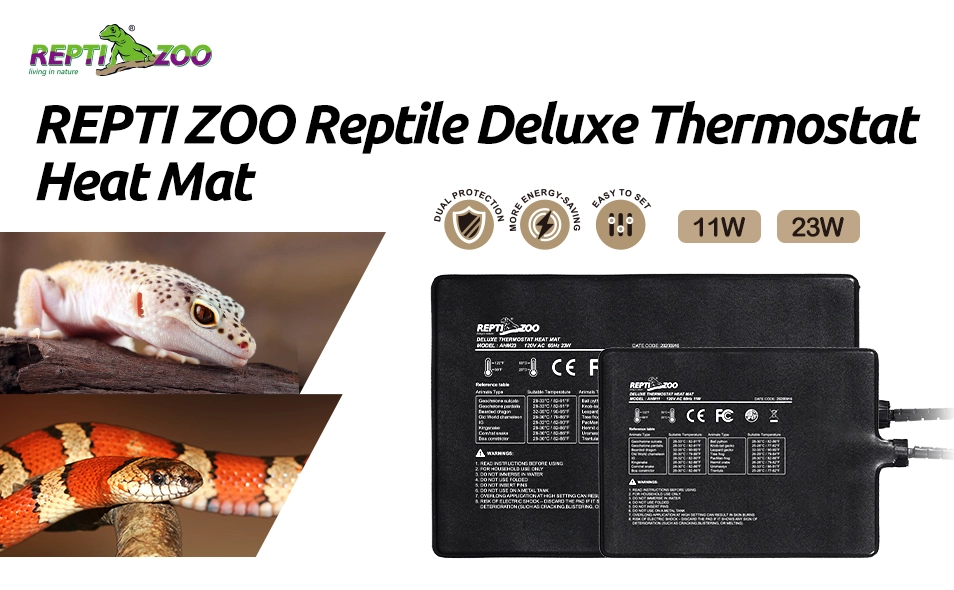
Thermostat Mastery: The Brain of Your Operation
You have three main types. Choosing the right one matters for your heat source and your sanity.
On/Off Thermostat: The basic model. It turns the device fully on until the temperature is reached, then fully off. It's fine for heat mats and some ceramic heaters, but the constant clicking on/off can shorten the life of light bulbs and create temperature swings.
Pulse Proportional Thermostat: Sends quick pulses of power to regulate output. Works well with radiant heat panels and ceramic heaters. Not ideal for lights, as the pulsing can be visible and annoying.
Dimming Thermostat: The gold standard for light-emitting heat sources (halogens, DHPs). It smoothly increases or decreases the power, like a dimmer switch, to maintain a precise temperature. This creates a stable basking spot and mimics the natural warming and cooling of the sun. It's more expensive but worth it for primary basking lights.
Brands like Herpstat (USA) and Habistat (UK) are industry leaders for dimming and pulse stats. For a simple on/off for a backup heat mat, an Inkbird from Amazon can do the job.
Step-by-Step: Building a Perfect Thermal Gradient
Let's walk through setting up a 120-gallon tank for a bearded dragon, a common scenario.
- Position the Heat Source: Install your halogen flood lamp in a dome fixture on one side of the mesh top, positioned over a sturdy basking platform (rock, slate).
- Set Up the Thermostat: Secure the thermostat probe 2-3 inches below the lamp, hanging directly over the basking platform. Plug the lamp into the dimming thermostat, and the thermostat into the wall.
- Place Thermometers: Put one digital thermometer probe directly on the surface of the basking spot. Place another in the coolest corner of the tank, away from all heat sources.
- Power On & Dial In: Set the thermostat to a trial temperature (say, 100°F). Wait 2-3 hours for everything to stabilize. Check the surface thermometer on the basking spot. It might read 105°F or 95°F. Adjust the thermostat setting up or down until the surface reads your target (100-110°F for a bearded dragon).
- Check the Cool End: Your cool-end thermometer should read between 75-80°F. If it's too high, you may need better ventilation, a smaller wattage bulb, or to move the lamp. If it's too low, you might need a secondary, low-wattage heat source (like a small CHE on its own thermostat) on the cool side to keep ambient temps up, but this is less common.
The animal now has a choice: 105°F on the rock, or 78°F in the leafy hide on the other side.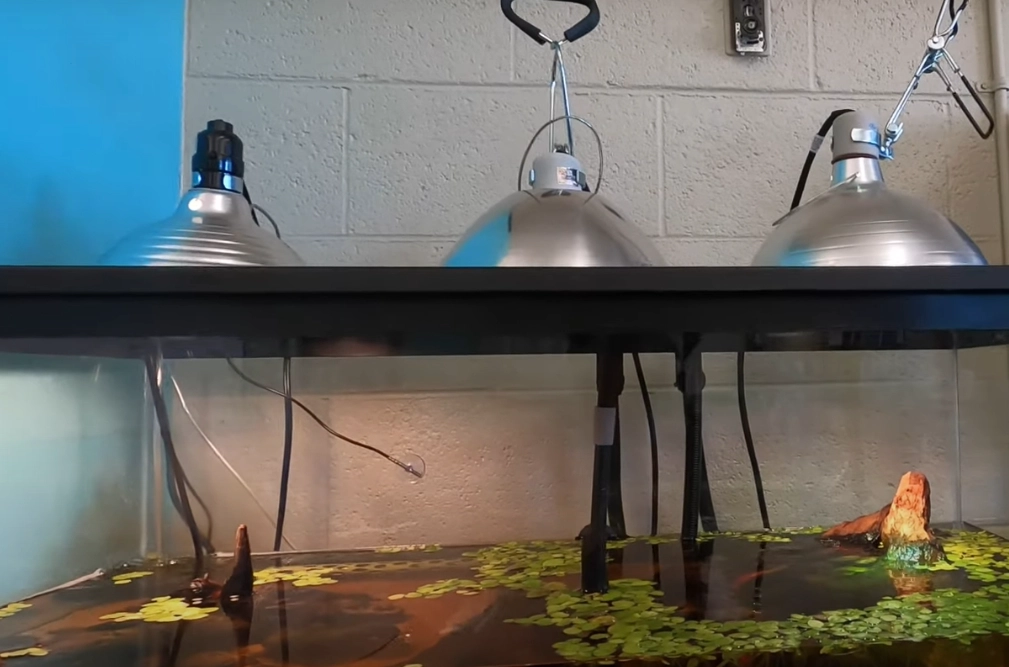
Quick-Reference: Heating Needs by Species
Here’s a cheat sheet. Always double-check with species-specific care guides from reputable sources like ReptiFiles or the AVMA.
- Bearded Dragon: Basking surface: 100-110°F. Cool side: 75-80°F. Use a halogen flood lamp.
- Leopard Gecko: Basking surface: 88-92°F. Cool side: 70-75°F. A low-wattage halogen or DHP over a slate hide works well. Avoid bright white lights at night.
- Ball Python: Warm hide/ambient: 88-92°F. Cool hide/ambient: 75-80°F. No need for a scorching basking spot. An RHP or DHP for ambient with a UTH under the warm hide (on a thermostat!) works.
- Crested Gecko: Ambient temperature range: 72-78°F. They need no additional heat if your room stays in this range. If your house is colder, a very low-wattage CHE or heat mat on the side of the tank, regulated to never exceed 78°F, is sufficient.
- Red-Eared Slider (Aquatic): Basking dock surface: 90-95°F. Water temperature: 75-78°F. Use a focused halogen or reptile-specific basking bulb over the dock, and an aquarium heater in the water.
Troubleshooting & Expert FAQ
My heat mat doesn't feel very warm to the touch, even with the thermostat on. Is it broken?
Probably not. Heat mats are designed to reach safe surface temperatures (usually 100-110°F max) to prevent burns, not to feel hot to your hand. The real test is with an infrared temperature gun or a probe thermometer sandwiched between the mat and the glass/tank floor. If it's reading within a few degrees of your thermostat set point, it's working. Their purpose is to create a warm surface, not to heat the air.
I'm using a ceramic heat emitter, but my snake's shed is coming off in patches and the humidity is low. What's wrong?
This is the classic CHE downside. They are incredibly drying. The infrared-C they emit heats objects and air directly, which evaporates moisture rapidly. You're fighting a losing battle trying to spray enough. Consider switching to a Deep Heat Projector or Radiant Heat Panel, which are less drying. Alternatively, drastically increase your humid hide's moisture content and consider partially covering the screen top to retain humidity.
 Can I use a human heating pad or a heat rock for my reptile?
No, and absolutely not. Human heating pads are not designed for constant use and can overheat or cause fires. So-called "heat rocks" are notoriously dangerous. They often develop hot spots that can cause severe thermal burns on a reptile's belly, as the animal cannot sense the burn until it's too late. They are unreliable and should be avoided entirely. Stick with products designed and tested for reptile use, always connected to a thermostat.
How do I heat a very large custom-built enclosure or a room full of cages?
For large custom enclosures (6ft+), a combination of a Radiant Heat Panel for primary ambient heat and a focused halogen for a basking spot is most effective. For a reptile room, the most efficient method is to heat the room itself to the required cool-side temperature (e.g., 75°F) using a space heater with a built-in thermostat. Then, each enclosure only needs its own basking light to create the warm-side gradient. This is easier on your electric bill and provides a stable background temperature.
My thermostat probe keeps falling. How should I secure it?
A dangling probe is a problem. Use a suction cup with a clip, zip-tie it to a fixed piece of decor or cord, or use a small blob of hot glue (on the probe wire, not the sensor tip) to attach it to the side of the tank or the ceiling. The key is to fix it in the exact spot you need to control, ensuring it's not in direct contact with the heat source itself or where the animal can dislodge it or sit on it.
Investing time and resources into a proper reptile heating setup is the single most impactful thing you can do for your pet's long-term health. It requires an understanding of the components, a commitment to using controls, and ongoing observation. Ditch the guesswork, embrace the tools, and watch your reptile respond with activity, appetite, and well-being. It’s worth every penny and minute spent.

Join the Conversation