Let's be honest, most commercial hamster cages are a letdown. They're often too small, poorly ventilated, and packed with plastic tubes that are a nightmare to clean. If you've watched your hamster pace or chew the bars, you've seen the signs of boredom and stress. That's where a DIY hamster cage setup comes in. It's not just about saving money (though you will). It's about creating a home that caters to your hamster's natural instincts to burrow, forage, and explore. You can build a habitat that's safer, more spacious, and infinitely more interesting than anything you can buy off the shelf.
What's Inside: Your DIY Blueprint
- Why Go DIY? More Than Just Saving Cash
- What to Know Before You Build: The Non-Negotiables
- How to Build a DIY Hamster Bin Cage (The Beginner's Champion)
- Common DIY Cage Materials Compared
- What Are the Best DIY Hamster Cage Enrichment Ideas?
- Keeping It Clean: DIY Cage Maintenance
- Your DIY Questions, Answered
Why Go DIY? More Than Just Saving Cash
Sure, you can build a fantastic habitat for half the price of a large commercial tank. But the real benefits are deeper. A proper DIY setup lets you hit animal welfare guidelines that many store-bought cages miss. Organizations like the ASPCA and RSPCA emphasize the need for ample space and enrichment. With DIY, you control every inch.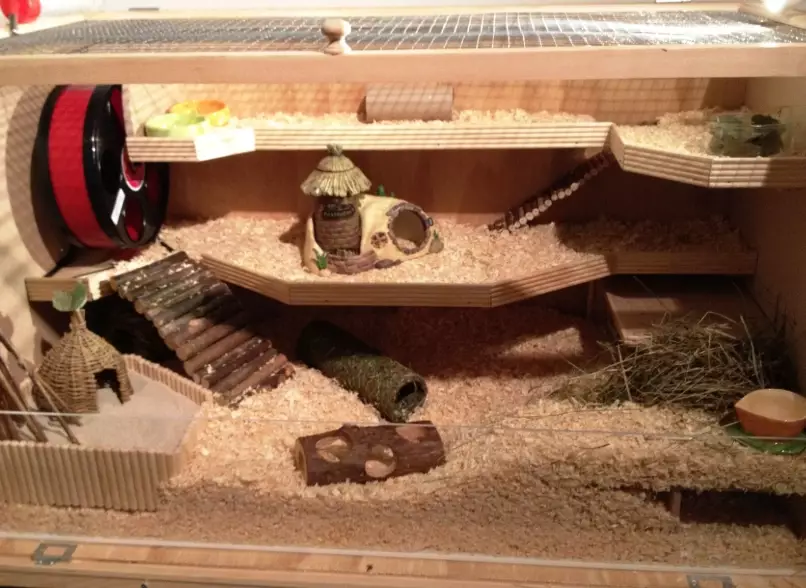
You can design for deep bedding—think 8 inches or more for a Syrian hamster to construct proper tunnels. You can ensure superior ventilation with a large, secure mesh area, preventing ammonia buildup. Most importantly, you can create a truly engaging environment. Instead of a static plastic castle, you can build a landscape that changes, with dig boxes, sand baths, and foraging areas that keep your pet's mind active. I built my first bin cage for my Syrian, Charlie, after he kept escaping his "deluxe" pet store cage. The difference in his behavior, from constant bar-chewing to busy, content burrowing, was night and day.
What to Know Before You Build: The Non-Negotiables
Jumping in without a plan leads to flimsy, unsafe cages. Let's lock down the fundamentals.
Size is Everything (And Height is King)
Everyone talks about floor space. A cage that's 40 inches long but only 12 inches tall is practically useless for a burrowing animal. After you fit an 8-inch wheel and a water bottle, you have maybe 2 inches left for bedding. That's a prison, not a home.
Your internal cage height should be a minimum of 18 inches, with 24+ being ideal. This allows for 10+ inches of bedding on one side and still room for a wheel and platforms above. This vertical dimension is the single most overlooked factor in DIY plans.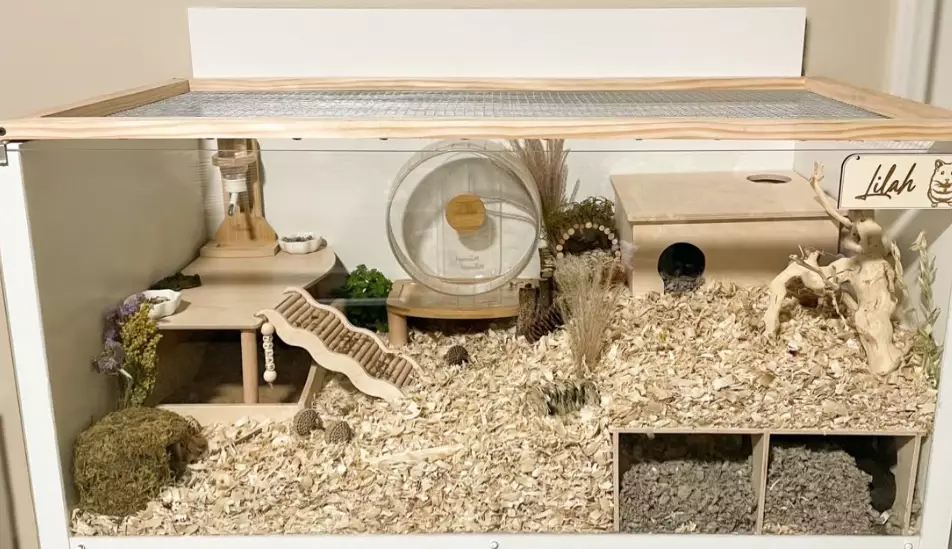
The Escape-Proof & Chew-Proof Mandate
Hamsters are escape artists and relentless chewers. Your materials must withstand this.
- Plastic: Use thick, clear storage bins (50+ quarts). Thin plastic will be chewed through in a night. The smooth, vertical walls of a good bin are surprisingly chew-resistant.
- Wood: Must be sealed with a non-toxic, water-based sealant like Mod Podge or a pet-safe polyurethane. Unsealed wood absorbs urine and becomes a bacteria factory.
- Mesh/Ventilation: Never use chicken wire. The holes are too large, and the metal is sharp. Use 1/4-inch or 1/2-inch galvanized hardware cloth. Secure it with bolts and washers, not just zip ties, which can be chewed.
- Adhesives: Standard super glue or hot glue is toxic. For any bonding inside the cage, use 100% silicone sealant labeled as aquarium-safe. It's non-toxic once fully cured.
How to Build a DIY Hamster Bin Cage (The Beginner's Champion)
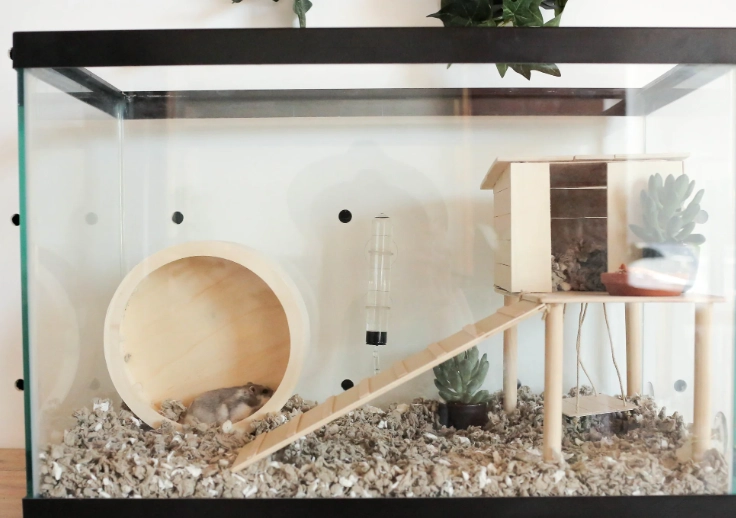
The plastic storage bin cage is the gateway drug to DIY hamster habitats. It's affordable, relatively easy, and highly effective. Here’s a step-by-step breakdown.
Materials & Tools You'll Need:
- A clear or translucent storage bin (110+ quarts/100+ liters for dwarfs, 150+ quarts for Syrians). Measure the internal floor space to ensure it meets 600+ sq in.
- Galvanized hardware cloth (metal mesh), 1/4" or 1/2" grid.
- A metal file or sandpaper.
- A power drill with hole saw attachment (for round vents) or a jigsaw (for rectangular lid cut-out).
- Zip ties (heavy-duty) and/or small bolts, nuts, and washers.
- Duct tape or strong packing tape.
- Wire cutters.
The Process, Simplified:
- Ventilate the Lid: Using a marker, trace a large rectangle on the bin's lid, leaving a 2-3 inch border all around. Carefully cut this rectangle out with a jigsaw or utility knife. File down any sharp edges.
- Secure the Mesh: Cut your hardware cloth to size, slightly larger than the hole. Place it over the opening. From the top side of the lid, drill small holes around the perimeter every few inches. Secure the mesh using bolts and washers for the strongest hold, or double-layer heavy-duty zip ties. Tape the sharp mesh edges on the underside with duct tape for safety.
- Add Side Vents (Optional but Recommended): On the upper third of the bin's long sides, use a hole saw to drill 3-4 large holes (2-3 inches in diameter). Cover these from the inside with small squares of hardware cloth, secured with zip ties. This creates cross-ventilation.
- The Final Check: Run your fingers along every interior edge. Feel for any sharp plastic spurs or exposed mesh ends. File or tape them. Ensure the lid clips securely. You're done!
The whole project can take an afternoon. The result is a lightweight, easy-to-clean, and massively spacious home for under $50.
Common DIY Cage Materials Compared
Bins are great, but they're not the only option. Your choice depends on your skills, budget, and desired aesthetics.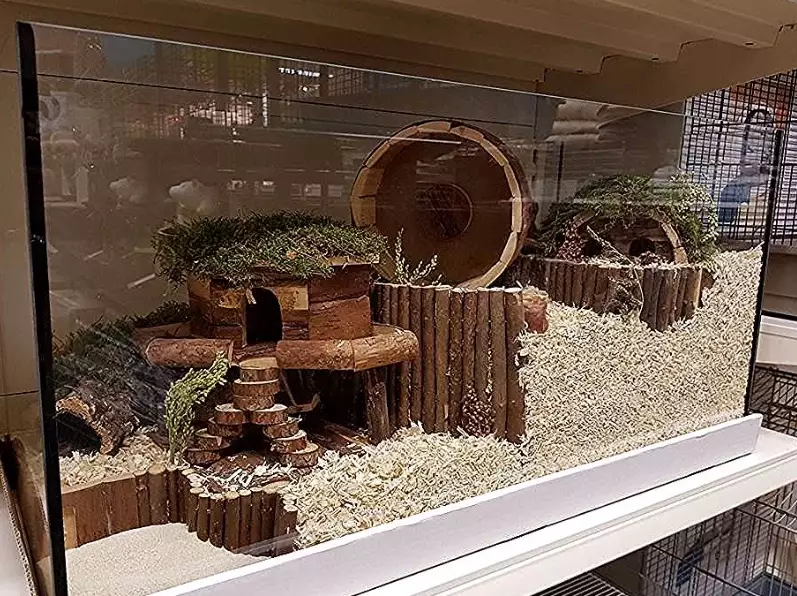
| Material | Best For | Pros | Cons & Key Considerations |
|---|---|---|---|
| Plastic Storage Bin | Beginners, budget builds, easy cleaning. | Inexpensive, lightweight, clear for viewing, chew-resistant walls. | Limited customization, can warp over time, requires secure mesh lid. |
| Glass Aquarium/Tank | Great visibility, contained bedding. | Excellent chew-proofing, holds deep bedding well, readily available. | Heavy, expensive in large sizes, poor ventilation unless paired with a mesh lid. |
| IKEA Furniture (Detolf, Linnmon) | Maximizing floor space on a budget. | Huge continuous floor area (Detolf offers ~950 sq in), sleek look. | Requires modification for a secure lid, can be low height, heavy glass (Detolf). |
| Custom Wood/Melamine | Advanced builders, specific layouts. | Fully customizable shape and size, can look very professional. | Time-consuming, must be meticulously sealed against moisture/urine, heavy. |
The Wooden Cage: A Project for the Dedicated
Building from wood or melamine lets you create a true piece of furniture. The critical step is sealing. I used three coats of a water-based, non-toxic polyurethane on the inside of my first wooden cage, letting each cure fully. I still had issues with moisture in the corners after a year. My advice? Use a plastic bin liner or pond liner as a waterproof barrier between the sealed wood and the bedding for ultimate protection. It's extra work, but it guarantees longevity.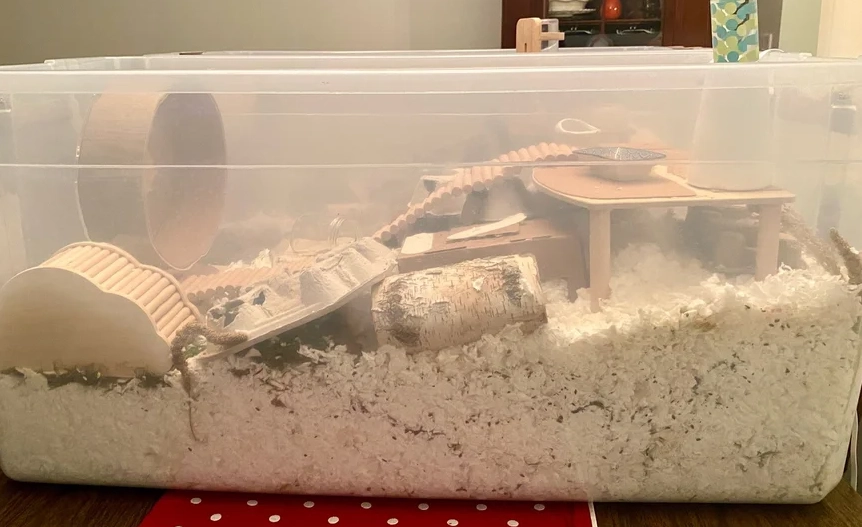
The IKEA Detolf Hack: A Legend for a Reason
The IKEA Detolf glass display cabinet is a famous hack. Lying on its back, its dimensions are perfect. The challenge is the lid. Most people build a frame from wood or PVC piping and attach hardware cloth to it. The payoff is an enormous, shallow tank perfect for creating a diverse landscape with different substrates. Just remember, its 7-inch height means you can't pile bedding to the roof, so you create deep sections using cardboard or wood barriers.
What Are the Best DIY Hamster Cage Enrichment Ideas?
The cage is the canvas; enrichment is the art. This is where you prevent cage boredom—a real issue that leads to repetitive behaviors.
- Multi-Chamber Hideouts: Glue together small, unpainted cardboard boxes (tissue boxes, snack boxes) with pet-safe glue. Cut connecting holes to make a labyrinth. It's cheap, replaceable, and loved by hamsters.
- Foraging Towers: Take a cardboard tube, seal one end, fill it with bedding and treats, and fold the other end closed. Or build a simple frame with dowels and attach small cups or bowls at different levels.
- Safe Digging & Sand Areas: Use a sturdy, shallow ceramic dish or a small glass aquarium for a dedicated sand bath (use reptile sand without added calcium or dyes). For a dig box, use a larger container filled with coco soil, beech chips, or crinkled paper strips.
- Platforms & Landscaping: Use untreated kiln-dried wood, cork logs, or slate tiles to create different levels. Avoid tall drops. Connect areas with wide ramps or bridges made from popsicle sticks (glued with pet-safe glue).
Rotate these items every week or two. A changing environment is a stimulating environment.
Keeping It Clean: DIY Cage Maintenance
A big cage doesn't mean less cleaning; it means smarter cleaning. You should never do a full, stressful cage clean-out unless there's an infestation or mold.
Instead, practice spot-cleaning. Every 1-2 days, remove visibly soiled bedding and any perishable food. Use a small sand sieve for the sand bath. Once a week, clean the wheel and wipe down high-traffic platforms.
Every 4-6 weeks, do a partial substrate change. Remove about 1/3 to 1/2 of the bedding, focusing on the corners where they likely pee (hamsters often pick a spot). Keep the rest, especially any bedding with established burrows, to preserve their scent and reduce stress. Replace the removed bedding with fresh material. This method maintains hygiene without destroying their hard work and sense of security.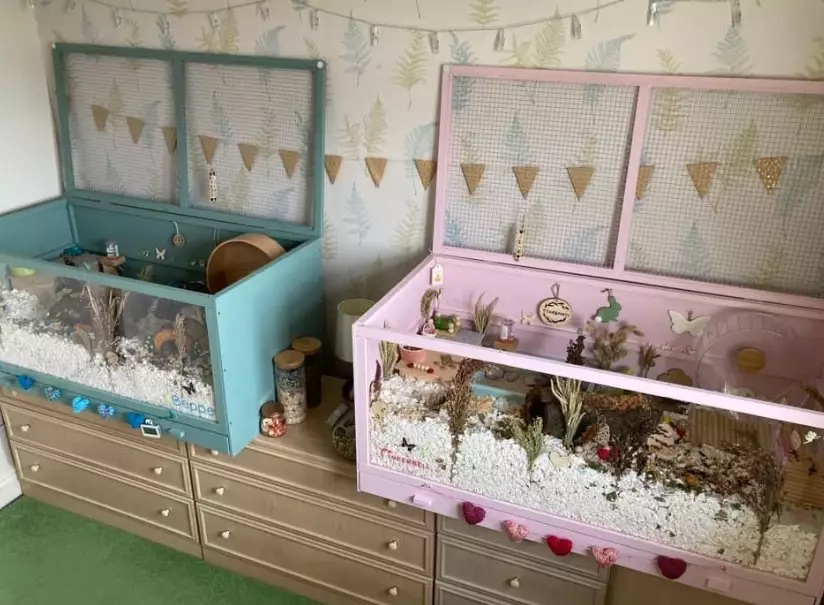





Join the Conversation