Getting a new kitten is thrilling. Those tiny paws, the curious eyes. But let's be honest, it can also feel overwhelming. One day they're a sleepy newborn, the next they're scaling your curtains. The secret to navigating this whirlwind? Understanding their development week by week. This isn't just about survival; it's about laying the foundation for a confident, healthy, and well-adjusted cat. I've fostered over fifty kittens in the past decade, and I still see new owners make the same subtle mistakes—like rushing the weaning process or missing the prime socialization window. This guide will walk you through each critical stage, from the fragile first days to the adventurous 12-week mark.
What's Inside This Guide?
Weeks 1-2: The Neonatal Phase
For the first two weeks, your kitten is essentially a newborn. If you're caring for an orphaned kitten, this is an around-the-clock job. If they're with their mother, your role is supportive.
Key Milestones: They are born blind and deaf, relying completely on smell and touch to find their mother. Their umbilical cord falls off around day 3-4. They can't regulate their own body temperature yet.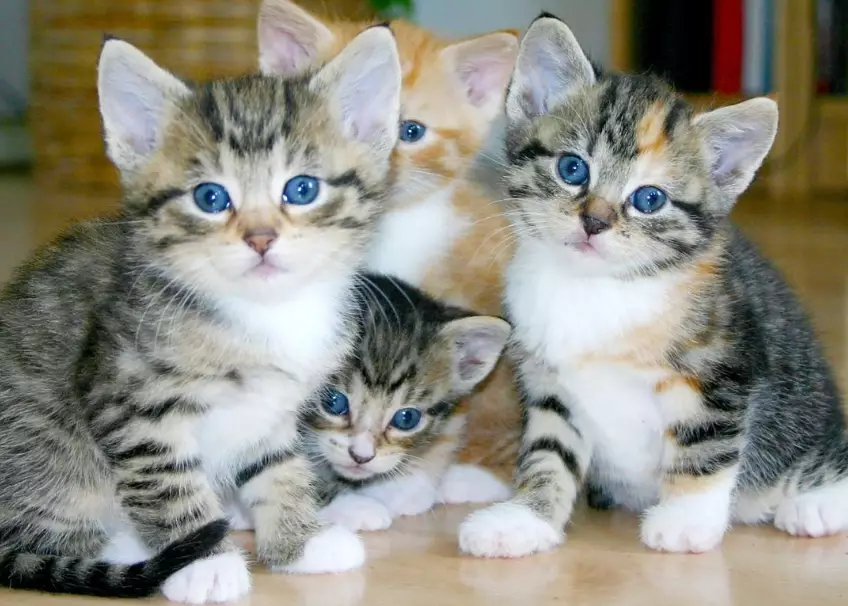
Feeding and Care: The Absolute Essentials
Feeding: 100% mother's milk or a commercial kitten milk replacer (KMR). Never use cow's milk. Feedings are needed every 2-3 hours, even through the night. A common mistake is feeding them on their back like a human baby—this can cause aspiration. Always feed them on their belly, as they would nurse from their mother. The ASPCA has excellent guides on bottle-feeding technique.
Elimination: Kittens cannot pee or poop on their own. The mother stimulates them by licking. If you're hand-rearing, you must gently massage their genital area with a warm, damp cloth or cotton ball before and after each feeding to mimic this.
Weeks 3-4: Eyes Open, World Awakens
This is where things get interesting. Their blue eyes open (vision is still blurry), and their ear canals begin to open. They start to become aware of their littermates and their surroundings.
Key Milestones: First wobbly attempts to stand and walk. Baby teeth begin to emerge. They start to interact with siblings, initiating the first play fights and learning bite inhibition.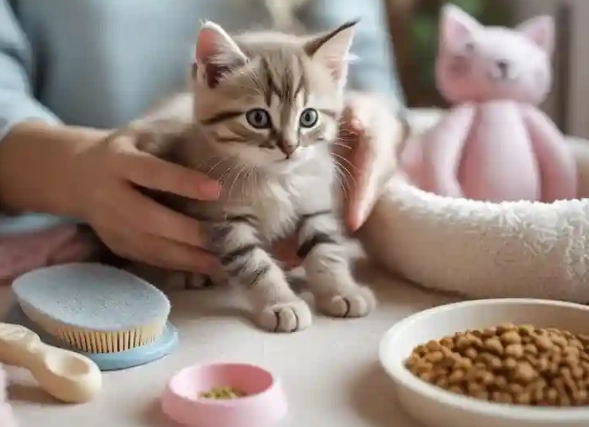
Introducing New Senses and Early Socialization
While they're still nursing frequently, you can start introducing very gentle human interaction. Handle them for short periods—just a few minutes at a time. Let them smell your hand and get used to your voice. This early, positive exposure is the first brick in building a social cat.
You might notice they start to purr. This week, you also begin the critical task of environmental enrichment. Introduce a single, very soft toy. A rolled-up sock or a small plush mouse is perfect. The goal isn't vigorous play, but gentle exploration.
Weeks 5-7: Weaning and Wobbling
This is the most transformative period, and where I see the most errors. Weaning isn't an overnight switch; it's a gradual transition over several weeks.
Key Milestones: Coordination improves dramatically. They start running, pouncing, and climbing. The weaning process begins in earnest. Litter box training becomes a primary focus.
How to Wean a Kitten Correctly (The Common Mistake)
People often start weaning by offering a bowl of milk replacer. That's step one, but the big mistake is waiting too long to introduce solid food. Around week 5, start offering a gruel. Mix high-quality, wet kitten pate with warm kitten milk replacer to create a mushy, oatmeal-like consistency.
Offer this gruel on a shallow plate 3-4 times a day. Let them walk in it, smell it, make a mess. They learn by doing. Don't force their face into it. By week 6, they should be eagerly lapping it up. Gradually reduce the liquid in the mix over the next week until they're eating plain wet food by week 7-8. They should still be nursing from mom or bottle during this time—the gruel is a supplement that becomes the main event.
Litter Box 101
By now, kittens are naturally inclined to dig and bury. Provide a very low-sided litter box (a cake pan works great) with unscented, clumping litter. After they eat or wake up from a nap, gently place them in the box. If they go, praise them softly. If they have an accident, never scold—just clean it thoroughly with an enzymatic cleaner. Consistency is key.
Weeks 8-12: Socialization and Independence
This is the golden window for socialization. A kitten's primary socialization period typically closes around 12-14 weeks. What they experience—or don't experience—now shapes their personality for life.
Key Milestones: Weaning is complete. They are fully eating solid kitten food. They receive their first vaccinations (usually starting at 6-8 weeks). Play becomes complex and highly energetic.
The Socialization Checklist
Your goal is to create positive associations with a wide range of stimuli. Do this in short, calm, reward-based sessions.
- People: Introduce them to men, women, children (supervised), people with hats, glasses, beards.
- Handling: Gently handle paws (to prep for nail trims), look in ears, open mouth, practice holding them in a carrier-like position.
- Household Noises: Play recordings of vacuums, doorbells, and washing machines at low volume, paired with treats.
- Travel: Take short, positive car rides in a secure carrier, ending with play at home.
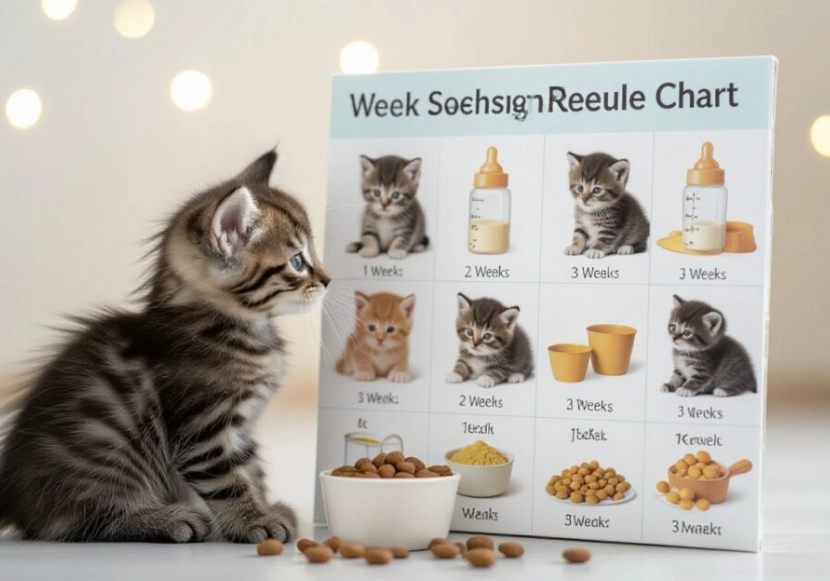
Play and Behavior Guidance
This is when play aggression can emerge. Never use your hands as toys. Always redirect biting and scratching onto appropriate toys like wand teasers or kicker toys. If they bite you, let out a high-pitched "ouch!" and immediately stop playing, walking away for a minute. This teaches them that biting ends the fun.
Your Weekly Kitten Care Task Summary
Here's a quick-reference table to keep you on track. Think of it as your weekly checklist.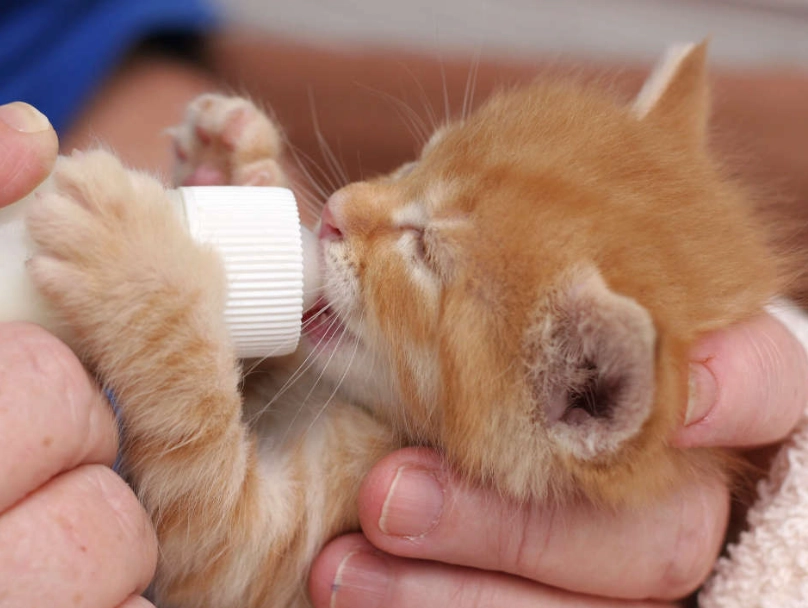
| Week Range | Primary Focus | Feeding | Key Health & Care Tasks |
|---|---|---|---|
| 1-2 | Survival & Warmth | Mother's milk/KMR every 2-3 hrs. | Stimulate to eliminate, maintain 85-90°F nest. |
| 3-4 | Sensory Awakening | Mother's milk/KMR. Nursing frequently. | Begin gentle handling. Monitor eye/ear opening. |
| 5-7 | Weaning & Learning | Introduce gruel, transition to wet food. Continue nursing. | Start litter box training. Provide low-sided box. |
| 8-12 | Socialization & Health | Full solid diet (kitten food). 3-4 meals/day. | First vet visit, vaccinations. Intensive socialization. |
Your Kitten Care Questions Answered
My 6-week-old kitten seems hungry but turns away from the gruel. What am I doing wrong?
Is it true that kittens taken from their mother before 8 weeks will have behavior problems?
My new kitten cries incessantly at night. How do I get us both some sleep?
How can I tell if my kitten is a healthy weight during these rapid growth weeks?


Join the Conversation