Let's cut to the chase. You've got a snake, or you're thinking about getting one. You bought a tank, maybe a heat lamp, threw in some bedding. But your corn snake is pacing the glass, or your ball python refuses to eat. Something's off. The problem isn't your snake—it's the cage. Most beginner setups miss critical, subtle needs that scream "stress" to a reptile. Getting the enclosure right isn't about making it look cool for Instagram (though that's a bonus); it's about mimicking the security and conditions of their wild world in a box. Do that, and you'll have a calm, healthy, thriving animal. Get it wrong, and you'll face a cascade of health and behavior issues.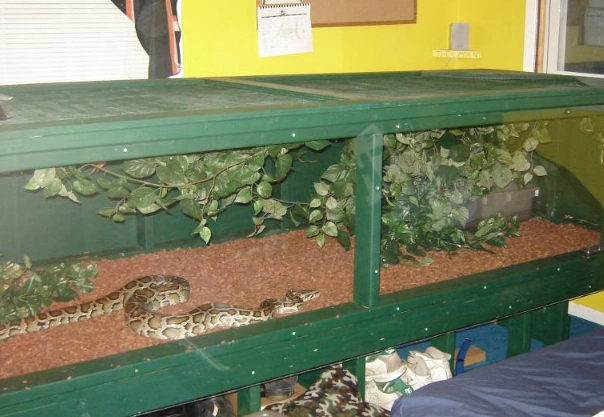
I've kept snakes for over a decade, from tiny sand boas to large carpet pythons. I've made every mistake in the book—using the wrong heat source that dried out the air, choosing a substrate that molded overnight, providing hides that were too large and offered no security. This guide is what I wish I'd read back then. We're going beyond the basic "need a heat lamp and a water bowl" list. We're diving into the *why* and the *how*, covering the non-negotiables and the expert tweaks that make all the difference.
In This Snake Care Guide
Picking the Right Cage: It's Not Just About Length
The old "length of the snake equals length of the tank" rule is a decent starting point, but it's flawed. It ignores how the snake uses space. A six-foot corn snake is long but slender; it needs length to cruise. A four-foot ball python is a dense, heavy-bodied ambush predator; it needs less length but more floor space for its girth. Think in terms of the snake's ability to fully stretch out along one side *and* have room for a distinct temperature gradient.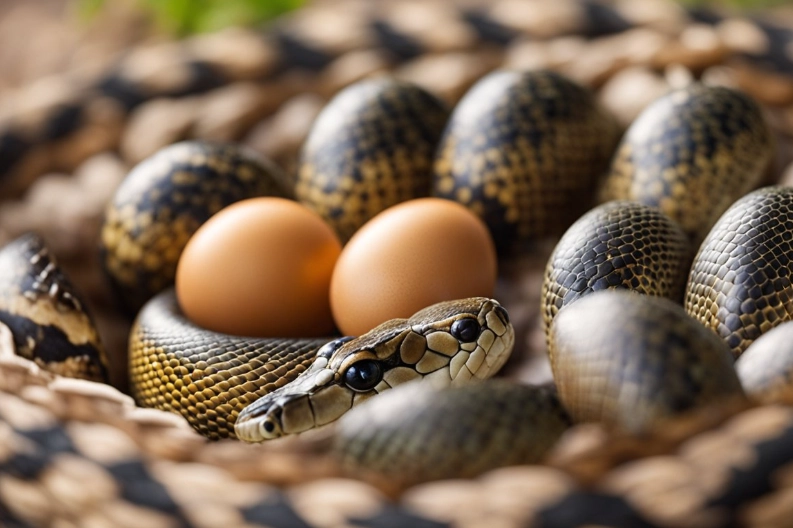
For most common pet snakes (corn snakes, kingsnakes, ball pythons, milk snakes), a 40-gallon breeder tank (36"x18"x16") is a good minimum for an adult. Larger species need custom enclosures. But here's the kicker: the cage type matters as much as size.
Glass Aquariums: Great for visibility, terrible for heat and humidity retention. All that mesh lid lets everything escape. You'll fight constantly to keep humidity up, especially for tropical species like ball pythons. If you use one, you must cover 70-80% of the mesh top with HVAC tape or a custom acrylic sheet.
PVC or Plastic Enclosures: These are the gold standard for most keepers. They insulate heat brilliantly, retain humidity with minimal effort, and often have front-opening doors that don't spook the snake from above. Brands like Animal Plastics or custom builds are investments that pay off in animal health and your sanity.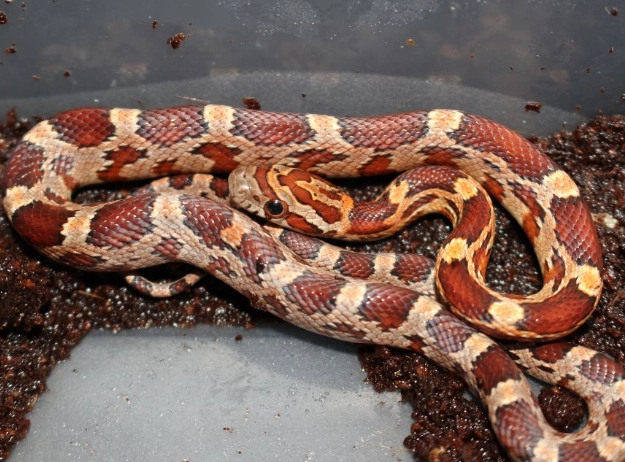
Wooden Vivariums: Good insulation, but can rot from high humidity and are difficult to disinfect. Seal them properly with a reptile-safe sealant like Drylok if you go this route.
The Heating Setup: Creating a True Gradient
This is where most first-timers fail. Snakes are ectotherms. They don't generate their own body heat; they regulate their temperature by moving between warm and cool areas. You must provide a clear, reliable gradient. One side warm, one side cool. Not lukewarm everywhere.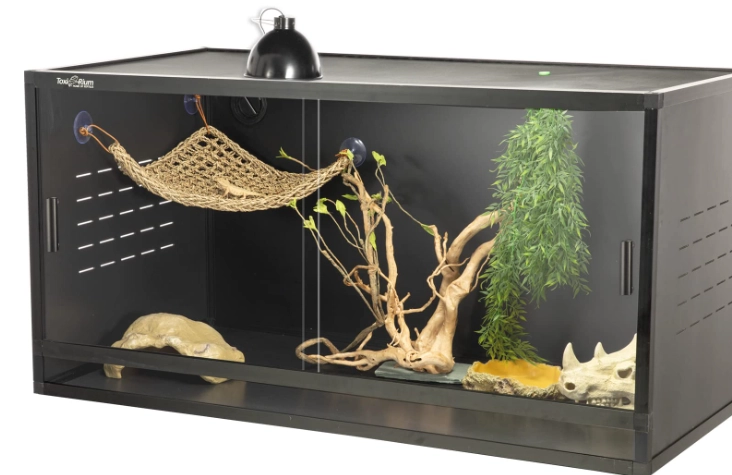
Choosing Your Heat Source
Your choice depends on your cage and your snake's needs.
- Overhead Heat (Ceramic Heat Emitters, Deep Heat Projectors): My personal preference. They heat objects and air like the sun, creating a more natural heat gradient. They don't emit light, so they can run 24/7. Must be controlled by a thermostat and guarded with a cage to prevent burns.
- Under Tank Heat Pads (UTH): Popular but misunderstood. They primarily heat the surface they're attached to (the glass or plastic floor), not the air. Great for providing a belly heat spot for digestion, but terrible at raising ambient temps in a large tank. Crucially, they MUST be regulated by a thermostat. An unregulated UTH can reach 120°F+ and cause severe thermal burns through the substrate.
- Heat Lamps/Bulbs: Provide both heat and light. Can dry out the enclosure quickly. Not suitable for 24/7 use unless using a non-light-emitting bulb. Also require a thermostat.
You need a thermostat. Not a rheostat (dimmer), but a proper on/off or pulse-proportional thermostat with a probe placed at the hottest point your snake can reach. This is non-negotiable for safety.
Temperature Targets
These are general ranges. Always research your specific species.
| Zone | Temperature Range | Purpose |
|---|---|---|
| Warm Side/Basking Spot | 85°F - 90°F (29°C - 32°C) | Digestion, immune function |
| Cool Side | 75°F - 80°F (24°C - 27°C) | Thermoregulation, resting |
| Nighttime Drop | Can drop by 5-10°F | Natural cycle (for most species) |
Measure with digital probe thermometers. Stick-on dial gauges are notoriously inaccurate. Place one probe on the warm side substrate, one on the cool side.
Humidity Control: The Silent Killer (And Savior)
If heating is the most common failure, humidity is the most misunderstood. Too low, and your snake can't shed properly, leading to retained eye caps and skin that can constrict toes and tail tips. Too high, especially with poor ventilation, and you're brewing a petri dish of scale rot and respiratory infections.
Again, species-specific. A corn snake does well at 40-50%. A ball python needs 60-70%, spiking to 70-80% during a shed. A green tree python needs 70-80% consistently.
The Mistake: Misting the cage twice a day. This causes spikes and crashes. The substrate surface is wet, but the humidity reading plummets an hour later. It's stressful and inconsistent.
The Solution: Create a stable humidity reservoir. Use a moisture-holding substrate (like coconut fiber or cypress mulch) that's several inches deep. Pour water directly into the corners of the substrate. The lower layers stay damp, releasing moisture slowly, while the top layer remains dry to prevent scale rot. A large water bowl placed over (or partially over) the warm side also boosts humidity through evaporation. A humidity hide (a sealed box with damp sphagnum moss) is a lifesaver during shed cycles.
Measure with a digital hygrometer. Place it in the middle of the enclosure, off the ground.
Substrate and Hides: The Foundation of Security
Your snake spends its life on the substrate and in its hides. These choices directly impact health and stress levels.
Substrate Showdown
| Substrate | Best For | Pros | Cons & Expert Notes |
|---|---|---|---|
| Coconut Fiber (Eco Earth) | Humidity-loving snakes (Ball Pythons, Boas) | Holds humidity superbly, natural look, diggable. | Can be dusty when dry. If it gets too wet and compacted, it can irritate vents. Let it dry out a bit on top. |
| Cypress Mulch | Most snakes, especially mid-humidity species. | Good moisture retention, resistant to mold, affordable. | Ensure it's reptile-safe, not treated with chemicals. Avoid fine, dusty bags. |
| Aspen Shavings | Dry climate snakes (Corn Snakes, Kingsnakes) | Great for burrowing, clean smell, easy to spot clean. | Turns to mush with high humidity. Will mold quickly if wet. Useless for ball pythons. |
| Paper Towel/Newspaper | Quarantine, sick snakes, hatchlings. | Sterile, cheap, allows for easy monitoring of feces. | Zero enrichment, looks terrible, does nothing for humidity. |
Avoid: Cedar and pine shavings (toxic resins), sand (impaction risk, poor humidity), gravel, and calcium sand (marketing gimmick, still causes impaction).
Hides: The Rule of Two and the "Snugness Test"
You need at least two identical hides. One on the warm end, one on the cool end. If the warm hide is a fancy castle and the cool hide is a plastic tub, your snake will choose security over thermoregulation and may overheat or get too cold.
Here's the micro-mistake I see constantly: hides that are too large. A hide should be just big enough for the snake to curl up inside and touch all sides, including the "ceiling." That contact creates a feeling of security. If there's empty space around it, it's not a hide—it's a decorative cave. Test it: your snake should disappear completely inside.
Material matters. Plastic flower pot saucers with a hole cut in are cheap and perfect. Commercial resin hides are easy to clean. Avoid hollow logs with two big openings; they don't feel secure. If you use one, block one end with substrate or a rock.
Water, Lighting, and a Touch of Enrichment
Water Bowl: Heavy, tip-proof ceramic is best. Big enough for the snake to soak its entire body if it wants. Change water daily. Place it on the cool side to avoid rapid evaporation messing with your humidity target, unless you need that evaporation boost.
Lighting: Snakes don't require UVB like diurnal lizards, but emerging research, including work cited by the Herpetological Conservation and Biology community, suggests it can benefit their immune system, coloration, and overall well-being. A low-level UVB light (like a ShadeDweller for forest species) on a 12-hour timer can be a great addition, providing a natural day/night cycle. It's not a strict requirement, but it moves beyond basic husbandry.
Enrichment: This isn't just for you. A bare tub is boring and stressful. Add clutter! Fake plants, branches for climbing (even for "terrestrial" species—they do climb!), cork rounds, and rocks. This breaks up sightlines, gives exploration opportunities, and reduces stress from feeling exposed. Rearrange it occasionally to stimulate their brain.
Common Setup Mistakes to Avoid at All Costs
- Heat Rock: Throw it away. They are notorious for developing hot spots that cause severe burns. Snakes don't sense localized heat on their belly well until it's too late.
- Using a Heat Mat Without a Thermostat: I'm saying it again because it's that important. It's a burn waiting to happen.
- One Hide: Forces the snake to choose between security and the right temperature.
- Misting for Humidity: Go for the deep-substrate pouring method instead for stability.
- Ignoring the Cool Side: If your cool side is 82°F, your snake has nowhere to cool down. This is chronic stress.
- Feeding Inside the Enclosure: This is actually an old myth. Moving to feed causes more stress and regurgitation risk. Feed them in their home, using tongs. They won't become "cage aggressive."


Join the Conversation