Quick Guide
Let's be honest. You brought home this adorable, tiny ball of fluff, imagining the purrs and playful pounces. You got the cute bed, the toys, the food. You set up the litter box, thinking it would be simple. Then reality hits. You find a little "present" behind the couch, or worse, on your favorite rug. Your 8-week-old kitten won't use the litter box. Again.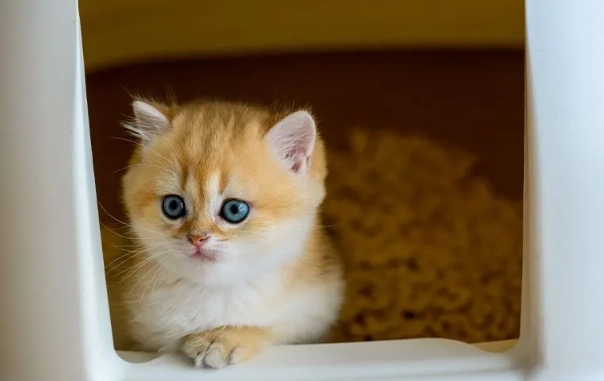
I've been there. The frustration is real, mixed with a bit of worry. Is my kitten sick? Stupid? Being spiteful? First, take a deep breath. Your kitten is almost certainly not being spiteful. At eight weeks old, they're just a baby, fresh from their mom and littermates, navigating a huge, scary new world. A litter box issue at this age is almost always a solvable problem, not a permanent personality flaw.
This guide is here to cut through the overwhelm. We're going to walk through every single reason why an 8 week old kitten won't use the litter box, and I mean every reason—from the obvious to the ones most people miss. More importantly, we'll map out exactly what to do about it, step-by-step. No fluff, just actionable fixes.
The core idea to hold onto: For a kitten this young, avoiding the litter box is a symptom, not the disease itself. Something about the setup, their health, or their experience is telling them "this is not the right place." Our job is to decode that message.
Why Won't My Kitten Use the Litter Box? The Complete Checklist
You can't fix what you don't understand. So before you try anything else, run through this mental checklist. The reason your 8 week old kitten won't t use the litter box is almost certainly hiding in one of these categories.
The Physical Box: It Might Be the Battlefield
We think of a litter box as just a plastic pan, but to a kitten barely bigger than your hand, it's an entire landscape. Get this wrong, and they'll vote with their paws—by leaving.
- Too Big, Too Tall, Too Scary: A standard adult litter box can look like a cliff face to an 8-week-old. High sides mean a difficult climb in and, crucially, a panicked scramble out. If they've ever felt trapped or struggled to get out, they'll associate the box with a bad experience. The fix is simple: a low-entry, kitten-sized box. I often just used a shallow plastic storage tub lid in the very beginning.
- The Wrong Number: The golden rule is one box per cat, plus one extra. For a single kitten, that means two boxes. It sounds like overkill, but it gives them options. One might be in a busy area they don't like, or one might get soiled and they're fastidiously clean. More boxes remove excuses.
- Dirty, Dirty, Dirty: This is a huge one. Kittens have sensitive noses. If the box smells strongly of ammonia or waste, it's revolting to them. Their instinct is to find a cleaner spot (hello, your soft bath mat). Scooping at least once, ideally twice a day is non-negotiable for a baby kitten. A full, weekly scrub with mild soap (no harsh chemicals!) is also key.
Pro Tip from Hard Experience: That hooded or enclosed "privacy" litter box? Toss it. Or at least, take the hood off. For a kitten, it traps odors inside (making it smell terrible to them) and can feel like a cave where predators might ambush them. Open-top boxes are almost always better for training.
The Litter Itself: It's All About the Paws
You might have a favorite litter, but your kitten has strong, unspoken opinions. Texture and smell are everything.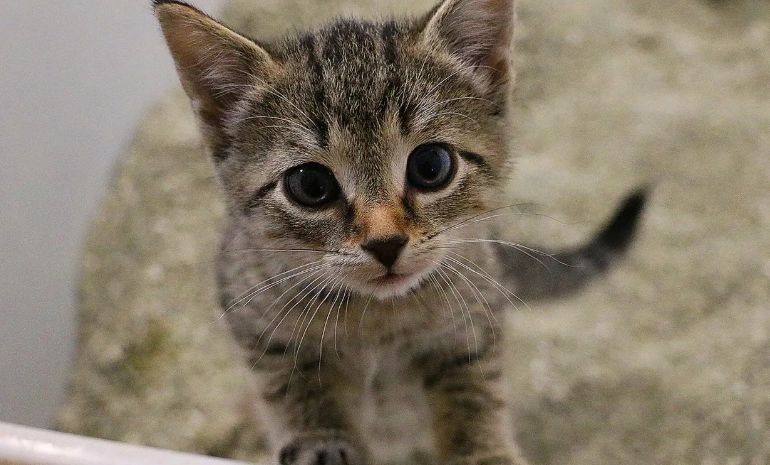
Think about what they used at the breeder or shelter. If you brought them home and swapped to something completely different—say, from fine clay to large pine pellets—it's like us going from a plush carpet to walking on gravel. They might just reject it.
| Litter Type | Kitten-Friendly? | Potential Issues for an 8-Week-Old |
|---|---|---|
| Unscented, Fine-Clump Clay | Usually Excellent | Dust can bother tiny lungs. Ensure it's low-dust. The familiar texture is often a win. |
| Paper-Based Pellets | Sometimes Okay | Texture is very different. Doesn't clump, so harder to keep immaculately clean. |
| Silica Gel Crystals | Generally Not Recommended | Hard, sharp texture on paws. Can be noisy. High risk of ingestion if kitten tries to eat it. |
| Natural Wood/Wheat | Proceed with Caution | Texture and smell can be unfamiliar. Some are very absorbent but don't clump well. |
My advice? Start with an unscented, clumping, low-dust clay litter. It's the closest to "standard" that most kittens intuitively understand. Strong perfumes are a common culprit—they're meant to mask odor for us, but they overwhelm a kitten's superior nose.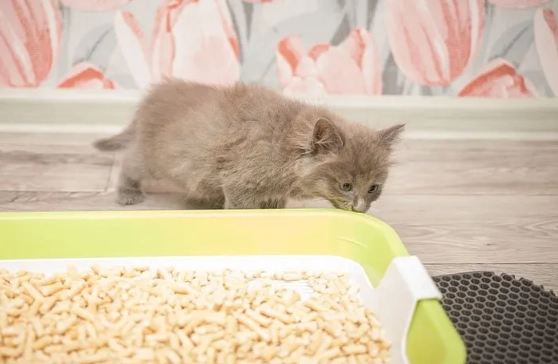
Location, Location, Location: Would You Eat Here?
Imagine if your toilet was placed in the middle of a noisy kitchen, next to a blasting speaker. You'd hold it, right? Kittens have similar aversions.
- Too Noisy or Busy: Washer/dryer vibrations, loud HVAC units, a hallway where people and dogs constantly trample through. These create an unsafe, stressful environment. Kittens are vulnerable when eliminating; they need to feel secure.
- Too Remote: The opposite problem. Stashing the box in a dark, creepy basement corner or a far-away laundry room might mean a tiny kitten simply can't get to it in time, especially when they're learning. They have a sudden urge, and the box is a marathon away—so they pick the closest soft corner.
- Too Close to Food and Water: This is a big instinct no-no. In the wild, you don't soil where you eat. Placing the litter box right next to the food bowl is a common setup mistake that can cause outright refusal.
You need a Goldilocks Zone: quiet, low-traffic, but easily accessible. A spare bathroom, a calm corner of a bedroom, or a sectioned-off part of a living room often works best. And remember, with multiple boxes, you can cover different zones of your home.
Red Flag: If your kitten is consistently choosing one specific type of spot (always on soft fabrics like rugs or bedding, or always on hard surfaces like tile), they're telling you something. Fabric-preferring kittens often dislike the feel of litter. Surface-preferring kittens might be seeking cooler, smoother textures. This is a huge clue for your troubleshooting.
The Health Factor: The Non-Negotiable Vet Check
This is the most critical step. When an 8 week old kitten won't use the litter box, a medical issue must be ruled out first. Pain or discomfort during elimination creates a powerful negative association. They start to think "the box hurts," so they avoid it.
Common culprits include:
- Urinary Tract Infections (UTIs): Even in young kittens. It burns when they pee.
- Intestinal Parasites: Worms or protozoa like giardia can cause urgent, painful, or uncontrollable diarrhea. The kitten literally can't make it to the box in time.
- Constipation: Straining to pass hard stools is painful.
- Congenital Issues: Rare, but possible.
A vet visit isn't an overreaction; it's responsible ownership. Describe the problem precisely: "My 8-week-old kitten is not using the litter box. They go right next to it/on rugs/in corners." Bring a fresh stool sample. The American Veterinary Medical Association (AVMA) stresses that sudden changes in elimination habits are a primary reason to consult a vet.
Seriously, don't skip the vet. It's the foundation for everything else.
Stress and Environment: The Invisible Trigger
An 8-week-old kitten's world just got turned upside down. New home, new people, new smells, no mom. Stress manifests in weird ways, and inappropriate elimination is a classic sign.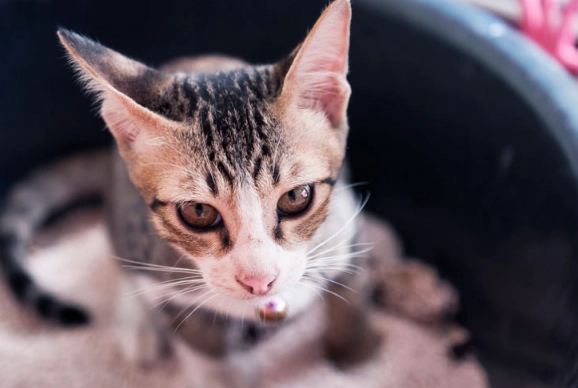
Stressors can be subtle: a new pet in the house (even one that ignores them), loud construction noise outside, rearranged furniture, or even overly forceful handling. If every time they explore they get yelled at or grabbed, the whole environment feels unsafe, including the litter box area.
The Action Plan: How to Get Your Kitten Back on Track
Okay, you've done your detective work. Now, let's build new, good habits. This isn't about punishment—it's about making the litter box the most appealing option.
Step 1: The Strategic Reset
- Confine and Conquer: This is the single most effective technique for an 8 week old kitten won t use litter box scenario. Restrict your kitten to a small, manageable space like a bathroom or a puppy-pen setup for a few days. This space should have their bed, food/water (on the opposite side), and the litter box. With fewer options, the likelihood of them using the box correctly skyrockets. It rebuilds the habit from scratch.
- Optimize the Setup: Based on your checklist, make the changes. Get a low-sided box. Use unscented litter. Put it in a quiet corner. Have two boxes if possible.
- Clean Like a Maniac: Scoop religiously. For accidents outside the box, use an enzymatic cleaner designed for pet urine. Regular household cleaners don't break down the urine proteins; your kitten will still smell the old spot and be drawn back to it. I've had good results with products like Nature's Miracle, but the key is the enzyme action, not the brand.
Step 2: Positive Reinforcement & Smart Timing
Never punish. Rubbing their nose in it or yelling only teaches them to be afraid of you, and to hide the act from you better.
- Post-Meal & Play Taxi: Kittens often need to go after waking up, after eating, and after a vigorous play session. Gently place them in their litter box at these key times. Don't force them or hold them there. Just set them down and let them hop out if they want. You're just reminding them of the location.
- Praise the Good Stuff: When you see them use the box correctly, wait until they're finished (interrupting is bad), then offer calm, happy praise and a tiny treat. They make the connection: "Box = good things."
What Worked for Me: I kept a jar of super special, smelly treats (freeze-dried chicken) right by the litter box. Every time my little guy used it, he got a tiny piece. Within two days, he was running to the box and then immediately to me for his treat. The motivation was powerful!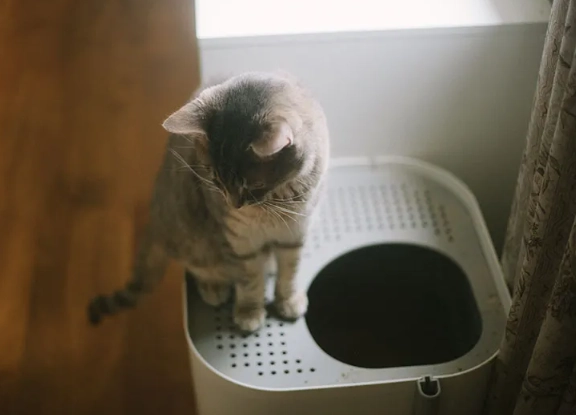
Step 3: Make the Wrong Places Unappealing
While you make the box awesome, make the favorite accident spots less so.
- If they love a particular rug, roll it up for a few weeks.
- Place a double-sided tape sheet (sticky side up) or aluminum foil on the spot. Most kittens hate the texture on their paws.
- You can also place a food bowl or water fountain over the spot—remember, they won't soil where they eat.
- For corners, use a piece of furniture to block access temporarily.
Answers to the Questions You're Really Asking
The Bottom Line: Patience and Process
Dealing with a kitten who won't use the litter box is frustrating, but it's almost never hopeless. It's a puzzle. You are the detective, gathering clues from the type of accident, the location, your kitten's body language.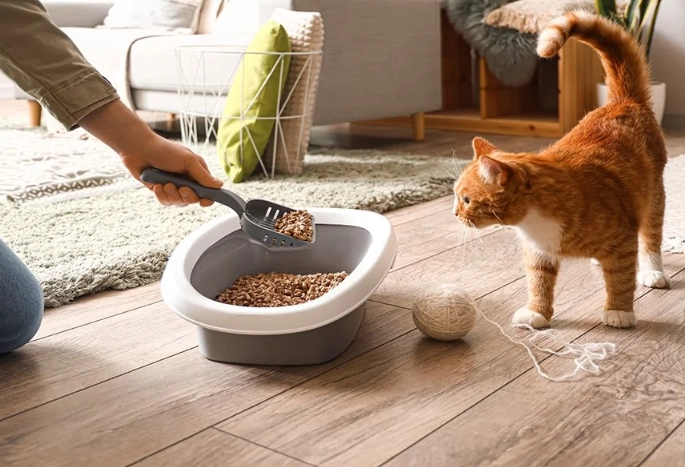
The sequence is always: 1. Rule out medical with a vet. 2. Optimize the litter box environment (size, litter, location, cleanliness). 3. Use smart management (confinement, positive reinforcement). 4. Be patient and consistent.
That tiny 8-week-old brain is learning the rules of your world. Your job is to make the right choice—the litter box—the easiest, most comfortable, and most rewarding choice they can make. When you solve the mystery of why your 8 week old kitten won't use the litter box, you're not just cleaning up fewer messes. You're building the foundation for a lifetime of good habits and a happier, less stressed feline companion.
And trust me, the day you realize you haven't thought about the litter box problem in a week is a fantastic day. It will come.


Join the Conversation