Essential Guide
Let's be honest for a second. When you first bring a chameleon home, the excitement is real. You've got this incredible, color-changing reptile, and you just want to give it the best life possible. But then you start looking into their needs, and suddenly you're drowning in information about UVB percentages, basking gradients, mesh versus glass, and humidity swings.
It's overwhelming. I know because I've been there. My first chameleon habitat setup was, in hindsight, a bit of a disaster. I used the wrong substrate, skimped on the lighting, and wondered why my little guy seemed so stressed. It was a learning curve, for sure.
This guide is everything I wish I'd known back then. We're not just going to list parts; we're going to talk about the why behind every piece of your chameleon's new home. Why does screen cage size matter so much? What's the real deal with those expensive lights? How do plants actually contribute beyond just looking nice?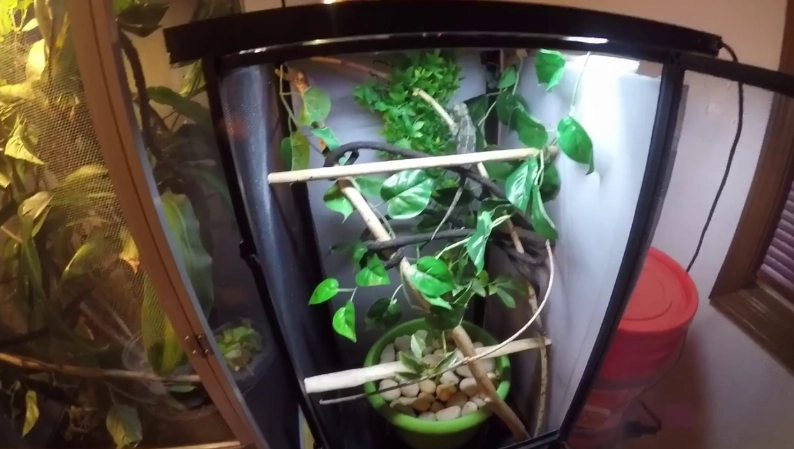
We'll break it all down, step by step. The goal is simple: to help you create an environment where your chameleon doesn't just survive, but truly thrives.
Why Getting the Habitat Right is Non-Negotiable
You might think, "It's just a cage, right?" With chameleons, that mindset is the fastest path to health issues. These reptiles are environmental specialists. In the wild, they have entire forests to regulate their body temperature, find water, and escape stress. In captivity, our enclosure is their entire world.
A poor setup directly leads to the most common chameleon health problems: Metabolic Bone Disease (MBD) from lack of proper UVB, respiratory infections from stagnant air and incorrect humidity, dehydration from no drinking options, and chronic stress from feeling exposed or cramped. Stress alone can suppress their immune system, making them vulnerable to everything else.
Investing time and resources into a correct chameleon tank setup from day one isn't an extra expense; it's preventative veterinary care. It's the foundation for a long, healthy life. The Association of Reptilian and Amphibian Veterinarians (ARAV) consistently cites improper husbandry as a primary cause of illness in pet reptiles. Getting the habitat right is the single most important thing you can do.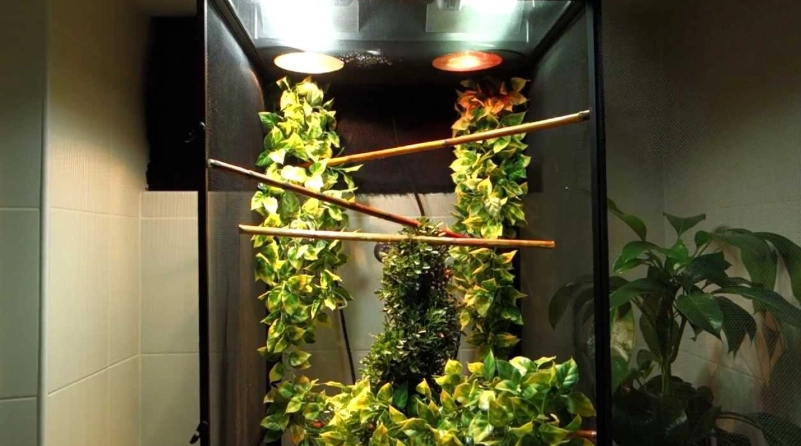
The Step-by-Step Blueprint for a Perfect Chameleon Enclosure
Step 1: Choosing the Palace – The Enclosure Itself
This is your canvas. Get it wrong, and you'll be fighting an uphill battle forever.
Size is Everything: The old "minimum size" recommendations are just that—minimums. For an adult Veiled or Panther chameleon, think big. A 24"x24"x48" tall enclosure is the widely accepted starting point for a single adult. Larger is almost always better. Height is critical because they are arboreal; they live up, not out. A tall cage allows for a proper temperature gradient from top to bottom.
The Great Debate: Screen vs. Glass vs. Hybrid: This one sparks endless forum threads.
- All-Screen/Mesh Cages: These are the gold standard for most keeper-kept species like Veileds and Panthers. Why? Unbeatable airflow. Chameleons are prone to respiratory infections in stagnant, humid air. Screen cages prevent this. The downside? Maintaining humidity can be trickier (you'll often need to screen in some sides or mist more frequently). Brands like ReptiBreeze are popular for a reason.
- Glass Terrariums (Vivariums): Often used for species requiring very high, stable humidity, like some Jackson's or carpet chameleons. The key is to use front-opening glass tanks with screened tops for some ventilation. A solid top is a recipe for disaster. The big risk with glass is overheating and poor air circulation if not managed carefully.
- Hybrid Enclosures: These combine solid sides (often PVC or acrylic) with large mesh panels. They offer a great balance—easier to maintain heat and humidity while still providing solid ventilation. They're becoming a favorite among advanced keepers.
My personal take? For a beginner with a Veiled or Panther, start with a large, high-quality screen cage. The airflow benefit is huge, and the humidity challenge is easier to solve than fixing stagnant-air health problems.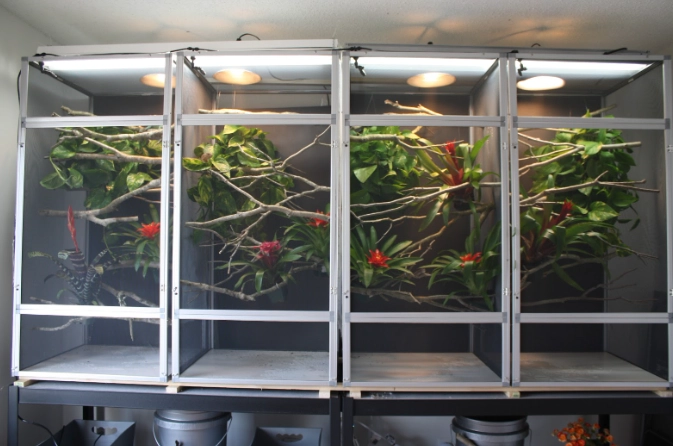
| Enclosure Type | Best For | Key Advantage | Biggest Challenge |
|---|---|---|---|
| All-Screen Cage | Veiled Chameleons, Panther Chameleons | Superior airflow, prevents respiratory issues | Maintaining consistent humidity levels |
| Glass Terrarium | High-humidity species (some Jackson's) | Excellent humidity retention, clear viewing | Risk of overheating and poor ventilation |
| Hybrid (PVC/Mesh) | All species, especially in dry climates | Great balance of heat/humidity retention and airflow | Higher initial cost, less common |
Step 2: Lighting & Heating – Recreating the Sun
This is where many first-timers stumble. Lighting isn't just about seeing your pet; it's about their biological functions.
UVB Lighting: The Non-Negotiable Life Light
Chameleons cannot process calcium properly without UVB rays. Without it, they develop Metabolic Bone Disease (MBD), a painful, crippling, and often fatal condition. You need a linear fluorescent tube UVB light, not a coil bulb. Coil bulbs have a limited, intense output zone that's ineffective for a tall cage.
- Fixture: A T5 HO (High Output) fixture is the modern standard. It's powerful and effective even through a screen top.
- Bulb Strength: For most chameleons (Veiled, Panther), a T5 HO bulb with a 5.0 or 6% UVB output is recommended. The bulb should span about 2/3 the length of the enclosure and be placed on the screen top, directly above the basking area.
- Replacement: UVB output decays over time. Even if the bulb still lights up, it may not be emitting sufficient UVB. Replace the bulb every 6-12 months as per manufacturer guidelines. The UV Guide UK is an invaluable, science-backed resource for understanding UVB requirements in detail.
Basking/Heat Lamp: Creating the Sunny Spot
This is a separate fixture from the UVB. Its job is to create a localized hot spot where your chameleon can raise its core temperature. Use a simple incandescent or halogen bulb in a dome lamp. The wattage (50w, 75w, 100w) depends on your room temperature and cage height—you'll need a thermometer to dial it in.
The Goal: The basking branch (the spot directly under the heat lamp) should reach a species-specific temperature. For a Veiled chameleon, this is typically 85-90°F (29-32°C). The bottom of the cage should be much cooler, around 70-75°F (21-24°C). This gradient lets your chameleon thermoregulate by moving up and down.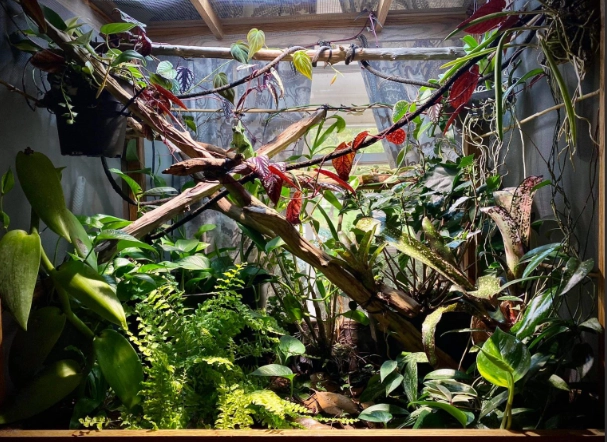
Step 3: Hydration and Humidity – The Invisible Essentials
Chameleons rarely drink from a standing water bowl. Their method is licking water droplets off leaves. Your chameleon cage setup must provide this.
Misting Systems: The most effective method. An automatic misting system (like MistKing or Exo Terra Monsoon) is a game-changer. It mists the enclosure for 2-5 minutes, several times a day, simulating rain. This provides drinking water and spikes the humidity. A hand mister works but requires a very consistent schedule.
Drippers: A simple water dripper creating a steady drip onto leaves gives them a constant drinking opportunity. Many keepers use both a mister and a dripper.
Humidity Levels: This varies by species. Veiled chameleons need moderate humidity (50-60%) with spikes during misting. Panther chameleons prefer it a bit higher. A good digital hygrometer (not the cheap analog ones) is essential to monitor this. Humidity should be higher at night and lower during the day.
Step 4: Furniture and Flora – Building the 3D Jungle
An empty cage is a stressed chameleon. They need clutter to feel secure and pathways to explore.
Branches and Vines: Create a highway system. Use a variety of diameters, with the main basking branch being sturdy and horizontal. Use natural woods like manzanita, ghostwood, or bamboo (ensure they are clean and pesticide-free). Arrange them diagonally and horizontally at different levels. Avoid placing them directly under the heat lamp in a straight line; create options.
Live Plants: The Secret Weapon
This is non-negotiable. Live plants increase humidity, provide cover, and are safe for your chameleon to climb on (and occasionally nibble). They also help process waste and improve air quality. Avoid fake plants—they can harbor bacteria and don't help with humidity.
Safe Plant List (A few top choices):
- Pothos (Devil's Ivy): The champion. Hardy, grows like crazy, provides dense foliage, and is non-toxic.
- Schefflera (Umbrella Plant): Great sturdy branches and broad leaves for cover.
- Ficus (Weeping Fig): Another excellent, sturdy option, though some may be sensitive to its sap.
- Hibiscus: Safe, beautiful, and the flowers are an occasional treat.
Always repot plants in organic soil, covered with large river rocks or a screen to prevent your chameleon from ingesting the substrate. Resources like Chameleon Forums' care sheets and the LLLReptile safe plant list are fantastic for cross-referencing.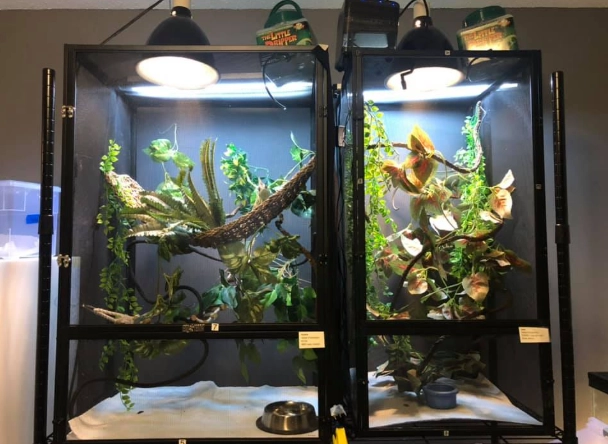
Step 5: The Floor – Substrate vs. Bare Bottom
Here's a controversial one. For beginner and intermediate keepers, I strongly recommend a bare bottom or a simple liner (paper towel, reptile carpet). Why? It's hygienic and eliminates the risk of impaction if your chameleon accidentally ingests loose substrate while hunting.
The advanced alternative is a bioactive setup. This involves a drainage layer, a soil substrate, clean-up crews (isopods, springtails), and plants rooted directly in the soil. It creates a self-cleaning, natural ecosystem. It's amazing when done right but complex to establish and balance. It's a project for after you've mastered the basics of chameleon habitat setup.
Common Chameleon Habitat Setup Questions Answered
Putting It All Together: A 24-Hour Habitat Checklist
Once your veiled chameleon habitat or panther setup is complete, run through this daily and weekly mental checklist:
Every Morning:
- Lights (UVB and heat) turn on automatically (use timers!).
- Check temperatures: Is the basking spot correct? Is the cool end cool?
- Look for feces and remove them.
- Ensure the dripper/mister is working and has water.
- Observe your chameleon. Are its eyes bright? Is it moving to bask?
Every Evening:
- Lights go off, providing total darkness.
- Note the nighttime temperature drop.
- Check humidity levels are rising appropriately for the night cycle.
Once a Week:
- Test your UVB light's output with a Solarmeter 6.5 (the gold standard) or mark your calendar to replace the bulb on schedule.
- Clean glass/acrylic viewing panels.
- Inspect plants for dead leaves or pests.
- Weigh your chameleon to track health.
Building the perfect chameleon habitat setup is a project. It requires research, investment, and attention to detail. But there's nothing quite like watching your chameleon explore a thriving, healthy environment you created—seeing it drink from a freshly misted leaf, bask contently under perfect light, or navigate a network of branches with confidence. That's the reward. It makes every bit of the effort worthwhile.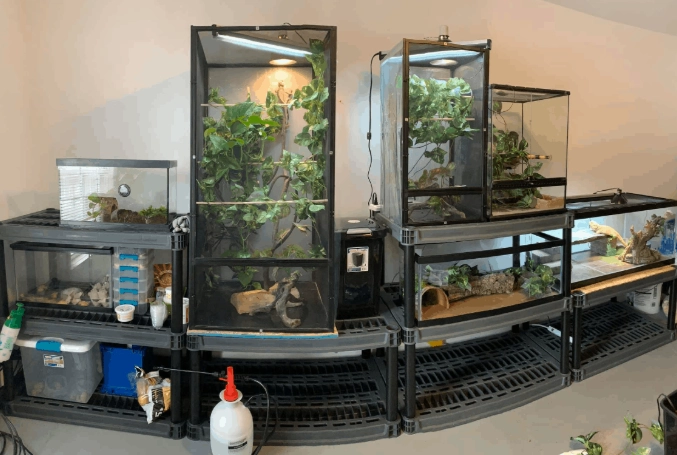
Start with a solid plan, invest in the key components (especially lighting), and don't be afraid to adjust things as you learn your specific animal's preferences. Your chameleon will thank you for it with vibrant colors, active exploration, and a long, healthy life.



Join the Conversation