In This Guide
- Why the Mother Cat is Your Secret Weapon in Litter Training
- Getting Started: The Pre-Training Setup (Your Homework)
- The Step-by-Step Guide: How to Litter Train Kittens with Mother
- Troubleshooting: When Things Don't Go Perfectly
- Your Questions, Answered (The Stuff You're Actually Searching For)
- Final Thoughts: Trust the Process
Let's be honest. The idea of training a tiny, wobbly-legged ball of fur to use a litter box can feel a bit daunting. You might picture weeks of mess, accidents, and frustration. But what if I told you there's a co-teacher already in the house, one with far more credibility on the subject than you? I'm talking about the queen herself—the mother cat.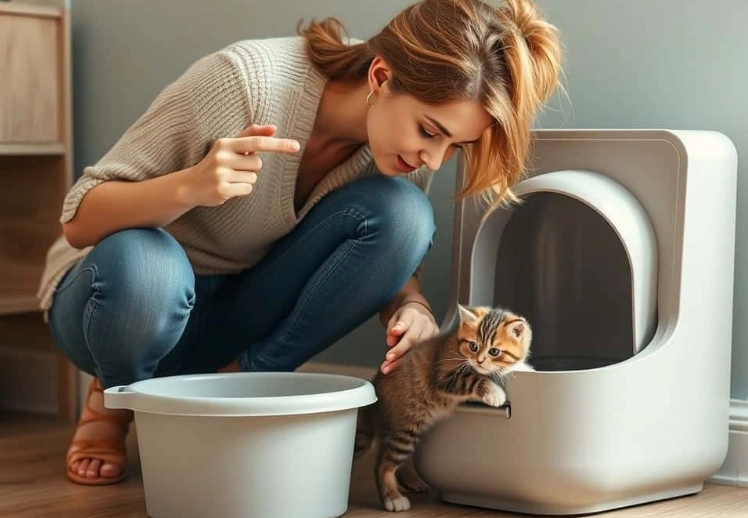
When you're figuring out how to litter train kittens with mother, you're not starting from scratch. You're working with an instinct, not against it. It's one of the coolest parts of having a mama cat around. She does most of the work, and you just need to set the stage properly. I learned this the hard way years ago with my first cat's litter. I tried to do it all myself, separate from the mom, and it was a needlessly messy process. When I let the mother lead in subsequent litters, everything clicked.
This guide is all about that natural method. We'll ditch the anxiety and work with the process that's been hardwired into cats for millennia.
Why the Mother Cat is Your Secret Weapon in Litter Training
Think about it. In the wild, cats instinctively bury their waste to hide their scent from predators and competitors. This isn't a learned social nicety; it's a survival tactic embedded in their DNA. A mother cat doesn't "train" her kittens in the way we think of training a dog. She simply goes about her business, and the kittens, driven by instinct and a powerful desire to imitate their mom, follow suit.
Here’s what the mother brings to the table that we simply can't replicate:
- The Ultimate Role Model: Kittens trust and copy their mother above all else. Seeing her dig, eliminate, and cover in a specific spot is the most powerful lesson possible.
- Timing is Everything: A mother cat often licks her kittens' genital areas to stimulate elimination for the first few weeks. As they grow, she leads them to the elimination area when they need to go. This creates a powerful association between the urge and the location.
- Stress Reduction: Training alongside mom and littermates is a low-stress, familiar activity. Isolating a kitten for training can create anxiety, which is the number one enemy of good litter box habits.
So, if the mom is so great, why do we need a guide? Because our human environments aren't perfect. We choose the wrong litter, put the box in a scary place, or clean it with harsh chemicals. We can unintentionally throw a wrench into this beautiful natural process. Your goal in learning how to litter train kittens with mother is to avoid those mistakes.
Getting Started: The Pre-Training Setup (Your Homework)
Before the kittens even think about using the box, you need to get your supplies and setup right. This is where most people slip up. They just plop down any old box and any bag of litter and wonder why it's not working.
The Litter Box: Size, Style, and Number Matter
For tiny kittens, the standard rule is one box per cat, plus one extra. In a household with a mother and a litter of four kittens, you're looking at six cats eventually. Start with at least three boxes from the get-go. But for the initial kitten litter box training phase with mom, focus on the nursery box.
The nursery box must be low-sided. I'm talking an inch or two high. A kitten needs to tumble in and out easily. A high-sided box is like asking a toddler to climb over a wall to use the toilet—it's not happening. A simple, cheap, low plastic storage tray often works better than a fancy "kitten" box sold in stores. Just make sure it's sturdy.
Place this primary box in the quiet, low-traffic corner of the mother cat's nesting area. It should be away from her food and water, but easily accessible. She needs to feel safe using it, and she needs to be able to easily herd her kittens to it.
The Great Litter Debate: What to Fill the Box With
This is critical, and where I see the most confusion. Adult cats can tolerate various litters, but kittens are a different story. Their senses are sharp, and they are prone to tasting things (including litter).
For the purpose of how to litter train kittens with mother, you want a litter that:
- Feels soft on tiny paws (no sharp crystals).
- Is unscented (perfumes are overpowering and can deter use).
- Is non-clumping for young kittens.
Let's talk about that last point. Clumping litter is fantastic for adults, but if a curious kitten ingests it (and they will sniff and sometimes taste it), the clumping action can occur inside their tiny digestive tract, causing a dangerous blockage. It's a real risk. Veterinarians and organizations like the Cornell Feline Health Center consistently recommend non-clumping litter for kittens under 8-12 weeks old.
Here’s a quick comparison to help you choose:
| Litter Type | Best For Kittens? | Pros | Cons |
|---|---|---|---|
| Non-Clumping Clay | YES - The top choice | Inexpensive, familiar texture, easy to find, safe if ingested in small amounts. | Dusty, not eco-friendly, doesn't control odor as well. |
| Paper Pellet | Good Alternative | Very safe, dust-free, absorbent. | Some cats dislike the texture, doesn't resemble natural substrate as well. |
| Wood Pellet | Good Alternative | Natural, absorbent, controls odor well. | Texture change as it gets wet can confuse some kittens. |
| Clumping Clay/Crystal | NO - Avoid for young kittens | Excellent odor control, easy scooping. | Risk of intestinal blockage if ingested. Can be sharp on paws. |
| Silica Gel (Crystals) | NO - Avoid for young kittens | Superb odor control. | Extremely dangerous if ingested. Sharp texture. |
My personal go-to is a simple, unscented, non-clumping clay for the first two months. It's not glamorous, but it works and it's safe. Once the kittens are reliably using the box and past the oral exploration phase (around 12+ weeks), you can very gradually transition to a clumping litter if you prefer.
The Step-by-Step Guide: How to Litter Train Kittens with Mother
Okay, the stage is set. You have low-sided boxes filled with kitten-safe, non-clumping litter in quiet, accessible locations. Now, the main event. Remember, patience is key. This isn't a one-day project.
Stage 1: The Observation Period (Weeks 3-4)
Kittens' eyes and ears are open, and they're starting to wobble around. Their mother is still stimulating them to go, but they're becoming aware of their surroundings.
- Your Action: None. Seriously. Just watch. Notice when the mother cat uses the litter box herself. The kittens will observe. They might even stumble in after her. This passive learning is the foundation.
- Do NOT place kittens in the box during this stage. It can startle them and create a negative association.
This stage is all about letting the mother's routine become the kittens' normal.
Stage 2: The First Introduction (Week 4 Onward)
The kittens are more mobile, curious, and starting to eat solid food. This means their digestive systems are kicking into gear, and the need for a designated toilet area becomes more pressing.
- After a nap or a meal, gently place the kittens in the litter box. Don't hold them there. Just set them down gently and let them explore.
- Take one of their paws and mimic a gentle scratching motion in the litter. This triggers the instinct to dig.
- The most powerful tool? Let the mother cat do it. Often, she will go to the box, and the kittens will follow. If you see her lead them, that's perfect. Reinforce this by not interrupting.
Stage 3: Reinforcement and Expansion (Weeks 5-8+)
As the kittens grow and their world expands beyond the nesting room, your setup needs to expand too.
- Add More Boxes: Place additional low-sided boxes in new areas the kittens are allowed to explore. The general rule is a box on every level of the home they access.
- Maintain Impeccable Cleanliness: Scoop solid waste from the boxes at least once a day, preferably twice. Kittens are fastidious. A dirty box is a major reason for refusal. Dump and replace non-clumping litter completely every few days.
- Use Enzymatic Cleaner for Accidents: If a kitten goes outside the box, clean the spot thoroughly with an enzymatic cleaner designed for pet urine. Regular cleaners leave a scent residue that says "toilet here" to a cat. This is non-negotiable.
The process of how to litter train kittens with mother truly shines here. As the mother cat uses the various boxes around the house, she's essentially giving each location her stamp of approval, showing the kittens they are all safe options.
Troubleshooting: When Things Don't Go Perfectly
Even with mom's help, you might hit a snag. Here's how to handle common issues.
Problem: The Kittens Are Using the Box, But the Mother Cat Isn't.
This is backwards! Usually, it means the mother is unhappy with the box setup. Is it too dirty? Is it in a noisy location? Did you switch litters on her? Revert to her preferred setup. Her comfort is paramount for the kittens' continued learning.
Problem: A Kitten Consistently Goes Right NEXT to the Box.
This is a classic sign. It usually means the kitten understands the general area but has an issue with the box itself. Is the side too high? Is the litter too deep or too shallow? Try a different style of low tray. Sometimes they just don't like the feel of that particular litter. Offer a second box right next to the first with a different type of safe litter (e.g., clay in one, paper in the other) and see which one they choose.
Problem: One Kitten Just Isn't Getting It.
Isolate the cause. Is this kitten the runt, less confident? Is it being bullied away from the box by siblings? Ensure there are enough boxes (spaced apart) for everyone to have privacy. You may need to give this kitten some brief, separate one-on-one training sessions with its mother in a small, quiet room with just one box, food, and water, repeating the Stage 2 introduction.
Remember, the core of how to litter train kittens with mother is leveraging her influence. If one kitten is struggling, make sure mom is spending time near that kitten around the box.
Your Questions, Answered (The Stuff You're Actually Searching For)
Final Thoughts: Trust the Process
Learning how to litter train kittens with mother is about embracing a partnership. You're not the sole instructor. You're the provider of resources and the remover of obstacles. The mother cat is the behavioral guide. When you get this synergy right, it feels almost effortless. The kittens learn in a low-stress, natural way, and you avoid the headaches of constant clean-ups.
It boils down to this: give them safe, accessible boxes with appropriate litter, keep everything incredibly clean, and let mom show them how it's done. Interfere gently only when needed. Pay attention to their preferences—some litters just don't feel right to certain cats, and that's okay. Be willing to experiment within the bounds of safety.
I've found that people who struggle with kitten litter box training are usually overcomplicating it or working against the grain of feline instinct. Simplify. Observe. Facilitate. That's the real secret. Now go enjoy those kittens—with a lot less mess to worry about.



Join the Conversation