Your cat has decided the litter box is no longer acceptable. Maybe they're using your favorite rug, the corner behind the sofa, or even your bed. It's frustrating, it smells, and it makes you wonder what you did wrong.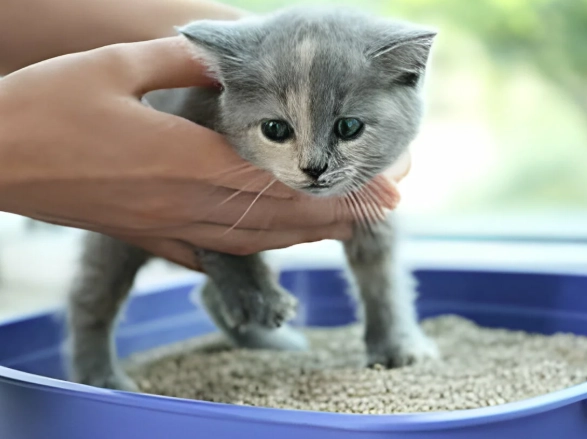
Here's the thing: cats don't boycott the litter box out of spite. It's a signal, often a loud and messy one, that something is wrong. Your job is to play detective, not disciplinarian.
What You'll Find in This Guide
Understanding Why Your Cat Refuses the Litter Box
Think of it this way. If your bathroom was dirty, in a noisy hallway, had a toilet seat you hated, and you had a bladder infection, you'd probably find somewhere else to go, too. A cat's reasons fall into three big buckets.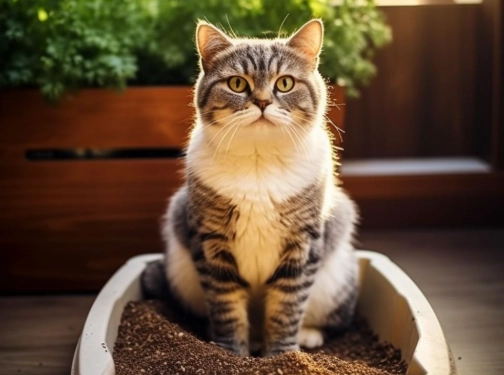
Medical Issues: The Silent Culprit
This is non-negotiable. Painful conditions like urinary tract infections (UTIs), bladder stones, cystitis, arthritis, or even diabetes can make using the box an agonizing experience. The cat then associates the box with pain and avoids it. According to resources from the Cornell Feline Health Center, any sudden change in elimination habits warrants an immediate vet visit.
Litter Box Aversion: The Box Itself is the Problem
The box, its contents, or its location has become unpleasant. This is where most human mistakes happen.
- Dirty Box: Scooping once a day? For many cats, that's not enough.
- Wrong Litter: Perfumed, dusty, or a texture they dislike (like large pellets).
- Wrong Box: Too small, has a hood they feel trapped in, or has a high lip that's hard to climb.
- Wrong Location: Next to a loud appliance, in a high-traffic area, or too far away.
- Not Enough Boxes: The classic rule is one per cat, plus one extra. Multiple cats sharing one box is a recipe for trouble.
Stress and Anxiety: The Environmental Factor
Cats are creatures of habit. A new pet, a new baby, construction noise, moving furniture, or even a conflict with another cat in the home (even if they don't physically fight) can trigger stress-marking or avoidance.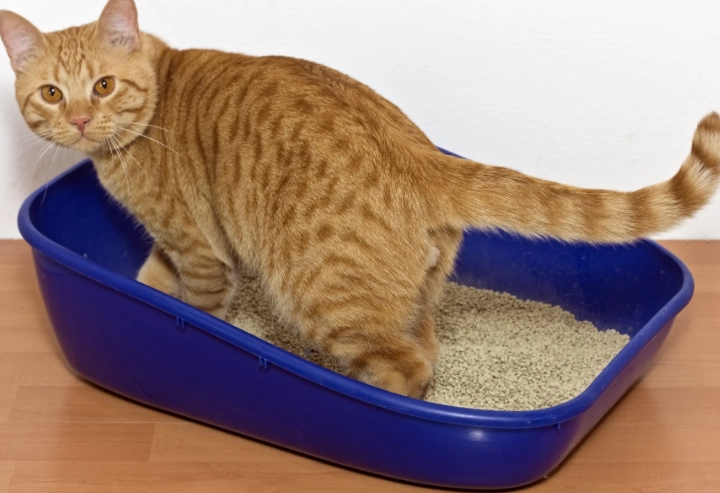
The One Mistake Almost Everyone Makes
They start with behavior modification before ruling out medical causes. I've seen it countless times. An owner tries three new litters, buys a fancy box, and gets frustrated for weeks, only to find out their cat had a painful UTI the whole time. The vet is always step one. Full stop.
Medical Check-Up: The First and Most Crucial Step
Call your vet. Describe the problem precisely: when it started, the frequency, the locations, and any changes in urine/feces appearance or your cat's behavior (drinking more, vocalizing, etc.).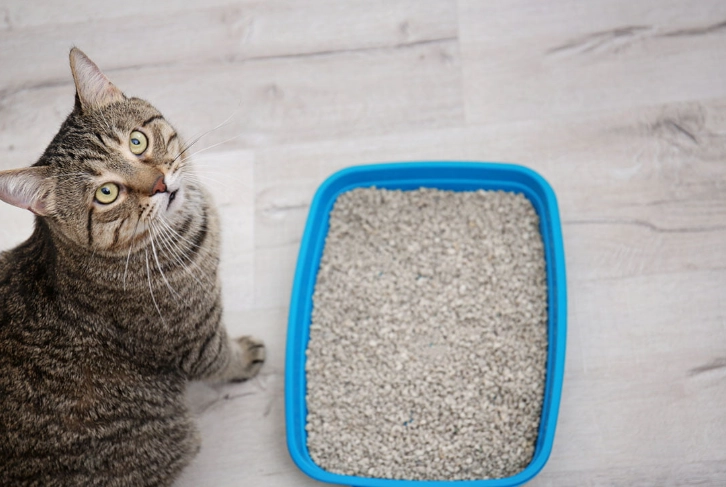
The vet will likely do a physical exam and may recommend a urinalysis, blood work, or imaging. Treating an underlying medical condition often solves the litter box issue entirely. If the vet gives a clean bill of health, you can confidently move on to environmental and behavioral fixes.
Fixing Your Litter Box Setup: The 5 Golden Rules
Now we rebuild the perfect bathroom experience from scratch. Follow these rules like a checklist.
1. The Right Number and Placement
One box per cat, plus one extra. Place them in quiet, low-traffic, easily accessible locations on different floors or ends of the house. Avoid placing food and water bowls right next to the box—would you want to eat in your bathroom?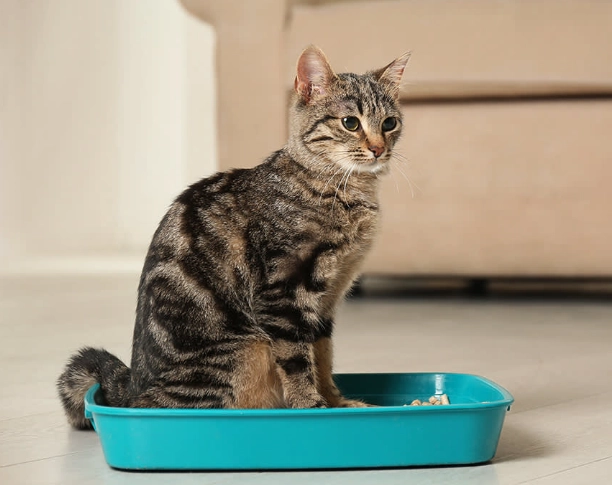
2. The Right Box
Bigger is almost always better. The box should be at least 1.5 times the length of your cat from nose to tail base. Most cats prefer open, uncovered boxes that don't trap odors and give them a 360-degree view. For older or arthritic cats, use a box with a very low entry lip.
3. The Right Litter
Start with the basics: unscented, fine-grained, clumping clay litter. It's the closest to sand, which is a natural substrate for elimination. Dump and replace all litter weekly, and wash the box with mild soap (no strong chemicals).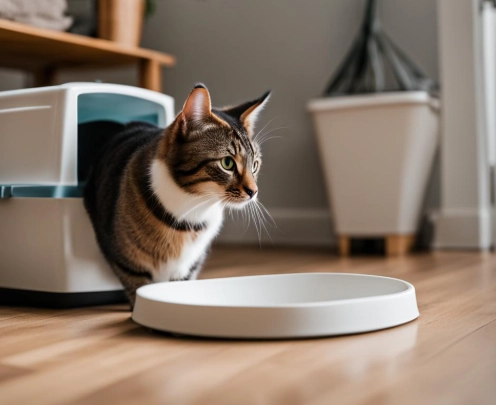
4. Impeccable Cleanliness
Scoop at least twice a day. For a cat that's already avoiding the box, you might need to scoop immediately after each use. A dirty box is the number one environmental reason for refusal.
5. Stress Reduction
Provide vertical space (cat trees), hiding spots, and consistent routines. Use pheromone diffusers like Feliway in the areas where incidents occur. In multi-cat homes, ensure resources (food, water, boxes, perches) are plentiful and spread out to reduce competition.
Behavioral Retraining and Clean-Up Protocol
Your setup is now perfect. But your cat has established a new, bad habit. Here's how to break it.
Deep Cleaning the Accident Zones
Standard cleaners don't work. You need an enzymatic cleaner specifically for pet urine. These break down the uric acid crystals that linger and signal "bathroom here" to your cat. Soak the area thoroughly, let it dry completely. For carpets, a black light can help find old stains.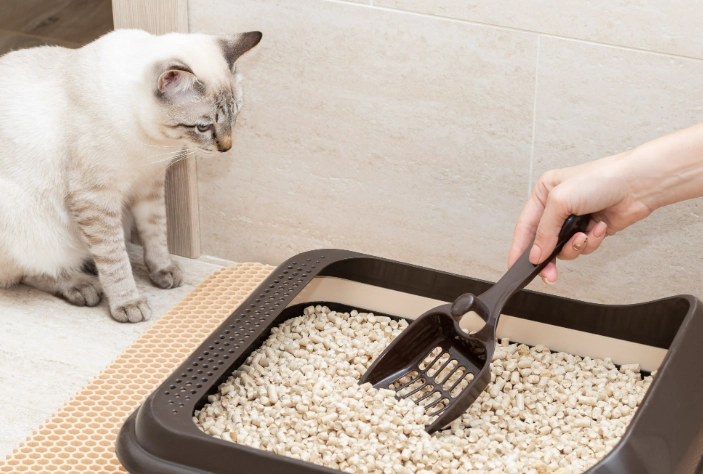
Making the Old Spot Unappealing
After cleaning, make the area undesirable for elimination. Place a double-sided tape sheet, aluminum foil, or a plastic carpet runner (nub-side up) over the spot. You can also place a food bowl or toys there to change the association from "bathroom" to "dining room."
Gently Guiding Back to the Box
Increase positive associations with the new, perfect litter box area. Place treats near it. Play nearby. If you catch your cat about to go in the wrong spot, calmly interrupt (a gentle clap) and carry them to the litter box. Never yell or rub their nose in it—this only creates fear.
For a severely averse cat, you may need to confine them temporarily to a small, easy-to-clean room (like a bathroom) with the new litter box, food, water, and a bed. This resets their habits. Once they use the box reliably for a week, gradually give them more space.
Patience is key. It took time for the problem to develop, and it will take time to fix.




Join the Conversation