Let's cut through the noise. The best way to train your bird isn't a secret trick or a magic phrase. It's a philosophy built on two pillars: trust and positive reinforcement. Forget dominance or punishment—they create fearful, neurotic pets. I've seen it happen. The goal is a willing partner, not a subdued prisoner. Whether you have a tiny budgie or a majestic macaw, the core principles are the same. This guide walks you through them, step by messy, rewarding step.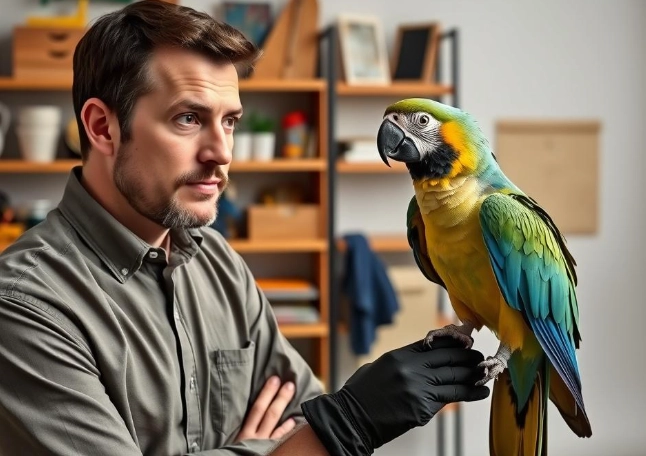
Your Quick Flight Path
Building Trust: The Non-Negotiable First Step
You can't train a bird that's terrified of you. This phase has zero commands. It's all about association.
Start by just sitting near the cage, reading or talking softly. Let the bird observe you without pressure. Offer high-value treats (like a piece of walnut or millet spray) through the bars without demanding anything in return. The message is simple: My presence predicts good things.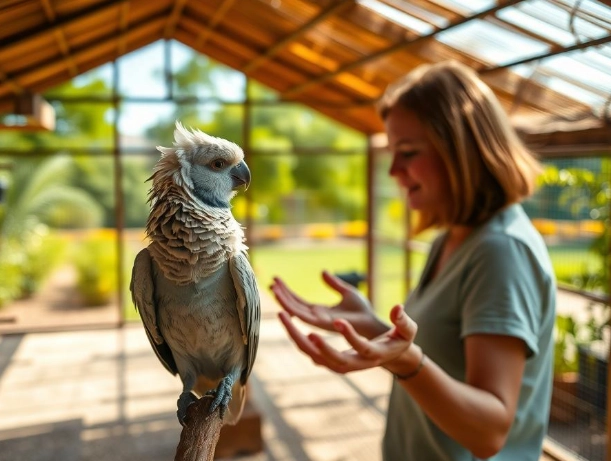
Once the bird eagerly takes treats, open the cage door and let it decide to come out. No grabbing. This might take days or weeks. I worked with a rescued cockatoo who spent the first two weeks just watching me from the back of the cage. Rushing it would have destroyed any progress.
The "Step Up" Command: Your Foundation
This is usually the first real command. Present your hand or a perch as a stable surface near the bird's lower chest. Gently press against its belly. The natural reaction is to step up for balance. The moment it does, lavish praise and offer a treat.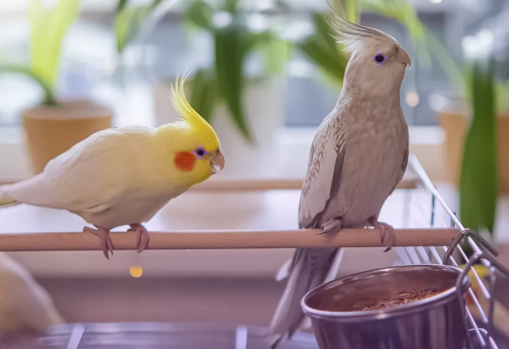
Consistency is key. Use the same phrase, "Step up," every time. Never use this command to move the bird to a place it dislikes (like back in the cage if it's playtime). You want it to be a neutral, positive request.
The Core Tool: Positive Reinforcement Training Explained
This is the engine of all modern animal training, backed by decades of behavioral science from sources like the International Association of Animal Behavior Consultants. It's simple: reward the behavior you want, and ignore (or manage) the behavior you don't.
The reward must be immediate—within a second. Birds don't connect actions with consequences after a delay. Find your bird's "currency." For some, it's a sunflower seed. For others, it's head scratches or verbal praise.
Clicker Training: A Game-Changer
A clicker is a small device that makes a consistent "click" sound. You "charge" the clicker by clicking and immediately giving a treat, repeated 10-15 times. The bird learns: click = treat is coming. Now, the click can mark the exact moment the bird does the right thing, even if you're a second away from delivering the treat. It adds incredible precision.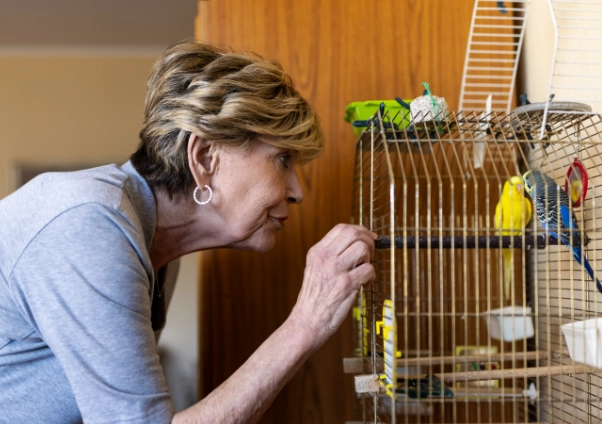
It's not mandatory, but it makes complex trick training much easier.
What to Train First: The Essential Skills Hierarchy
Don't jump to "play dead" before you have the basics. This is a logical progression.
| Skill | Why It's Important | Approx. Time Commitment | Key Tip |
|---|---|---|---|
| Step Up / Down | Basic handling, safety, moving the bird without force. | 1-3 weeks | Practice on different perches and hands. |
| Stationing (Stay on Perch) | Teaches impulse control, foundation for vet exams, grooming. | 2-4 weeks | Start with 2 seconds, slowly increase duration before rewarding. |
| Recall (Come When Called) | Critical for safety, free-flight practice (for advanced owners). | 3-6 weeks+ | Start very short distances indoors with no distractions. |
| Accepting Towel / Handling | Makes nail trims, wing clips, and vet visits less traumatic. | Ongoing | Associate the towel with treats, never use it only for restraint. |
Notice how these aren't "tricks." They're life skills that make cohabitation safer and less stressful for both of you. A bird that steps up reliably is a bird you can easily check for injuries.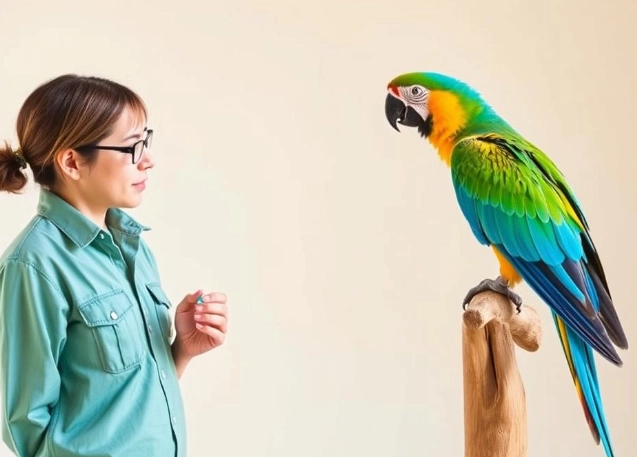
Moving to Tricks & Fun: Expanding Your Bird's World
Once the basics are solid, training becomes a fantastic bonding activity and mental stimulation. Birds are intelligent and get bored.
Target Training is the gateway to almost any trick. Teach the bird to touch the end of a chopstick or a brightly colored stick with its beak. You guide it with the target to turn around, go through hoops, or retrieve objects. It's how I taught my conure to put a ball in a cup—he's following the target, not understanding the abstract concept of "basketball."
Shaping is rewarding successive approximations. Want your bird to ring a bell? First, reward for looking at it. Then for moving toward it. Then for touching it. Finally, for hitting it hard enough to ring. Break everything down into tiny, achievable steps.
Keep sessions short. Five to ten minutes, once or twice a day, is far better than an hour on Saturday. End on a success, even if you have to make the final step very easy.
Troubleshooting: Fixing Common Behavior Problems
Training isn't just for fun; it's your primary tool for fixing issues.
Screaming for Attention: This is the big one. The rule is brutal: never reward the scream. Reward quiet, independent play. When the screaming starts, do nothing. No eye contact, no talking, no walking over. If you must, leave the room. The instant there's a pause of a few seconds, go back and reward. You're teaching that quiet brings you back, screaming makes you disappear.
Biting: Birds bite from fear, frustration, or hormonal agitation. Yelling or putting them down angrily can be a reward (they wanted you to go away). Instead, stay calm, put them down neutrally on a perch, and turn away for 30 seconds. You remove the interaction (which is what they wanted), but without drama, which can be reinforcing.
Feather Plucking: Training is a distraction and confidence builder, but plucking is complex. It often requires a avian veterinarian check-up first to rule out medical causes, as recommended by resources like the Association of Avian Veterinarians. Environmental enrichment and foraging training (hiding food) are crucial alongside any behavioral training.
Your Training Questions, Answered
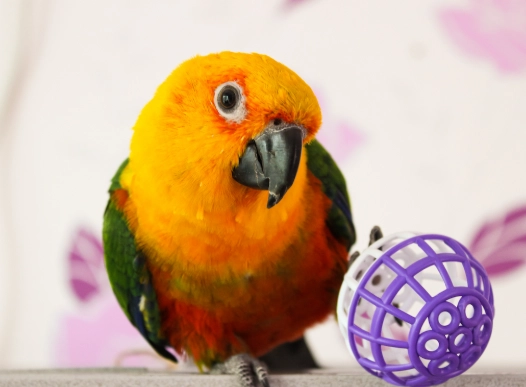
The journey of training your bird is the journey of building a relationship. There will be setbacks—bites, regressions, days when they seem to forget everything. That's normal. The goal isn't a perfectly obedient robot, but a feathered friend who chooses to interact with you, trusts you, and enjoys the puzzle of learning together. Start with trust, reinforce the good, and be patient. The results—a strong bond and a happy, engaged bird—are worth every minute.


Join the Conversation