Quick Guide
You know that feeling. You're standing there with a brush in one hand, a slightly suspicious dog at your feet, and a simple question swirling in your head: which direction do you groom a dog? It seems like it should be straightforward, right? Just brush the fur. But then you start reading, and someone says always go with the hair growth. Another says you need to go against it to get the undercoat. A third mentions something about circular motions. It's enough to make you put the brush down and just give the dog a treat instead.
I've been there. Honestly, I messed this up for years with my first dog, a gorgeous but perpetually tangled Golden Retriever mix named Rusty. I thought I was doing a great job, brushing him every day. But I was just skimming the surface, literally. I was only brushing in the direction his topcoat grew, which made him look shiny on top but did nothing for the dense, woolly undercoat that was slowly turning into a giant, inseparable felt mat near his skin. The vet had to point it out during a checkup. It was a bit embarrassing, and worse, it was uncomfortable for him. That mat was pulling on his skin every time he moved.
So let's cut through the confusion. The short answer to "which direction do you groom a dog" is: it depends. It depends on the tool in your hand, the type of coat your dog has, and what you're trying to achieve at that very moment. Brushing isn't a one-direction-fits-all task. Getting it wrong isn't just about a less-fluffy dog; it can lead to skin irritation, hidden mats, and a dog who learns to hate grooming sessions.
The Core Principle: The fundamental rule of thumb is to start by brushing in the direction of hair growth. This is your base layer, your initial pass. It's gentle, it helps distribute natural skin oils, and it removes some of the surface-level loose hair and debris. For many dogs with short, smooth coats, this might be all you need. But for most dogs, especially the fluffy, double-coated, or curly ones, answering "which direction do you groom a dog" requires a more nuanced, multi-step approach.
Why Does Grooming Direction Even Matter? It's Not Just About Looks
If you think brushing direction is a trivial detail, think again. It's the difference between a spa day and a torture session for your pup's skin and coat. The direction you choose directly impacts the health of the skin underneath all that fur.
Brushing with the grain (the direction the hair grows) is like gently smoothing down a velvet blanket. It's calming. It aligns the hair cuticles, spreading those natural oils (sebum) from the skin down the hair shaft. This oil is nature's conditioner, giving the coat its waterproofing and shine. The American Kennel Club (AKC) consistently emphasizes this as the first step in any grooming routine to maintain coat health.
Now, brushing against the grain? That's a more intense move. You're lifting the hairs away from the skin to get deep into the undercoat. This is essential for removing dead hair that's trapped close to the skin—hair that would otherwise form mats and create a hot, itchy blanket. But do it too aggressively, or with the wrong tool, and it's like back-combing. You can scratch the skin, cause static, and honestly, it can just hurt. This is where most people, myself included in the early days, either under-do it or over-do it.
And then there's the matting. Mats are public enemy number one. They start small, near the skin, in areas of friction—behind the ears, under the armpits, around the collar. If you're only ever brushing in the direction of growth on the surface, you'll never even see these forming. They tighten, they pull, they restrict movement, and they trap moisture against the skin, leading to potential infections. Proper grooming direction, specifically using techniques that lift the hair to check the base, is your primary defense.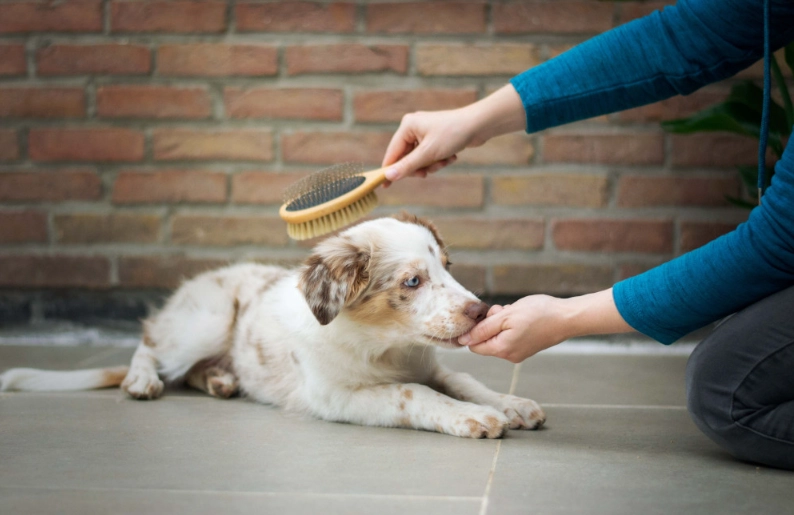
A Common Mistake I See: People vigorously brushing back and forth over the same spot. This doesn't effectively pull out dead undercoat; it mostly just breaks the healthy topcoat hairs and annoys the dog. Directional, intentional strokes are key.
The Toolbox: Which Direction Do You Groom a Dog With *This* Thing?
This is where the generic advice falls apart. You wouldn't use a hammer to screw in a lightbulb. Similarly, you don't use a slicker brush the same way you use an undercoat rake. Each tool has a specific job, and that job dictates the direction.
The Slicker Brush: Your Detangling Detective
Ah, the slicker brush. Those fine, bent wire pins look a bit intimidating. For a long time, I used this wrong, dragging it harshly over Rusty's coat. Big mistake. The correct way is to use short, gentle strokes in the direction of hair growth for initial detangling. Think of it as teasing out small knots.
For deeper work on a thick coat, you can gently brush against the grain in small sections. But here's the crucial part: you always follow up by brushing that same section back with the grain to smooth everything down. This two-step process (against, then with) is the secret sauce for plush double coats. It lifts the undercoat out and then lays the topcoat back neatly.
The Undercoat Rake or Deshedding Tool: The Deep Dive
These tools (like the Furminator or similar) are designed with one purpose: to reach through the topcoat and grab the loose undercoat hair. The official instructions for most of these tools explicitly tell you to brush in the direction of hair growth. Not against.
Why? Because the teeth are designed to catch the dead undercoat as they glide through. Going against the grain can make the blade-like edge too harsh on the skin and can actually cut or damage the healthy topcoat. Use long, smooth strokes from the skin outwards, following the line of the body. Let the tool do the work; you don't need heavy pressure.
The Pin Brush and Bristle Brush: The Finishers
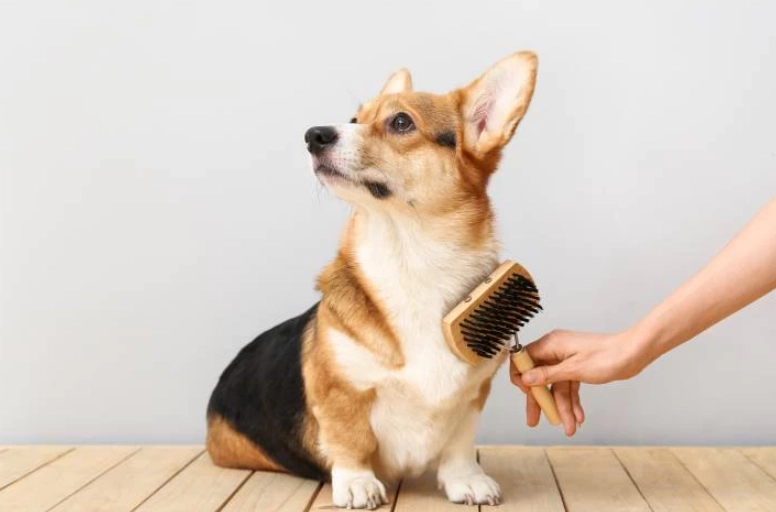
These are your smoothing and polishing tools. Pin brushes are great for long, silky coats after you've dealt with tangles. You use them almost exclusively with the grain to add shine and remove final debris. Bristle brushes, often made of boar hair, are fantastic for short-haired dogs and for distributing oils. Again, long strokes with the grain are the rule here. They're like the final buff on a freshly waxed car.
The Dematting Comb: The Special Ops
If you have a mat, the direction question changes. You never just yank a comb through a mat from the top down. You work from the tips of the hair inward toward the skin, gently teasing the mat apart little by little. You hold the base of the mat firmly against the skin with your fingers to prevent pulling, and you work the comb through in tiny sections. Direction is less about with/against and more about a careful, strategic dissection of the knot.
A Practical Guide by Coat Type: What Does *Your* Dog Need?
Let's get specific. Here’s a breakdown of how to approach the "which direction do you groom a dog" question based on the coat staring back at you.
| Coat Type | Primary Tools | Key Direction & Technique | Biggest Pitfall to Avoid |
|---|---|---|---|
| Short & Smooth (e.g., Beagle, Boxer) | Rubber curry brush, Bristle brush, Grooming mitt | Circular motions with a curry brush to loosen hair, followed by long strokes with the grain with a bristle brush. | Skipping grooming because "they don't shed much." They do—it's just short hair that embeds itself in your couch. |
| Double Coat (e.g., Husky, German Shepherd, Golden Retriever) | Undercoat rake, Slicker brush, Wide-tooth comb | 1. Undercoat rake with the grain in sections. 2. Slicker brush: gentle strokes against, then with the grain. 3. Comb through with the grain to check for missed tangles. |
Shaving them! It ruins the insulating properties of their coat. Proper directional brushing is the only safe way to manage shedding. |
| Long & Silky (e.g., Yorkshire Terrier, Afghan Hound) | Pin brush, Metal comb, Detangling spray | Always start from the tips and work toward the skin to prevent tightening tangles. Final brushing is always long, gentle strokes with the grain. | Brushing dry hair from the root down. This creates knots and breaks hair. Mist with detangler and always section the hair. |
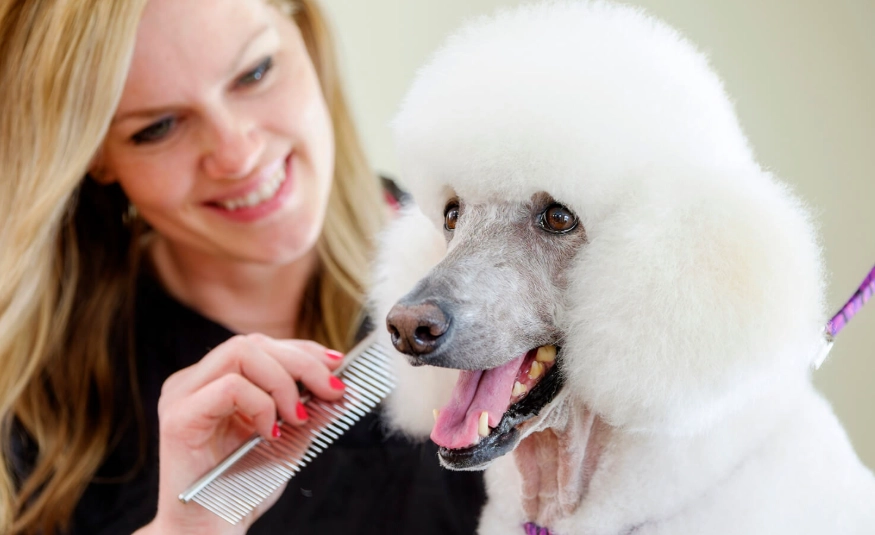
| Curly/Wiry (e.g., Poodle, Terrier mixes) | Slicker brush, Metal comb | Brush in sections, lifting hair away from skin with one hand and brushing from the skin outwards. Follow immediately with a comb through the same section. | Not brushing down to the skin. Curly coats mat at the base. The "comb test" (a comb gliding easily to the skin) is your best friend. |
I learned the double-coat routine the hard way. After Rusty's matting incident, I adopted a Shepherd mix, Luna. Her shedding was next-level. Using an undercoat rake with her hair growth felt counterintuitive at first—I wanted to dig against it. But following the tool's purpose made piles of undercoat come out effortlessly, without any fuss from her. It was a revelation.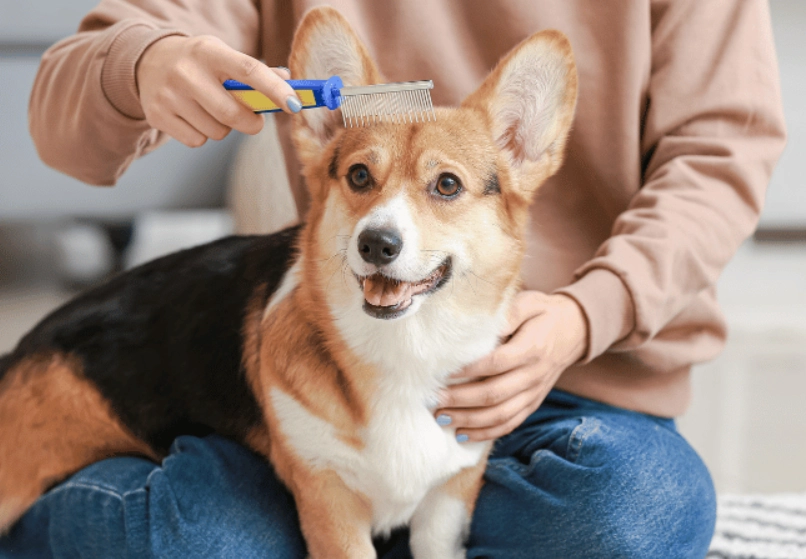
The Step-by-Step: How to Actually Do It Right
Let's walk through a real session for a typical double-coated dog, where the direction question is most critical.
- Prep and Check: Give your dog a quick pet-over. Feel for any obvious lumps, bumps, or tangles. This isn't about brushing yet, just reconnaissance.
- First Pass – The Rake: Take your undercoat rake. Start at the neck and use firm but gentle, long strokes in the direction the hair grows, moving down the back, over the sides, and down the legs. Work in sections. You'll see a soft pile of undercoat building up on the floor. This is the good stuff.
- Second Pass – The Slicker: Now grab the slicker brush. For each section you just raked, use short, gentle strokes brushing lightly against the grain to lift the topcoat and catch any remaining loose undercoat. Immediately follow in the same section with a few strokes brushing back with the grain to smooth everything down. This against-then-with motion is the heart of answering "which direction do you groom a dog" for thick coats.
- The Final Check – The Comb: Take a wide-tooth metal comb. Gently comb through the coat, with the grain. The comb should glide from skin to tip without catching. If it catches, you've found a small tangle you missed. Go back to that spot with your slicker or fingers to gently work it out.
- Don't Forget the Trouble Spots: Ears, armpits, behind the elbows, the "pants" area on the back legs, under the collar. Lift the hair in these areas away from the body and brush from the skin outward. This is where you're most likely to find secret mats forming.
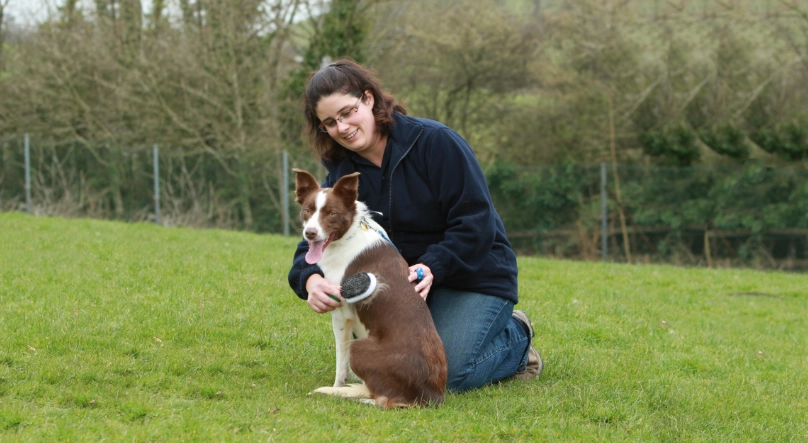
Pro Tip: For dogs who are anxious, break this into multiple short sessions. Do the rake one day, the slicker the next. Consistency with a positive experience (treats!) is better than a perfect but traumatic hour-long ordeal.
Common Mistakes (I've Made Most of These)
Let's be honest, we all mess up. Here are the biggies related to direction, so you can avoid them.
- Skimming the Surface: Just brushing the top layer with the grain. Your dog looks fine, but a hidden world of mats is developing underneath. Always lift layers to see the skin.
- The Back-and-Forth Scrub: Rapidly brushing back and forth. This is ineffective and irritating. Use intentional, directional strokes.
- Using a Human Brush or the Wrong Tool: Human hair brushes aren't designed for dog coats and can't penetrate properly. Using a slicker brush on a short-haired dog is overkill and uncomfortable.
- Ignoring the Post-Bath Dry: When you blow-dry or brush a wet/damp coat, you must brush in the direction you want the hair to lie as you dry. Letting a double-coated dog air dry without brushing is a guaranteed recipe for massive, full-body matting.
- Forgetting the Belly and Legs: It's easy to focus on the easy-to-reach back. But the finer hair on the belly and legs mats incredibly easily. Make these areas part of your routine.
Beyond the Brush: Bathing, Drying, and Overall Coat Health
Grooming direction isn't just about the dry brush. It applies to the whole process.
When bathing, lather with the grain to avoid tangling. When rinsing, use your hands to smooth the coat with the grain, ensuring all soap is out. The real critical phase is drying. If you're using a high-velocity dryer, always point the nozzle with the lay of the coat to blow out water and undercoat. If you're towel drying or using a stand dryer, brush each section with the grain as it dries to set the hair in place.
Diet plays a huge role, too. A poor diet leads to a dry, brittle coat that tangles and breaks more easily, making your directional brushing efforts harder. Resources like the ASPCA's dog nutrition guide offer great starting points for understanding how diet impacts skin and coat health from the inside out.
Your Questions, Answered
Here are some of the specific questions I had when I started, and that I hear from other dog owners all the time.
Yes, but strategically and with the right tool. As described above, using a slicker brush gently against the grain on a section of a thick coat is a standard technique to lift the undercoat. The key is to always follow it by brushing with the grain to re-smooth the coat. Never finish a grooming session with the hair brushed against its natural growth pattern.
Absolutely, 100%. Effective shedding control is all about removing the dead undercoat before it has a chance to fall out on your furniture. Using an undercoat rake or deshedding tool with the grain is the most effective mechanical way to pull this dead hair out from the root. Directional brushing doesn't reduce the total amount of hair your dog sheds (that's biological), but it redirects it from your home to your trash can.
Just look and feel. On most dogs, the hair grows from head to tail and down the legs. Run your hand from head to tail—it will feel smooth. Run it from tail to head, and it will feel slightly rougher as you go against the grain. On the legs, hair typically grows downward toward the paws. On the chest, it often grows downward as well. Take a moment to map it out on your own dog; you'll see the natural flow.
It could be part of the problem. Going against the grain with too much pressure or a prickly tool is uncomfortable. Try going back to basics: use only soft, slow strokes with the grain with a gentler tool (like a rubber curry or soft bristle brush) for a week. Pair every single stroke with a high-value treat. You need to rebuild the association that brushing = good things. The direction matters for their comfort.
The principles are the same, but everything is gentler. Use only soft brushes designed for puppies and always brush with the grain. The goal with puppies isn't deep cleaning but positive association. Keep sessions very short (2-3 minutes) and super positive. You're teaching them the routine and that the brush is not scary.
Look, at the end of the day, figuring out which direction do you groom a dog is about paying attention. Pay attention to your dog's reaction. Pay attention to what the tool is actually doing to the coat. Pay attention to the results on the floor and in the comb.
It's not a rigid military drill. It's a flexible system. Start with the grain. Go against it only when you need to, with the right tool, and then smooth it back. Check your work. Your dog's comfort and a tangle-free coat are the ultimate signs you've got it right. Now go grab that brush—you've got this.
Join the Conversation