Let's cut to the chase. Feeding a snake seems straightforward—offer food, snake eats. But that simplicity vanishes the first time your ball python stares blankly at a rat, or your corn snake regurgitates a perfectly good mouse. I've kept snakes for over a decade, from fussy ball pythons to voracious king snakes, and I've made most of the mistakes so you don't have to. The biggest one? Thinking a one-size-fits-all schedule from a pet store caresheet was enough.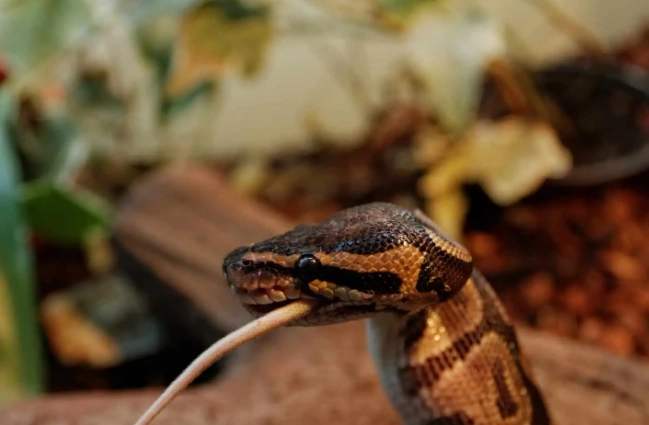
It's not. This guide is about the details they never tell you.
What You'll Find in This Guide
Getting the Prey Basics Right: Size, Type, and Frequency
This is where 80% of problems start. You're either underfeeding, stressing the snake, or overfeeding, which leads to obesity—a massive and under-discussed issue in pet snakes.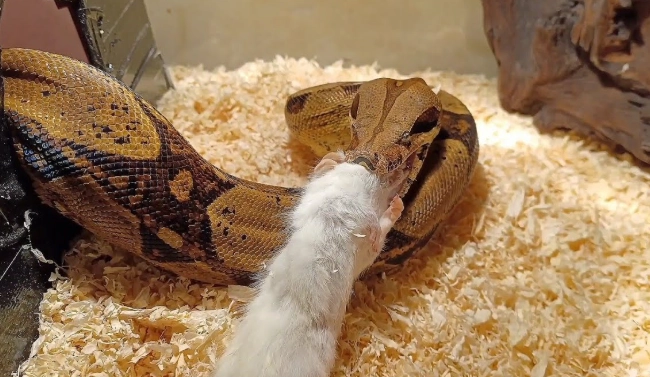
Prey Size: The Midsection Rule
Forget comparing the prey to the snake's head. That's a classic beginner error that leads to chronic underfeeding, especially in heavy-bodied snakes like ball pythons. Their heads are deceptively small.
The correct method: The prey's widest point should be roughly equal to, or up to 1.5 times, the widest part of your snake's body midsection. After swallowing, you should see a noticeable but not grotesque bulge. That bulge should be mostly gone within 24-48 hours. If it's still prominent after three days, you're likely offering meals that are too large.
Feeding Frequency: It Slows Down
Snakes don't need to eat weekly forever. A common pitfall is sticking to a juvenile schedule into adulthood, which packs on fat. Here's a more nuanced look: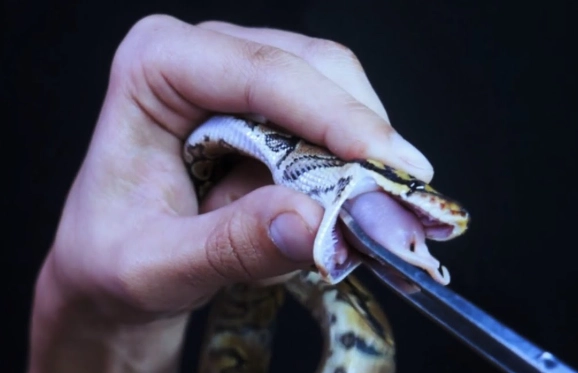
| Life Stage | Example Species (Ball Python / Corn Snake) | Frequency | Notes |
|---|---|---|---|
| Hatchling/Juvenile | Under 1 year / Under 18 months | Every 5-7 days | Rapid growth phase. Don't skip meals. |
| Sub-Adult | 1-3 years / 1.5-3 years | Every 7-10 days | Growth slowing. Monitor body condition. |
| Adult | 3+ years / 3+ years | Every 10-14 days (Balls) / 7-10 days (Corns) | Maintenance feeding. Some large adults eat only every 3-4 weeks. |
See the difference? A 5-year-old ball python does not need a rat every week. An obese snake is a lethargic, unhealthy snake with a shorter lifespan.
Frozen-Thawed vs. Live: There's No Debate
I'll be blunt: feed frozen-thawed (F/T) or pre-killed. The argument for live is usually "my snake prefers it." That's almost always a husbandry or technique issue, not a preference.
Live rodents can and will fight back. I've seen gashes that required vet visits. It's unnecessary risk. The convenience of F/T is unbeatable—buy in bulk, store safely.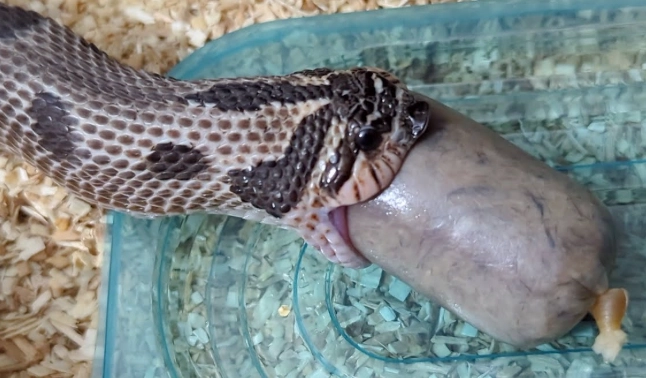
The real trick is prepping F/T correctly. It must be thawed slowly in the fridge overnight, then warmed thoroughly with warm water (not hot, not a microwave). The prey should feel body-temperature warm to the touch, about 100°F (38°C). A snake's heat-sensing pits can't detect a cold, dead mouse very well.
The Step-by-Step Feeding Process (Beyond "Use Tongs")
You know to use feeding tongs. Here's what else matters.
1. The Setup: Feed inside the enclosure. Moving to a separate "feeding tub" is an outdated practice that causes stress and increases handling risk post-meal. Your snake's home is where it feels secure enough to eat.
2. The Presentation: This is crucial. Dangling the prey limply is boring. Use the tongs to make the prey move in a realistic, enticing way along the ground—a slow, stumbling crawl. For snakes that prefer ambush (like ball pythons), place the warmed prey near the entrance of their hide and leave the room. The lack of your presence often triggers a strike.
3. The Strike & Constrict: Even with F/T, most snakes will constrict. Let them. It's instinctual and stimulates feeding behavior. Don't jerk the tongs away. Once they have it coiled, gently release the prey from the tongs and immediately leave them alone. Turn off the lights if it's evening. They need privacy.
What if they miss? It happens. If they seem interested but clumsy, leave the prey in a shallow dish overnight. Sometimes they'll take it later. If not, remove it in the morning and try again in 5-7 days.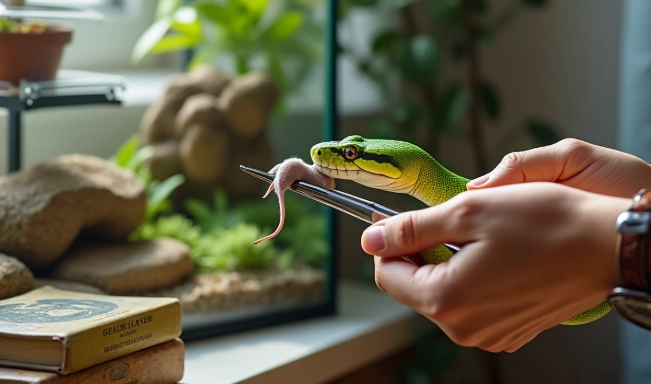
The Critical Post-Meal Period: What Not to Do
This is the most violated rule I see. The meal is down, and the urge to peek or, worse, handle is strong. Resist.
No handling for at least 48 hours. For a larger meal, make it 72. Handling can cause regurgitation, which is metabolically costly and stressful. A regurgitated mouse is a sad, semi-digested mess you cannot re-feed.
Your job now is solely to ensure their heating is optimal for digestion. A snake with a full belly sitting in a cool tank can't digest properly, leading to regurgitation or even respiratory infection. The basking spot should be at the perfect species-specific range.
Don't even spot-clean aggressively near them. Give them peace.
Troubleshooting: When Your Snake Won't Eat
A refused meal isn't a crisis. Snakes, especially adults, can fast for months without issue. But you need to diagnose why.
First, run through the checklist:
- Is it in shed? (Look for cloudy, blue eyes and dull skin). Most snakes won't eat. Wait until the shed is complete.
- Are temperatures correct? A digital thermometer/hygrometer is essential. Incorrect temps are the #1 cause of long-term fasting.
- Is the prey warm enough? Re-warm it. Try offering with the head specifically heated.
- Is the prey type/size correct? A snake that eats mice might refuse a rat, and vice versa. Try switching.
If all that checks out, and you have a ball python, welcome to the club. They are famously fussy. Try these in order:
1. The Paper Bag Method: Place the warmed prey and the snake in a small, dark paper bag, fold the top over, and leave it in the warm enclosure for 2-3 hours. The confined, dark space often triggers a feed.
2. Scenting: Rub the F/T mouse with a bird (like a quail chick) or use used gerbil/litter bedding. The novel scent can spark interest.
The key is patience. Don't offer food every day. This just stresses them. Stick to your normal schedule, offering once a week. If a fast extends beyond 3-4 months for a juvenile or 6-8 months for a healthy adult, then consult a reptile vet to rule out parasites or illness.
Your Top Feeding Questions Answered
Feeding your snake correctly is less about rigid rules and more about understanding their biology and behavior. Pay attention to the subtle signs—the body condition, the interest level, the post-meal behavior. It's this observation, more than any schedule, that will keep your snake healthy and thriving for years to come. Start with the midsection rule, master the F/T thaw, and respect the post-meal fast. You'll avoid 90% of the common headaches.



Join the Conversation