So you've got a new feathered friend, and you're staring at each other. You want a bond, maybe teach them to step up or talk. They're just... staring. Most beginner guides make bird training sound like a complex science project. It's not. It's more like learning a new language together, where treats are the currency of friendship. Forget the pressure. Let's talk about how to actually communicate with your bird.
What You'll Learn in This Guide
- The Right Mindset: It's Not About Obedience
- Gear You Actually Need (It's Less Than You Think)
- Your First Training Steps: Building Trust from Scratch
- Core Training Techniques That Actually Work
- The 3 Biggest Mistakes Beginners Make (And How to Avoid Them)
- When Things Go Sideways: Quick Troubleshooting
The Right Mindset: It's Not About Obedience
This is the part everyone skips, and it's why they fail. You're not a drill sergeant. Your bird is not a soldier. Think of yourself as a friend offering a really fun game. The goal is voluntary cooperation.
Birds are prey animals. Their default setting is to be suspicious. Forcing your hand into the cage or chasing them around creates fear, not learning. The training happens before you even ask for a behavior. It happens when you sit quietly near the cage reading a book, letting them get used to your presence. It happens when you consistently bring a yummy piece of millet.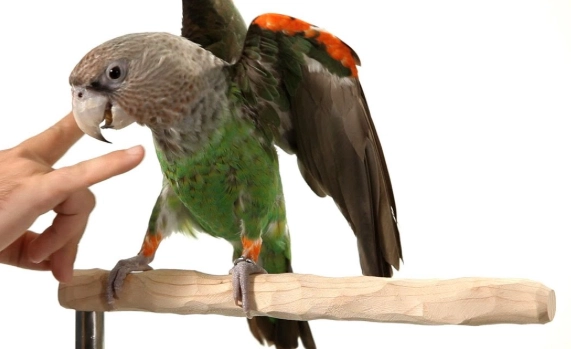
I remember the first time my parrot, Kiwi, stepped onto my hand after weeks of this. It wasn't because I finally "made" her do it. It was because she decided the scary hand was actually a stable platform that sometimes held almonds. Big difference.
Gear You Actually Need (It's Less Than You Think)
You can spend a fortune, but you only need three things to start.
1. A High-Value "Training-Only" Treat. This is non-negotiable. Find what your bird goes crazy for. For many, it's spray millet, a piece of walnut, or a bit of pine nut. This treat should only appear during training sessions. Its specialness is your superpower.
2. A Quiet, Safe Space. Not the living room with the TV blaring. A small room or a quiet corner where the bird can focus on you. Turn off ceiling fans, close windows, and ensure other pets are elsewhere.
3. A Clicker (Optional but Revolutionary). A dog training clicker from the pet store. This isn't a gimmick. It's a precision tool. The click sound marks the exact moment your bird does the right thing, bridging the gap between action and reward. It creates crystal-clear communication. According to the LafeberVet avian behavior library, this method, rooted in the science of operant conditioning, is incredibly effective for birds.
What NOT to buy yet: Fancy perches, costumes, or complex obstacle courses. Those come later, if ever. Start simple. A T-stand or a simple play gym is plenty for initial training outside the cage.
Your First Training Steps: Building Trust from Scratch
If your bird flies away when you approach the cage, start here. Don't even think about "step up."
Week 1: Become a Furniture Feature. Spend 10-15 minutes, 2-3 times a day, just sitting near the cage. Read out loud, talk softly, ignore the bird. You're teaching them your presence is boring and safe.
Week 2: The Treat Drop. Start offering the high-value treat through the cage bars. Don't force it. Just place it in a food dish or clip it to the side. Move your hand slowly and predictably. If they retreat, just leave the treat and back off. Success is them taking it within 30 seconds of you leaving.
Week 3: Hand as a Treat Dispenser. Hold the treat at the far end, so they have to come close to your fingers to get it. Gradually, over days, hold it so they have to briefly touch your finger with their beak. That's a huge win. Celebrate with a happy voice.
Core Training Techniques That Actually Work
Once you have a baseline of trust (they take treats reliably), you can start simple behaviors.
How to Teach "Step Up" (The Foundation)
This is asking your bird to step onto your finger or a perch.
1. With your bird on a stable surface (like the cage door), present your finger or a perch firmly against their lower chest, just above their feet.
2. Apply gentle, upward pressure. Most birds will instinctively step up to regain balance.
3. The millisecond their foot leaves the old perch, CLICK (or say your marker word like "Good!") and give the treat.
4. Hold steady for a second, then gently return them. Keep sessions to 3-5 successful repetitions.
The subtle mistake here? Pushing too high on the chest, which feels threatening. Aim for the gentle nudge right above the toes.
How to Teach Talking with Clicker Training
Forget repeating a word for hours. You're not a broken record. You're capturing accidental sounds.
1. Pay attention to any noise your bird makes that even remotely sounds like your target word, like "hello." A soft "ello" or a chirpy "lo" counts.
2. The instant you hear it, CLICK and treat. You're not rewarding silence. You're rewarding a specific sound.
3. Over days, they'll make the sound more often to get the treat. Only then do you start saying "hello" clearly right before they're likely to mimic it, pairing the word with the action they already know gets a reward.
This method is slower to start but creates much more reliable talking because the bird understands the cause and effect.
The 3 Biggest Mistakes Beginners Make (And How to Avoid Them)
I've seen these derail more training plans than anything else.
Mistake 1: Training when the bird is distracted or hormonal. Trying to train a bird at dusk (their naturally active, noisy time) or when they're focused on a mirror is pointless. Pick calm, bright morning hours.
Mistake 2: Getting frustrated and ending on a negative note. If your bird isn't getting it after a few tries, ask for an easier behavior they know (like taking a treat from your hand), reward that, and end the session. A failed session that ends positively is better than a forced "success" that creates stress.
Mistake 3: Inconsistent rewards. When first teaching a behavior, you must reward (or click and reward) EVERY single time. Once they do it reliably, you can switch to a variable schedule (rewarding every 2nd or 3rd time), which actually makes the behavior stronger. But starting with sporadic rewards just confuses them.
When Things Go Sideways: Quick Troubleshooting
"My bird won't take treats from me." The treat isn't high-value enough. Experiment. Try a tiny piece of unsalted popcorn, a bit of scrambled egg, or a different nut. Also, you might be moving too fast. Go back to just dropping it in the bowl.
"He does the trick at home but ignores me elsewhere." Totally normal. Birds don't generalize well. You need to reteach the behavior in every new environment, starting from easier steps. Practice "step up" in the bathroom, on the play stand, by a different window.
"Training was going great, but now she's regressing." Check for environmental changes. Is there a new pet in the house? A change in cage location? Did you change your haircut? Birds are sensitive. Also, they have off days. Take a 2-3 day break, focus on just hanging out, then try again.
Answers to Your Burning Questions
The journey with your bird is a marathon, not a sprint. Some days you'll have breakthroughs, and some days you'll just sit together. Both are valuable. Start with patience, celebrate the tiny victories—a curious glance, a taken treat, a single step—and let the trust build naturally. The tricks will follow.


Join the Conversation