You just brought home your new hamster, Fluffy. You've got the cage, the bedding, the wheel. It's getting late, and you're about to head to bed. Do you turn off the light in the room, or leave a little lamp on so Fluffy isn't in total darkness? This simple question trips up more new hamster owners than you'd think. The short, definitive answer is that hamsters vastly prefer and are biologically adapted to darkness during their active hours. Leaving lights on at night is one of the most common, yet easily corrected, mistakes in hamster care.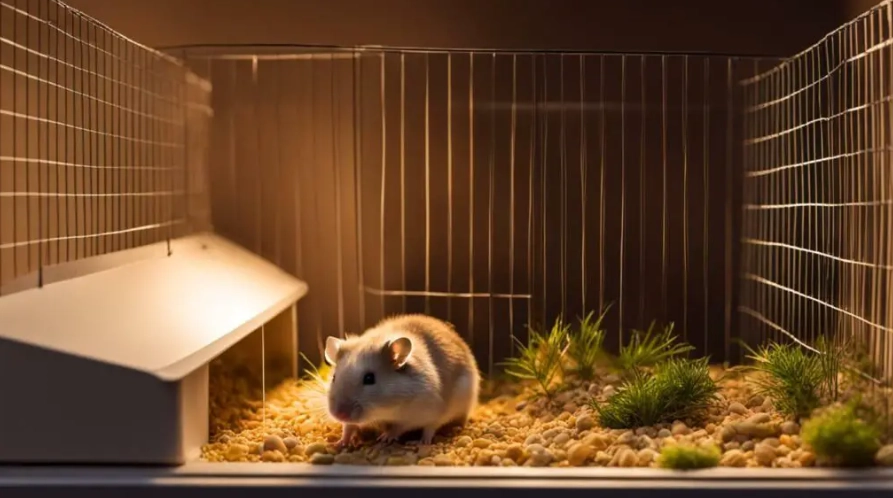
What You'll Find in This Guide
The Biology of a Darkness-Lover: Why Off is Always Better
This isn't just a preference; it's hardwired. Hamsters are crepuscular and nocturnal. In the wild, Syrian hamsters (the most common pet type) emerge from deep burrows at dusk to forage under the cover of night. Dwarf hamster species are even more strictly nocturnal. Their entire physiology is set to this clock.
Their eyes are the giveaway. Hamsters have mostly rod cells, which are excellent for detecting light and movement in low-light conditions, but poor at discerning color and detail. Think of it like built-in night vision goggles. A study on circadian rhythms in rodents, referenced by resources like the American Veterinary Medical Association (AVMA), highlights how critical consistent light/dark cycles are for regulating hormones, sleep, and behavior. Bright light during their subjective "night" is like someone flipping on stadium lights while you're trying to sleep—it's jarring and stressful.
Key Takeaway: For a hamster, darkness equals safety, activity time, and normal biological function. Light, during their active period, equals danger, stress, and a confused internal clock.
The Stress Connection You Can't Ignore
Chronic stress from improper lighting doesn't just make for a grumpy hamster. It weakens their immune system. I've seen it firsthand. Years ago, I kept a hamster cage in a room where a streetlamp shone directly through a crack in the blinds. That hamster was jumpier, less active, and seemed more prone to minor sniffles than others I've had in darker rooms. It wasn't until I blacked out that window section that his personality truly blossomed. He became more confident, explored more, and was happier to interact during his evening wake-up time.
Common Lighting Mistakes (And the Simple Fixes)
Most lighting problems come from applying human logic to a hamster's world. Let's break down the big ones.
Mistake 1: The 24/7 Night Light
The Problem: "I don't want him to be scared in the dark!" This comes from a good place, but it's misguided. A constant dim light denies the hamster a true night. Their world is perpetually twilight, which can disrupt melatonin production (the sleep hormone) and keep them in a state of low-grade alertness.
The Fix: Embrace the dark. If you need a light to navigate the room for safety, use a motion-activated red or infrared bulb placed low and away from the cage. Hamsters see red light poorly, so it's far less intrusive than white or blue light.
Mistake 2: Erratic Light Schedules
The Problem: Lights go on and off at random times based on when you get home, watch TV, or go to bed. This is chaos for an animal that relies on predictable cues.
The Fix: Automation is your friend. A simple, cheap plug-in timer for the room's main light is the single best investment for hamster well-being. Set it for 10-12 hours of "day" (light) and 12-14 hours of "night" (darkness). Consistency is more important than the exact number.
Mistake 3: Direct Sunlight on the Cage
The Problem: A sunny windowsill seems like a lovely spot. It's warm and bright! But it's a terrible idea. Direct sun can rapidly overheat a glass or plastic tank (creating a deadly greenhouse effect), and the intense, moving light patterns are disruptive.
The Fix: Place the cage in a room with bright but indirect natural light during the day, and ensure it's in a shaded spot. Never in direct sunbeams.
Watch Out: Avoid "blue light" from electronics like TVs, computers, or LED strips near the cage at night. This wavelength is particularly disruptive to circadian rhythms in mammals.
Creating the Perfect Hamster Lighting Schedule
Here’s a practical, no-fuss blueprint you can start tonight. This assumes your hamster is most active in the evening/night, which is typical.
- 7:00 AM - 7:00 PM (Day Phase): Room lights can be on. Natural daylight is fine. This is when your hamster will primarily be sleeping. Some ambient noise and light is okay and actually helps them distinguish day from night.
- 7:00 PM - 7:00 AM (Night Phase): Room lights off. This is their time. If you're awake in the room, use minimal, localized light (like a reading lamp pointed away from the cage). The cage should be in near or total darkness.
What about people who work night shifts? You can flip this schedule! The goal is a stable 12-hour cycle that matches your consistent "day" and "night," even if they're reversed. A hamster can adapt to your reversed schedule as long as it's predictable.
Solving Tricky Cage Placement Problems
Not everyone has a dedicated, perfectly dark hamster room. Here’s how to handle real-world scenarios.
If the Cage is in Your Bedroom or Living Room
This is the most common situation. You can't sit in darkness from 7 PM onward.
Solution: Create a dark zone within the cage. Cover one half of the cage (the half with the sleeping hut) with a dark-colored, breathable cloth (like a cotton sheet or specialized cage cover) during the evening. This provides a crucial retreat. Ensure the covered side still has adequate ventilation.
If the Room Has Unavoidable Ambient Light
Maybe from a hallway, digital clock, or modem.
Solution: Strategic blocking. Use black poster board or cardboard to shield the side of the cage facing the light source. Inside the cage, provide a fully enclosed, opaque sleeping hut (wooden or ceramic is great). This gives them a pitch-black sanctuary to sleep in, even if the cage exterior is faintly lit.
The "My Hamster is Active During the Day" Concern
Sometimes you'll see them out and about. This is normal brief activity, not a sign they've become diurnal. If they are consistently very active in bright daylight, it's often a red flag. It could mean their nighttime environment is too disruptive (noisy, lit up), forcing them to adjust to a less optimal time. Review your night-time setup for noise and light pollution first.
Your Hamster Lighting Questions Answered
 How many hours of darkness do hamsters need?
Getting the lighting right for your hamster is a simple act that pays off massively. You'll have a less stressed, healthier, and more naturally active pet. It's about respecting their world, which is fundamentally different from ours. Turn off the lights, listen for the gentle whir of the wheel in the darkness, and know your hamster is exactly where it wants to be.





Join the Conversation