Let's be honest. Most hamster cages sold in pet stores are a disaster. They're colorful plastic prisons with tiny floors, wire tubes, and maybe a pathetic plastic igloo. If your hamster is pacing, chewing bars, or seems generally miserable, it's not you—it's the cage. A natural hamster cage setup isn't just an aesthetic choice (though it does look amazing). It's a fundamental shift that addresses your pet's deepest instincts: to burrow, to forage, to explore, and to feel secure. I've kept hamsters for over a decade, and switching to natural setups was the single best thing I ever did. The bar chewing stopped. The frantic pacing vanished. I saw behaviors I never knew they had, like building elaborate multi-room burrows. This guide will show you exactly how to build one.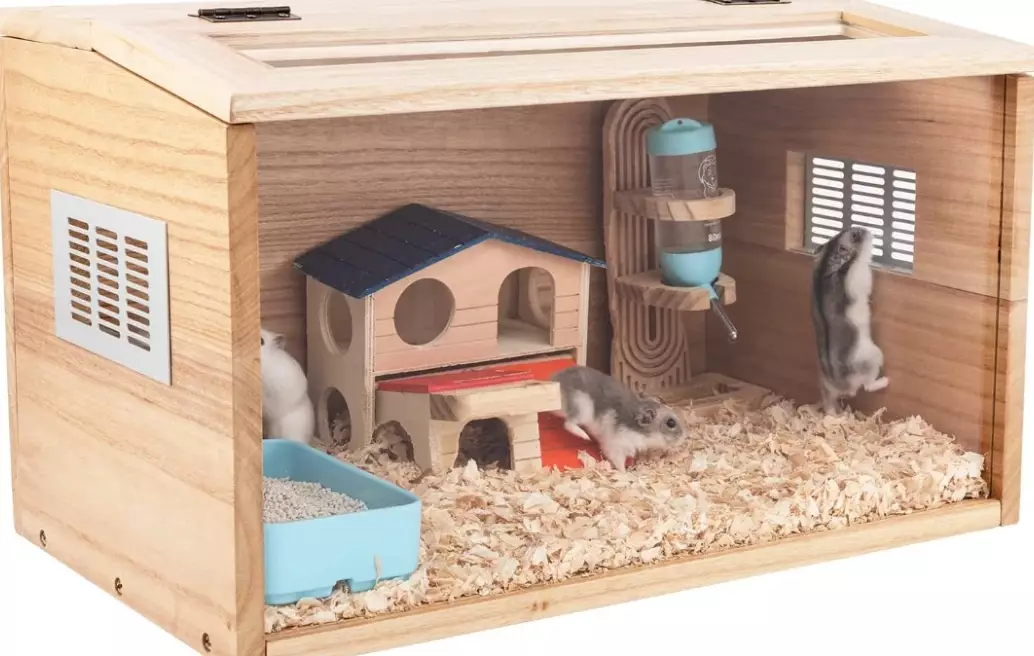
What's Inside This Guide?
What is a "Natural" Hamster Cage, Really?
It's not about throwing some twigs and moss in a tank and calling it a day. A true natural setup mimics the key elements of a hamster's wild environment to promote natural behaviors. Think of it as functional design for a tiny animal.
The core philosophy rests on three pillars:
- Space for Burrowing: In the wild, hamsters dig tunnels several feet deep. Your cage must allow for this. We're talking a minimum of 8-10 inches of deep, holdable bedding across most of the enclosure.
- Complexity and Enrichment: A flat, open space is stressful. The cage needs clutter—multiple hideouts, platforms, tunnels, and textures that break the line of sight and provide choices.
- Safe, Natural Materials: Ditch the brightly colored plastic. Use untreated wood, ceramic, terracotta, cork, and safe, natural fibers. These are safer to chew, better for climate control, and simply look more authentic.
I made the switch years ago with a Syrian hamster named Whiskers who was a relentless bar-chewer. Moving him from a "large" pet store cage to a 40-gallon breeder tank filled with deep aspen shavings was like night and day. Within hours, he was digging. The bar chewing? It just stopped. He was too busy.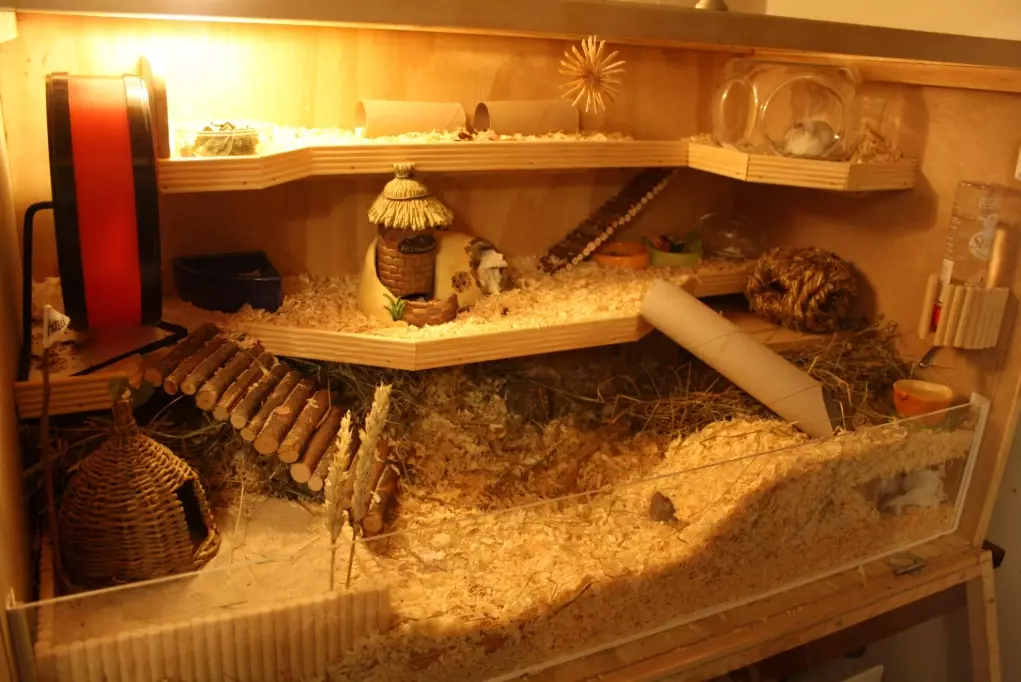
How to Build a Natural Hamster Cage: A Step-by-Step Guide
Ready to build? Here's your practical, no-fluff shopping and assembly list.
Step 1: Choose the Right Enclosure
This is the foundation. Forget the minimums. The widely cited 450 sq inch (about 29" x 15") floor space is an absolute bare minimum, not a recommendation. Aim bigger. For Syrians, I wouldn't go below 600 sq inches. For dwarfs, 450 can work if it's laid out well, but more is always better.
Best Enclosure Options:
- Large Aquarium/Tank: A 40-gallon breeder tank (36"x18"x16") is a fantastic, affordable starting point. It holds bedding beautifully and provides great visibility.
- DIY Bin Cage: A large, clear storage bin (110+ quarts) modified with a large mesh area on the lid is a budget-friendly champion. It's lightweight and holds humidity well for dwarfs.
- Front-Opening Terrarium: More expensive, but the front access makes decorating and spot-cleaning incredibly easy.
- Large Wire Cages with Deep Bases: Some exist, but ensure the bar spacing is safe (narrow for dwarfs) and the base is deep enough to hold 8+ inches of bedding without it all being kicked out.
Step 2: The Bedding Foundation
This is where most setups fail. Depth is non-negotiable. Pour in that bedding! A mix is better than a single type.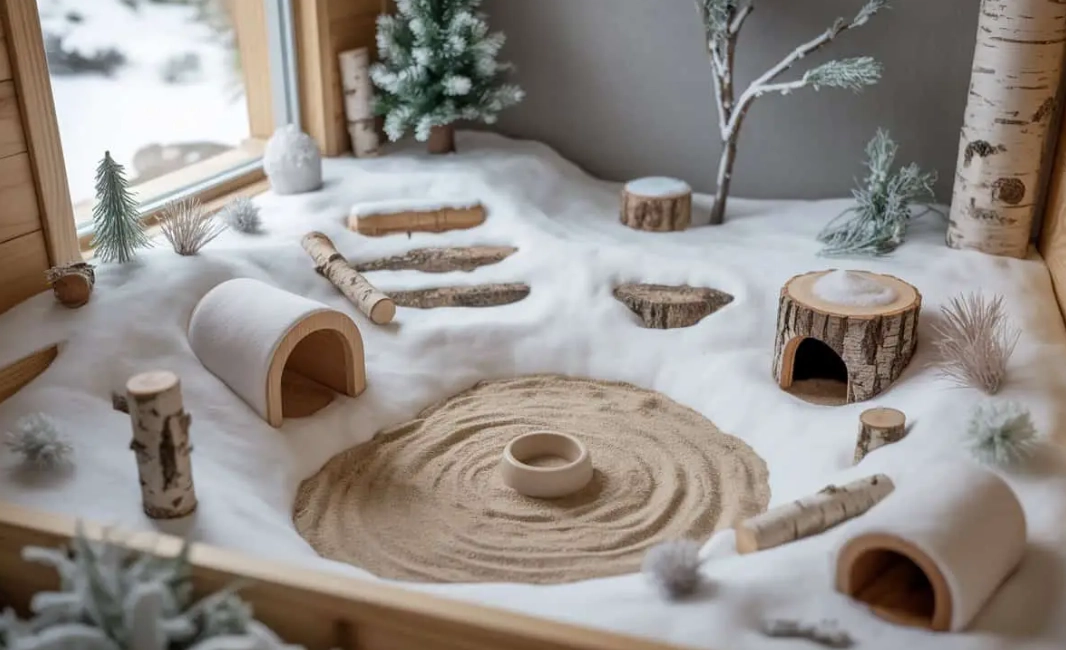
- Base Layer (Hold Structure): Aspen shavings or a paper-based bedding like Carefresh. This forms the main burrowing medium.
- Middle Layer (Tunnel Support): Sprinkle in timothy hay or orchard grass hay. This gives the tunnels structure so they don't collapse.
- Top Layer (Texture & Foraging): Add a sprinkle of softer materials like shredded hemp, beech chips, or even a bit of moss in one area. Scatter some forage mix here.
Pack it down. You want it to hold a tunnel, not be loose and fluffy everywhere.
Step 3: Hideouts and Houses
Multiple hideouts are crucial. Think of them as safe rooms scattered throughout their territory.
- Main Chamber: A large, multi-entrance wooden hide or a ceramic jar on its side. Place it partially buried in the bedding.
- Secondary Hides: Smaller cork logs, coconut hides, or simple cardboard boxes (monitor for chewing).
- Platforms: A wooden platform or a flat stone creates a different level and a place to put heavier items like the water bowl.
Step 4: Wheels, Sand, and Essentials
These need to be integrated thoughtfully.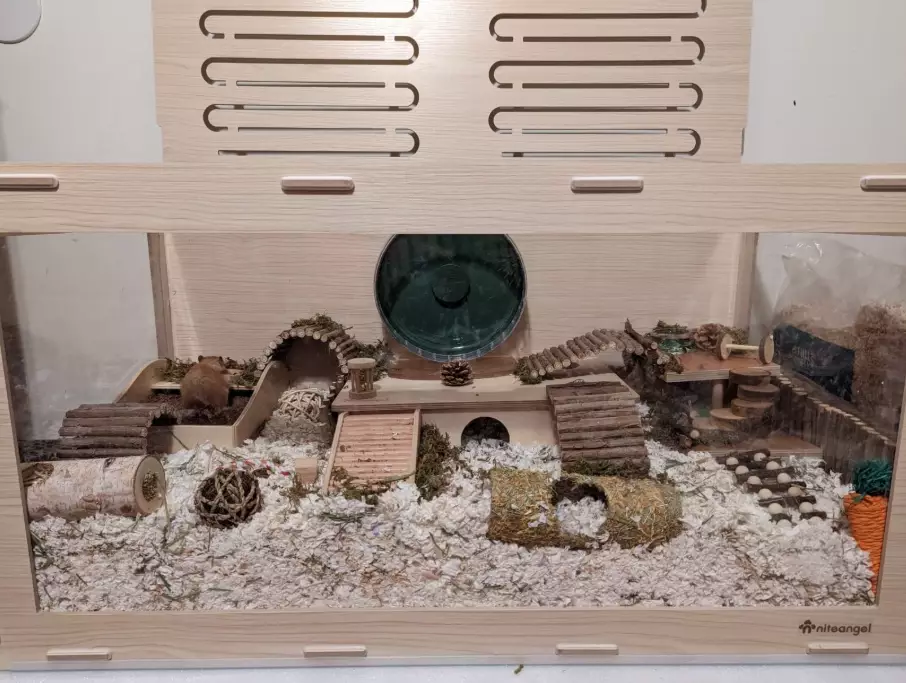
- Wheel: Solid-surface, silent-running, and appropriately sized (11-12" for Syrians, 8" for dwarfs). Bury the base slightly in the bedding for stability.
- Sand Bath:
A must, especially for dwarfs. Use reptile sand (no calcium or dyes) or chinchilla sand (not dust) in a large, heavy dish. This is their bathroom and grooming station.
- Food & Water: Scatter their main food daily to encourage foraging. A small, heavy ceramic bowl can hold a supplemental pellet mix. Use a water bottle and a small, stable ceramic water dish. They often prefer drinking from a dish.
Step 5: The Fun Part: Enrichment & Foraging
This is what brings the setup to life. Rotate these items to keep things fresh.
- Chews: Whimzees dog chews (the alligator shape is a hit), apple wood sticks, seagrass mats.
- Sprays: Millet, flax, or oat sprays stuck into the bedding. A natural hamster supermarket.
- Tunnels: Cork tunnels, bamboo root sections, or cardboard tubes stuffed with hay.
- Forage Mixes: Scatter a teaspoon of a seed/herb/flower mix daily. It gives them a job.
The Natural Cage Maintenance Mindset
You clean differently. The goal is to preserve the burrows and scent markers.
Spot Cleaning: Do this daily. Find the pee corner (usually in a sand bath or a specific hide) and scoop out wet bedding. Remove any soiled food.
Partial Clean: Every 2-3 weeks, gently remove about one-third of the bedding from the most soiled areas, especially around the main nest if it's soiled. Try not to collapse their main burrow system.
Full Clean: Only every 2-3 months. Even then, try to save a handful of clean, old nesting material from their main nest to mix back in. This retains their familiar scent and reduces stress dramatically.
Avoid the "Sterile Reset": Completely stripping the cage bare every week is incredibly stressful. It destroys their hard work and removes all their scent security. A natural setup should smell earthy, not sterile. If it smells strongly of ammonia, your bedding isn't deep enough or you're not spot-cleaning effectively.
3 Common Natural Setup Pitfalls (And How to Avoid Them)
I've seen these mistakes over and over.
1. The "Shallow Scatter": Putting 2-3 inches of bedding in a huge cage. It's pointless. Depth is functional, not decorative. Commit to the 8-10 inch minimum.
2. Over-reliance on Plastic: That cute plastic maze or house? It's a sweatbox, chewed into sharp edges, and doesn't absorb moisture. Gradually replace every plastic item with a natural material alternative.
3. The Open Desert: A huge space with a house, a wheel, and nothing else. This is actually more stressful than a small, cluttered space. Add clutter! Break up the sightlines with platforms, tunnels, and sprays. A hamster wants to feel hidden as it moves.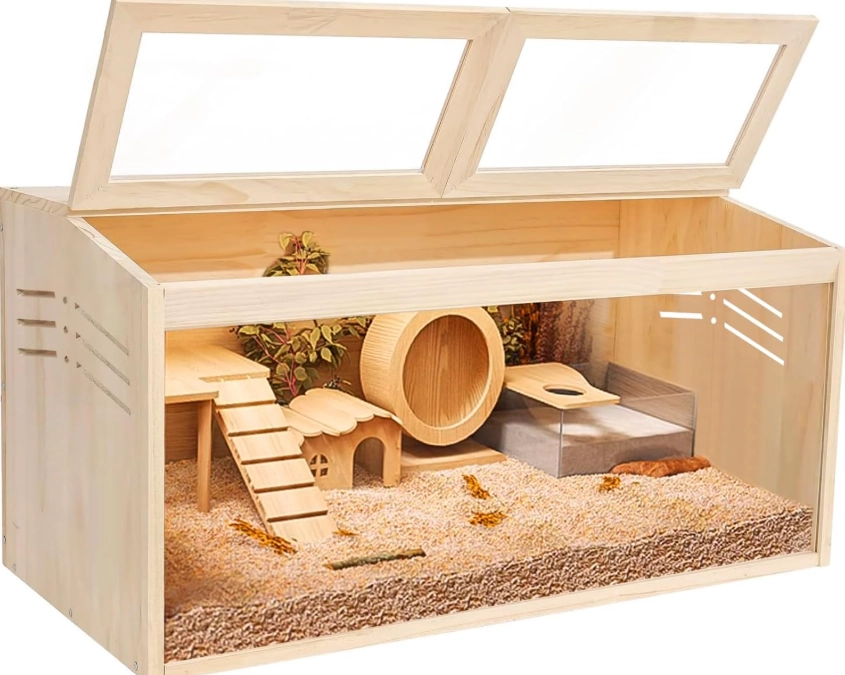
Your Natural Habitat Questions, Answered
My hamster keeps chewing the bars. Is my natural setup wrong?
What's the number one mistake people make with natural hamster bedding?
Can I use branches and rocks from my backyard in the cage?
How often should I completely clean a natural hamster cage?
 The transition to a natural hamster cage setup requires an initial investment of time and money, but the payoff is immense. You're not just building a cage; you're engineering an environment where your hamster can express its full range of natural behaviors. You'll spend less time worrying about stress-related problems and more time observing the fascinating creature you share your home with. Start with the enclosure and the bedding depth—the two most critical factors—and build from there. Your hamster will thank you, not with words, but with a life of busy, contented activity.



Join the Conversation