Let's cut straight to it. After over a decade working with dogs, from nervous rescues to show-ring champions, I've seen every grooming mistake in the book. Nicks, burns, terrified pets, and frustrated owners. If you search for "dog grooming rules," you'll find lists about brushing first or using the right shampoo. Those are fine. But they're not Rule #1.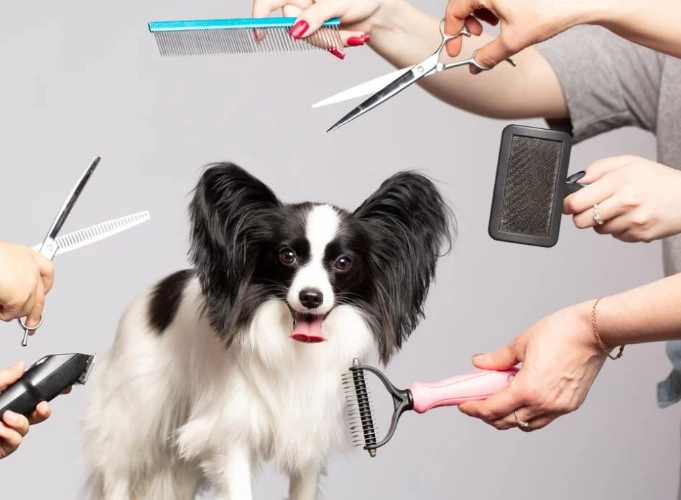
The absolute, non-negotiable, golden rule for grooming a dog is this: Safety First – for both you and the dog. Everything else is a secondary technique. This isn't just about avoiding cuts; it's about creating an experience where your dog isn't traumatized, you don't get bitten, and trust is built, not broken. Most guides talk about the "how" but gloss over the foundational "why" of safety. We're going deep on that today.
Quick Navigation: What You'll Learn
- Why "Safety First" is Non-Negotiable in Dog Grooming
- The 4 Pillars of Safe Dog Grooming: A Practical Framework
- Essential Tools for Safe Grooming (And What to Avoid)
- Step-by-Step: Applying Rule #1 to a Basic Home Grooming Session
- Beyond the Basics: When to Call a Professional
- Common Grooming Safety Myths Debunked
- Your Top Safety Questions Answered
Why "Safety First" is Non-Negotiable in Dog Grooming
Think of safety as the oxygen mask on an airplane. You have to secure your own before assisting others. In grooming, if the environment isn't safe, every technique you try is riskier.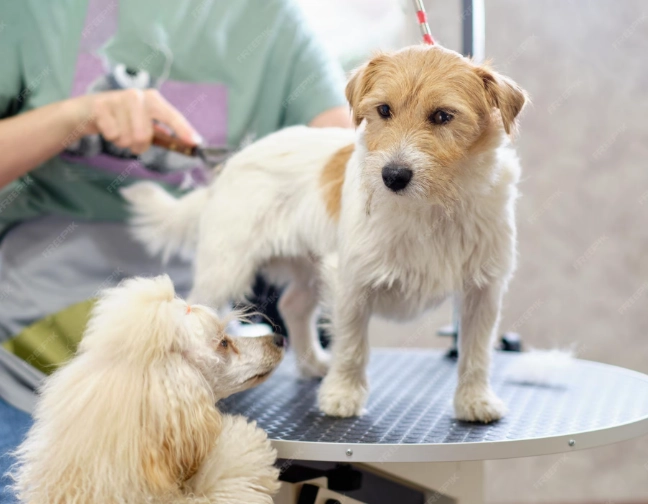
A scared dog is an unpredictable dog. I learned this the hard way early on with a sweet-natured Labrador named Buddy. He seemed fine until the clippers turned on. A sudden jerk, a tiny slip, and I nicked the edge of his ear. It was a superficial cut, but the sight of blood and his yelp haunted me. The problem wasn't the clipper technique; it was that I missed his early stress signals—the whale eye (seeing the whites of his eyes), the stiff posture. I prioritized the haircut over his emotional state. That's a failure of Rule #1.
Physical injuries from grooming are more common than people admit. Quick cuts on nails that bleed for minutes, clipper burns on sensitive skin, soap in the eyes, slips from wet tables. The American Veterinary Medical Association (AVMA) highlights restraint and stress as significant welfare considerations during procedures like grooming.
But safety is also about your well-being. A dog bite, even a minor one, can end your grooming session and require medical care. Creating a safe process protects your relationship with your dog. Grooming should be a neutral or positive part of your routine, not a battle.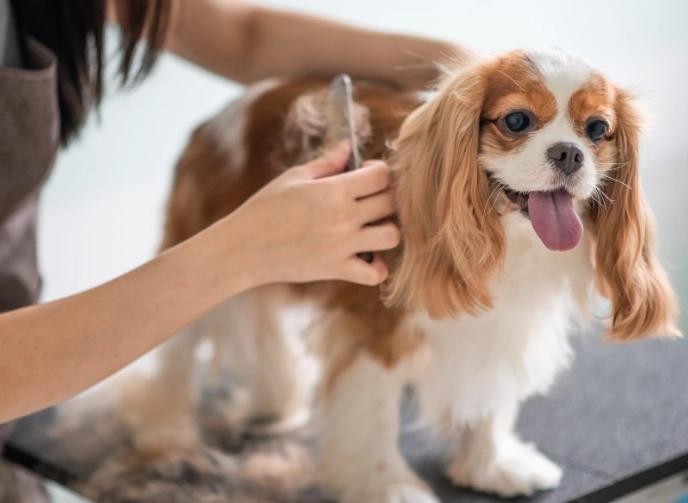
The 4 Pillars of Safe Dog Grooming: A Practical Framework
"Safety First" sounds good, but what does it look like in practice? Break it down into these four pillars. If one is weak, the whole process is compromised.
Pillar 1: The Right Tools, Properly Maintained
Dull tools are dangerous. A dull clipper blade pulls hair instead of cutting it, causing discomfort and heat buildup. A dull nail grinder can snag. Cheap scissors can pinch. Your tools don't need to be salon-grade, but they must be sharp, clean, and appropriate for your dog's coat type. A slicker brush for a Poodle is essential; that same brush on a thin-coated Greyhound can scratch their skin.
Pillar 2: A Controlled, Non-Slip Environment
This is a huge one beginners overlook. Grooming on a slick kitchen floor? On a bed? That's an invitation for your dog to slip, panic, and for you to make a wrong cut. Use a rubber bath mat in the tub. If you're grooming on a table, it must have a non-slip surface. The secure footing gives your dog confidence and prevents sudden movements.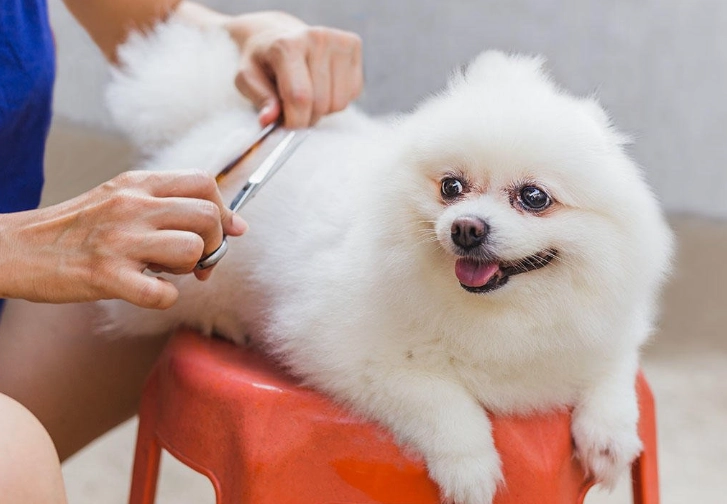
Pillar 3: The Dog's Physical & Emotional State
Never groom a tired, sick, or overly excited dog. Just don't. Also, learn to read canine body language. Is your dog licking its lips, yawning excessively, turning its head away, or trembling? These are signs of stress. Pushing through these signals violates Rule #1. It's time for a break, a treat, or to stop altogether.
Pillar 4: Your Own Skill and Patience
Be honest about your limits. Trying a complex lion cut on your first attempt is a safety hazard. Master brushing, bathing, and nail trimming before moving to haircuts. Your patience is a tool. Rushing leads to mistakes.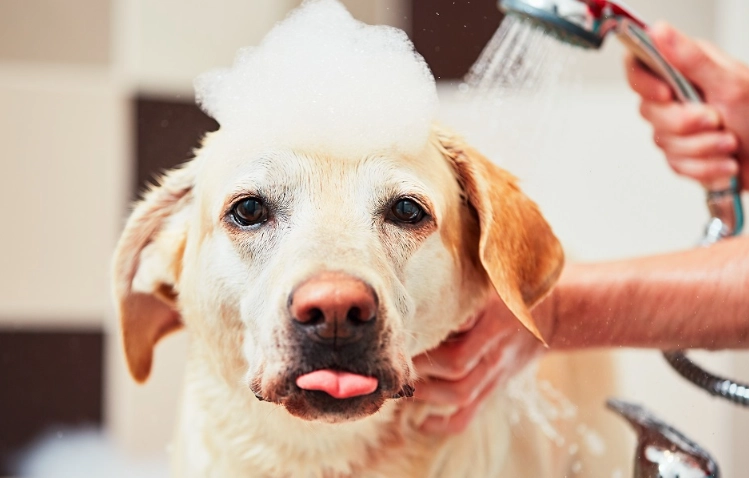
Essential Tools for Safe Grooming (And What to Avoid)
Let's get specific. Here’s a breakdown of tools through the lens of safety.
| Tool | Safe Choice & Why | What to Avoid / Safety Risk |
|---|---|---|
| Nail Clippers | Guillotine-style or scissor-style with a sharp blade. Look for ones with a safety guard or quick sensor. Use a nail file to smooth edges. | Dull clippers that crush the nail. Cutting blindly without knowing where the quick (blood vessel) is. NEVER use human nail clippers. |
| Brushes/Combs | Mat-splitting rake for tangles, slicker brush for undercoat, wide-tooth comb for finishing. Test on the back of your hand first—it shouldn't scratch. | Using a Furminator-style de-shedding tool too aggressively or on the same spot—it can thin and damage the topcoat. Brushing dry, severe mats (wet them with conditioner first or see a pro). |
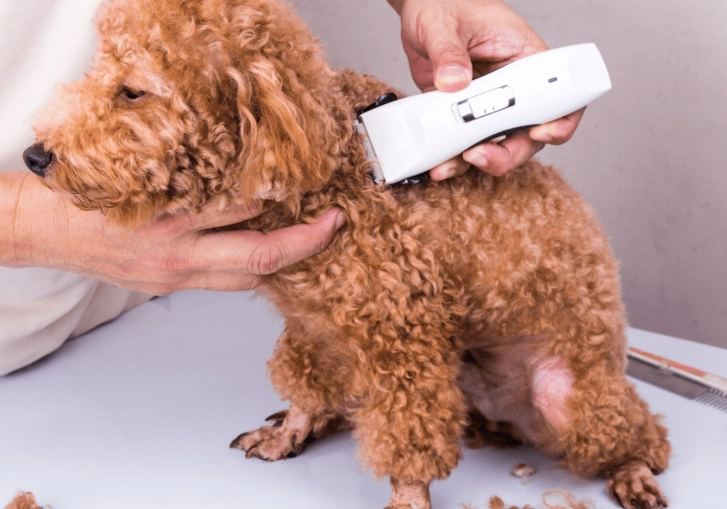
| Clippers | Lightweight, low-vibration clippers with multiple guard comb attachments. Always use a guard comb for body work. Keep blades cool with clipper spray. | Using a #10 blade directly on skin (it's for sanitary trims only). Letting blades get hot. Using human hair clippers (not powerful enough, more likely to pull). |
| Shampoo | Dog-specific, pH-balanced shampoo. A tearless formula for the face. Have a pitcher or sprayer for rinsing to avoid the face. | Human shampoo (strips natural oils, causes irritation). Getting soap in eyes, ears, or mouth. Not rinsing thoroughly (causes itchiness). |
| Restraint | Non-slip mat, a helper for large dogs, a grooming arm with loop (if on a table). Your calm voice and treats are the best restraint tools. | Physically forcing or wrestling the dog. Using excessive strength. Muzzling without proper conditioning (can increase panic). |
Step-by-Step: Applying Rule #1 to a Basic Home Grooming Session
Let's walk through a standard bath-and-brush, with safety as our compass.
Step 1: The Pre-Grooming Check (The Most Skipped Step)
Is your dog calm? Are his paws clean and free of burrs? Do you see any new lumps, bumps, red spots, or mats? Check ears for redness. This isn't just inspection; it's connecting. If you find a severe mat close to the skin, stop. Don't cut it out yourself—you risk cutting skin. This is a job for a professional groomer with a safe blade that can slide under the mat.
Step 2: Brushing & De-Matting
Always brush before the bath. Wet mats tighten and become impossible. Work in sections. Hold the hair at the base of the mat to avoid pulling skin. Use a detangling spray. If a mat is too tight, use the corner of a comb to gently pick it apart, or carefully snip it vertically with blunt-tipped scissors (not pointy ones aimed at the skin).
Step 3: The Bath
Use lukewarm water. Test it on your wrist. Secure your dog on a rubber mat. Place a cotton ball gently in each ear to prevent water entry (don't push it in!). Use the pitcher to wet the body, avoiding a direct stream to the face. Wash from the neck down, saving the face for last with a damp washcloth. Rinse, rinse, rinse. Soap residue is a major irritant.
Step 4: Drying
Towel dry gently. For blow-drying, use a pet dryer on the cool or warm setting, never hot. Keep the nozzle moving and at a distance. Let your dog get used to the sound first. For many dogs, air-drying in a warm room is the safest, least stressful option.
Step 5: Nails, Ears, and Finishing
For nails, cut small amounts at a 45-degree angle. If your dog has clear nails, look for the pink quick and stay well clear of it. If they're black, make tiny cuts and look for a white dot in the center of the cut surface—a black dot means you're nearing the quick. Stop.
For ears, use a vet-recommended ear cleaner on a cotton pad. Wipe only the parts you can see. Do not use Q-tips down the ear canal.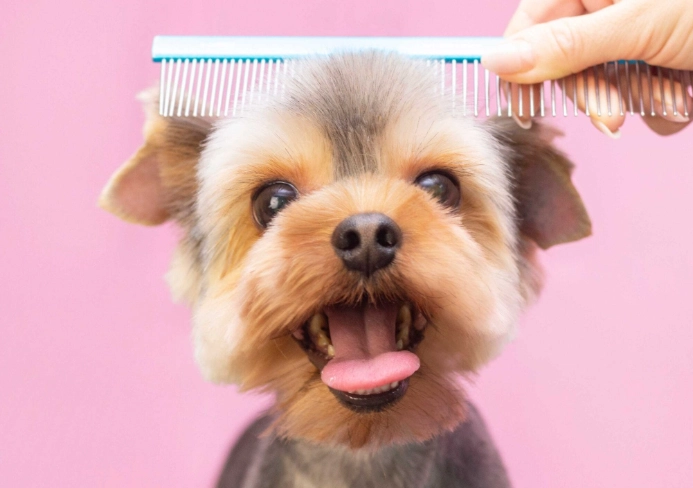
Beyond the Basics: When to Call a Professional
Adhering to Rule #1 means knowing when you're out of your depth. Calling a pro is the safest choice in these scenarios:
Severe Matting: If the mats are tight to the skin, covering large areas, or your dog is in pain when you touch them.
Aggressive or Extreme Fear: If your dog growls, snaps, or trembles uncontrollably despite slow conditioning. A groomer has experience and safe restraint methods.
Medical Issues: Recent surgery, skin infections, arthritis, or conditions like diabetes. Your vet or a certified groomer should advise.
Complex Haircuts: Breed-specific cuts require skill. A bad haircut is one thing; cutting skin because you don't know how to handle contours is another.
I view professional groomers as allies, not competition. They have the tools, tables, and training to handle situations I wouldn't risk at home.
Common Grooming Safety Myths Debunked
Myth: "My dog just needs to get used to it. Hold him down until he stops struggling."
Reality: This floods the dog with fear and teaches them that grooming is terrifying. It breaks trust and increases bite risk. Desensitization—slow, positive exposure—is the only safe, ethical method.
Myth: "It's okay to give my dog a little Benadryl or melatonin to calm him for grooming."
Reality: Never medicate your dog without explicit direction from your veterinarian. Dosages are weight-specific, and sedatives can sometimes have a paradoxical effect, making a dog more agitated. This is a major safety red flag.
Myth: "Puppies don't need grooming until they're 6 months old."
Reality: The opposite is true. The safe window for introducing puppies to grooming (handling paws, brushing, clipper sounds) is between 8 and 16 weeks. Waiting until they're older and bigger makes the process much harder and less safe.
Your Top Safety Questions Answered
Stop using the clippers immediately. The goal isn't the haircut right now; it's changing his emotional response. Start by having the clippers (turned off) in the same room during mealtime. Then, reward him for looking at them. Over days, move to touching his body with the *side* of the silent clipper, followed by treats. Only turn them on in another room, then gradually bring them closer while feeding high-value food. This process can take weeks. For now, use blunt scissors to carefully trim any problematic hair, or use a grooming glove/brush for management. Forcing it is a direct violation of Rule #1 and will make the problem worse.
The foolproof method is to use a nail grinder (Dremel-style). It files the nail down gradually, and the friction creates heat before you hit the quick, giving you a warning. If you must use clippers, make microscopic cuts. After each tiny snip, look at the cross-section. You'll see a white/grey outer ring and a softer, darker center. The center will eventually show a small black or pinkish dot. That dot is the beginning of the quick. The moment you see any dot, stop. You're done. For the back dewclaws, be extra conservative—the quick often runs longer.
This is how many ear nicks happen. The skin there is thin and pulls tightly into the mat. Never cut parallel to the skin. If you must attempt it, take blunt-tipped, curved grooming scissors. Slide the *very tip* of the bottom blade between the mat and the skin. This creates a gap. Then, carefully snip the mat vertically (from the skin outward) in thin slices, like you're thinning it out. Better yet, work a generous amount of detangling conditioner or cornstarch into the mat and try to slowly pick it apart with a comb. If it's rock solid, the safest action is to have a groomer remove it. They can often shave it out with a very safe blade that goes under the mat.
Rule #1 becomes paramount. Their pain threshold is lower, and they can't stand for long. Groom on the floor on a soft mat, not a table. Break the session into 5-10 minute chunks over several days. Use a supportive harness to help them stand if needed. Be extra gentle around joints—brushing over a hip with arthritis can hurt. Focus on hygiene (sanitary trim, nails, brushing) over aesthetics. Consider a shorter, easier-care clip to reduce future brushing stress. Communicate with your vet about pain management on grooming days.

Join the Conversation