Quick Navigation
- Why Your Indoor Cat *Really* Needs to Move
- A Smorgasbord of Indoor Cat Exercise Ideas (Forget the Boring Stuff)
- Tailoring Exercise to Your Cat's Personality & Age
- Common Mistakes (I've Made Most of These)
- Answering Your Burning Questions About Indoor Cat Exercise
- Wrapping It Up: It's a Journey, Not a Chore
Let's be honest. Sometimes we look at our indoor cats, curled up in a sunbeam for the tenth hour, and think... "Yeah, you're good." But then you notice the extra "fluff" around their middle, or that 3 AM burst of energy that involves scaling the curtains. Sound familiar? That's your cat telling you, in their own special way, that they need more indoor cat exercise.
I've been there. My own cat, Mochi, went through a chunky phase. The vet wasn't thrilled. I felt guilty. I bought every toy under the sun, but most were ignored after a day. It took me a while to figure out exercising an indoor cat isn't about forcing a workout; it's about tapping into what makes them tick. It's about enrichment, play, and a bit of clever trickery.
This isn't just about preventing a fat cat (though that's a huge part of it). The American Veterinary Medical Association (AVMA) consistently highlights that obesity in pets leads to a host of problems—diabetes, arthritis, urinary issues. For an indoor cat with a limited territory, lack of movement and mental stimulation can also lead to stress, anxiety, and even behavioral problems like inappropriate scratching or aggression.
Why Your Indoor Cat *Really* Needs to Move
Outdoor cats "exercise" by default. They patrol, hunt, climb, and explore. Our indoor buddies? Their world is our living room. Without us creating opportunities, their main activities become eating, sleeping, and staring at us.
The need goes deep. Cats are obligate carnivores, hardwired for short, intense bursts of activity—the famous "prey sequence" of stalk, pounce, kill. If they never get to act on this instinct, that energy has to go somewhere. Often, it turns inward.
I learned this the hard way. Mochi started overgrooming. A bald patch appeared on her belly. The vet ruled out medical causes and said it was likely stress or boredom. That was my wake-up call. We weren't just fighting weight; we were fighting feline frustration.
The Risks of a Sedentary Indoor Life
It's not just about the zoomies. A lack of consistent exercise for indoor cats contributes to:
- Weight Gain & Obesity: The most obvious one. Fewer calories burned plus the same (or more) food intake equals a widening kitty.
- Joint Stiffness & Arthritis: Just like in humans, lack of movement makes joints creakier, especially in older cats.
- Diabetes Mellitus: Overweight cats are at a massively higher risk. It's a serious, lifelong condition.
- Hepatic Lipidosis: A dangerous liver condition that can happen if a fat cat stops eating suddenly.
- Behavioral Issues: Boredom manifests as aggression, attention-seeking meowing, destructive scratching, or litter box avoidance.
- Poor Mental Health: Lethargy, depression, and anxiety can all stem from a lack of environmental stimulation.
See? It's a big deal. But the good news is, the fix can be genuinely fun for both of you.
A Smorgasbord of Indoor Cat Exercise Ideas (Forget the Boring Stuff)
Okay, let's get practical. You know you need to do it. Here's *how* to do it without losing your mind. The key is variety and simulating the hunt.
The Interactive Play Session (Non-Negotiable)
This is the cornerstone. Dedicate 10-15 minutes, twice a day, to interactive play. Use a wand toy. The goal is to mimic prey: make it skitter like a mouse, flutter like a bird, and then... let your cat "catch" it. End the session with a treat or a meal. This completes the hunt-eat-groom-sleep cycle perfectly.
Don't just wiggle it. Think like prey. Hide it behind a corner. Drag it up a cat tree. Make it "escape" under a blanket. Get creative.
Food-Based Exercise: Make Them Work for It
The easiest hack in the book. Stop using a food bowl.
- Puzzle Feeders: From simple balls they bat around to more complex boards. The International Association of Animal Behavior Consultants (IAABC) often discusses how food puzzles provide vital cognitive enrichment.
- Scatter Feeding: Toss their kibble all over a clean floor or a carpeted room. Let them sniff and hunt for each piece.
- Hide Treats: Place treats on different levels of their cat tree, on windowsills, in cardboard boxes. Create a mini treasure hunt.
This turns a 30-second gulp into 20 minutes of active problem-solving. It's brilliant.
Environmental Enrichment: The Setup
Your home is their jungle. Design it accordingly.
- Vertical Space: Cats feel safe and powerful up high. Cat trees, wall shelves, window perches. Create highways up high.
- Lookout Points: A simple perch by a window is a TV channel for cats. Bird feeders outside the window are premium content.
- Cardboard Boxes & Paper Bags: Never throw them away immediately. They are forts, ambush points, and nap spots. Rotate them.
- Cat Grass & Safe Plants: A little pot of wheatgrass to nibble on provides sensory variety.
DIY & Low-Cost Toy Ideas That Actually Work
You don't need to spend a fortune. Some of the best cat toys are free.
Try a ping-pong ball in an empty bathtub. The ricochet is chaotic and exciting. Dangle a string or shoe lace from a door handle. Hide a treat inside a toilet paper roll and fold the ends. Simple stuff.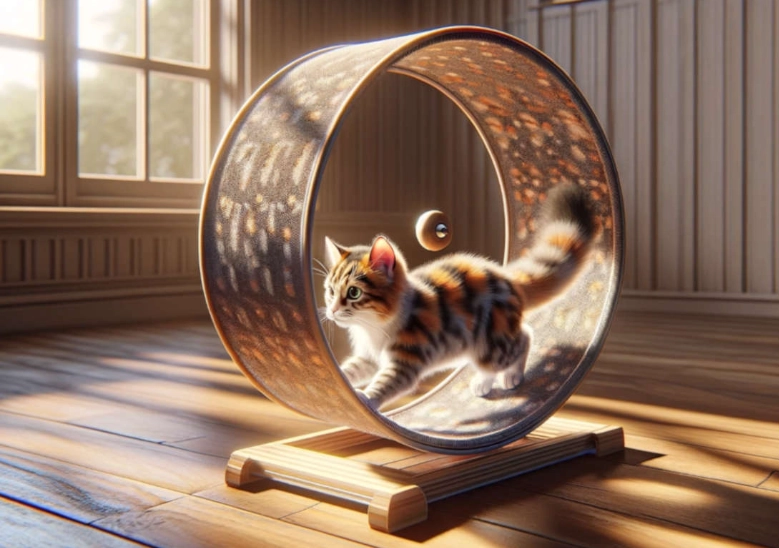
Tailoring Exercise to Your Cat's Personality & Age
Not all cats are the same. A one-size-fits-all approach to indoor cat exercise will fail. You need a scouting report on your own player.
| Cat Type / Age | Exercise Focus | Best Activities | Things to Avoid |
|---|---|---|---|
| Kitten (Under 1 year) | Socialization, learning, burning insane energy. | Short, frequent play sessions (5 mins, many times a day). Introduce various textures/sounds. Gentle handling. | Over-tiring them. Using hands/feet as toys (bites hurt later!). |
| Young Adult (1-7 years) | High-intensity play, agility, satisfying strong hunt drive. | Vigorous wand play, chasing games, puzzle feeders of medium difficulty, cat wheels (for the adventurous). | Predictable, boring routines. Leaving them alone with string toys unsupervised. |
| Senior (7+ years) | Low-impact movement, joint health, mental stimulation. | Gentle wand play (slower movements), snuffle mats, easy puzzle feeders, warm cozy perches they can access easily. | Forcing jumps or strenuous activity. Assuming they don't want to play at all. |
| The Couch Potato | Motivation! Getting them started. | Food-motivated games (treat trails, easy puzzles). Toys that make intriguing sounds (crinkles). Laser pointer to initiate movement (ALWAYS end with a tangible treat/toy). | Frustrating them with puzzles that are too hard. Giving up too easily. |
| The Nervous Nelly | Building confidence in a safe way. | Play from a distance (wand toys), toys that allow hiding (fishing rod from behind a door), predictable routines. | Sudden movements, loud noises, or forcing interaction. |
See the difference? My friend's lazy Ragdoll needs a treat trail just to get off the couch, while my neighbor's Bengal needs a full obstacle course before breakfast. Know your cat.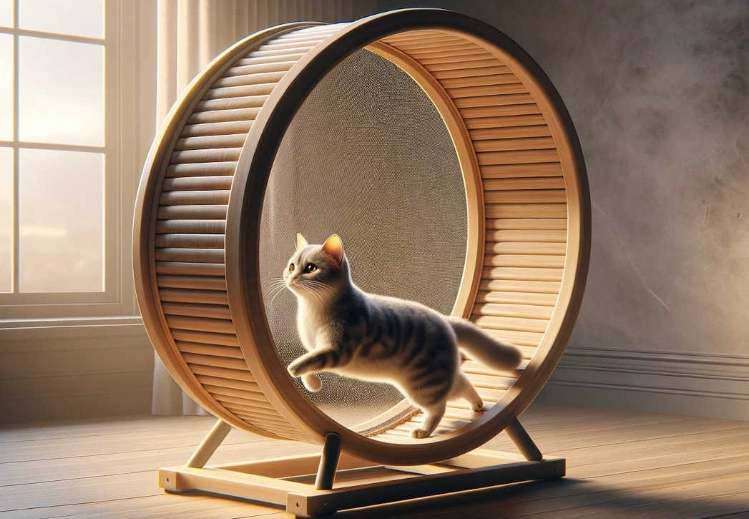
Common Mistakes (I've Made Most of These)
Let's talk about what doesn't work. It's just as important.
Other classic blunders:
- Leaving Toys Out 24/7: They become invisible. Toy rotation is non-negotiable.
- Playing Too Rough: Encouraging biting and scratching hands teaches bad habits that hurt later.
- Inconsistent Routine: Cats thrive on predictability. Sporadic play is less effective than short, daily sessions.
- Ignoring the "Catch": Always let them end the play session by "catching" the toy. Then praise and maybe offer a small food reward. This provides closure.
- Assuming Older Cats Don't Play: They do! You just need to adapt to their pace and physical limits.
Answering Your Burning Questions About Indoor Cat Exercise
There's no perfect number, but a good target is 30-60 minutes of total activity spread throughout the day. That includes interactive play, food puzzles, and self-directed exploration. Two 15-minute interactive sessions are a golden standard. Kittens and high-energy breeds will need more.
First, rule out pain or illness with a vet. If they're healthy, experiment. Try different prey types: feathers (birds), furry mice (mammals), crinkly toys (insects?). Try catnip or silvervine. Try playing when they're most active (dawn/dusk). Use their food as the ultimate motivator. And sometimes, just sitting on the floor and gently rolling a ball past them while you watch TV can spark interest. Low pressure.
For the right cat, absolutely. They provide an unbeatable outlet for high-energy breeds (Bengals, Savannahs, Abyssinians) or any cat that loves to run. But they're an investment. Many cats are intimidated by them. Do your research, look for quiet models, and introduce it slowly with tons of treats and encouragement. It's not a magic solution for every cat, but for some, it's a game-changer for indoor cat exercise.
This is the real challenge. Automate and enrich their environment.
- Set up puzzle feeders with part of their breakfast.
- Leave out novel, safe objects (boxes, paper bags).
- Consider a timed feeder that dispenses a small meal midday, activating a hunt.
- Bird feeder outside a secure window.
- When you get home, that's your prime interactive play time to help them unwind from a boring day.
It's about quality when you *are* there, and a stimulating setup for when you're not.
They sleep soundly (not just out of boredom). They maintain a healthy weight. They're engaged and curious about their environment, not lethargic. Destructive or attention-seeking behaviors decrease. They have a good appetite and use their litter box consistently. You'll just see a more content, balanced animal.
Wrapping It Up: It's a Journey, Not a Chore
Look, some days you'll be tired. Some days your cat will stare at the fancy wand toy like it's an insult. That's okay. The goal isn't perfection. It's consistent effort.
Think of providing indoor cat exercise as part of your daily care, like feeding or cleaning the litter box. It's a responsibility, but it can also be a genuine bonding experience. That 15 minutes of focused play is your time together, without phones or distractions. It builds trust and burns your cat's energy in a positive way.
Start small. Pick one idea from this article—maybe scatter feeding at dinner tonight, or digging out an old toy they haven't seen in months. See how they react. Tweak it. Find what makes your unique cat's eyes light up.
A fit, stimulated, and happy indoor cat is a joy to live with. They're less likely to develop costly health problems and more likely to be a calm, affectionate companion. You've got this. Now go find that feather wand—I think I saw it under the couch.


Join the Conversation