Quick Guide
- Why Corn Snakes Are the Perfect First Snake (Seriously)
- Getting Your First Corn Snake: What You Need to Know Before You Buy
- Setting Up the Perfect Corn Snake Enclosure (Before You Bring Them Home)
- Feeding Your Corn Snake: The Simple Guide
- Handling and Bonding: Building Trust
- Health and Common Issues: What to Watch For
- Frequently Asked Questions (FAQs)
So, you're thinking about getting a corn snake. Good choice. Let's cut through the noise and the scary stories. I remember my first reptile expo, staring at all the tanks, completely overwhelmed. I ended up with a corn snake, and honestly, it was one of the best pet decisions I've ever made. They're not slimy, they're not out to get you, and they won't grow big enough to eat your cat. This guide is the one I wish I had when I started. We're going to talk about everything from picking out your first scaly friend to setting up a home they'll thrive in, all tailored for corn snakes for beginners.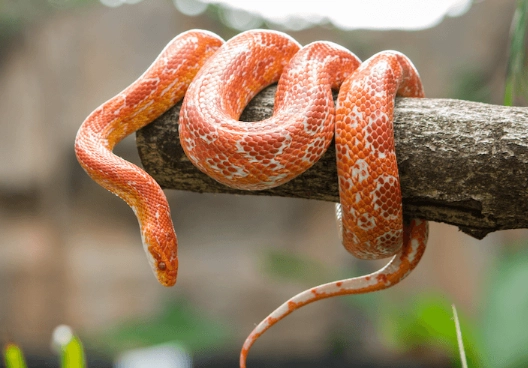
Why listen to me? I've made the mistakes so you don't have to. I've dealt with escape artists, picky eaters, and confusing shed cycles. I've also had the joy of watching a shy hatchling turn into a curious, handleable pet. This isn't a dry textbook; it's a chat from someone who's been in your shoes.
Why Corn Snakes Are the Perfect First Snake (Seriously)
Everyone says corn snakes are great for beginners, but let's get specific about why that cliché is actually true. It's not just marketing.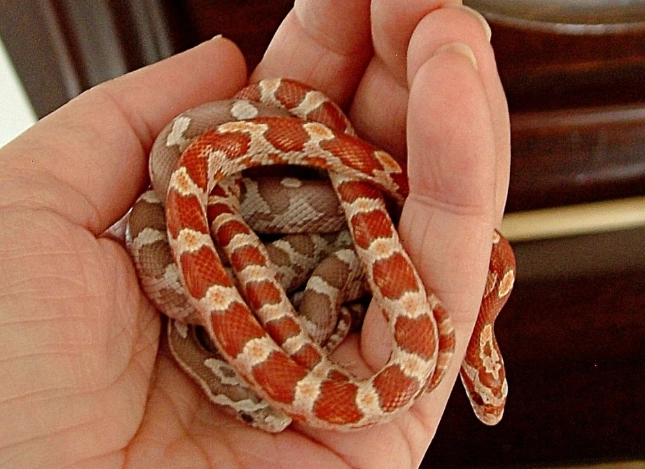
Docile and Easy to Handle
Their temperament is their biggest selling point. Most corn snakes, especially ones that have been handled regularly, are remarkably calm. They rarely bite, and when they do (usually due to a feeding mistake), it feels like a quick pinch from Velcro—startling, not painful. I've handled many species, and corn snakes consistently sit calmly in your hands, exploring without frantic movement. This makes the experience enjoyable for you and low-stress for them, which is the whole point of having a pet.
Hardy and Forgiving
This is crucial for beginner corn snake owners. You will make minor mistakes with temperature or humidity. A corn snake is robust enough to handle those beginner errors without immediately getting sick, giving you time to correct course. Compare that to some tropical species that can develop respiratory infections if the humidity is off by 5% for a day.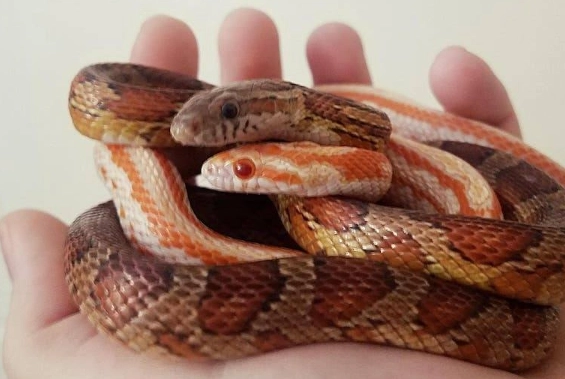
The Right Size
They grow to a manageable 3 to 5 feet over 2-3 years. That's big enough to feel like a "real" snake but small enough that housing and feeding are straightforward and affordable. You don't need a room-sized enclosure or to source rabbits for dinner.
Simple Dietary Needs
They eat frozen/thawed rodents. That's it. No live feeding drama (which is dangerous for the snake), no complicated insect gut-loading. You buy frozen mice of the appropriate size, thaw them, and offer them with tongs. It's clean, safe, and simple.
Let's see how they stack up against other common "beginner" snakes. This helped me decide.
| Snake Species | Average Adult Size | Temperament | Care Difficulty (1-5, 1=Easiest) | Key Consideration for Beginners |
|---|---|---|---|---|
| Corn Snake | 3-5 feet | Typically very docile, curious | 1 | All-around easiest choice; most forgiving |
| Ball Python | 3-5 feet | Very docile, but can be shy | 2 | Famous for going on hunger strikes, needs higher humidity |
| King Snake | 3-4 feet | Often docile, but can be food-aggressive | 2 | Strong feeding response; may mistake fingers for food |
| Rosy Boa | 2-3 feet | Generally calm and slow-moving | 2 | Smaller size is a plus, but can be less readily available |
See? Corn snakes really do sit at the top for ease.
Getting Your First Corn Snake: What You Need to Know Before You Buy
Don't just run to the nearest pet store. A little planning here makes the next 15-20 years (their lifespan!) much smoother.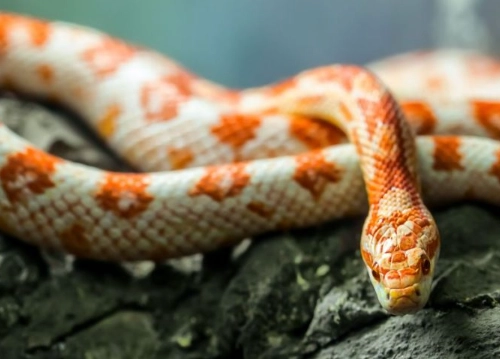
Choosing Your Corn Snake: Wild Type vs. Morphs
Wild-type corn snakes are beautiful—orange, red, and black blotches on a greyish background. But the world of corn snake morphs is where it gets fun. Morphs are color and pattern variations produced through selective breeding.
Popular Beginner-Friendly Morphs:
- Amelanistic (Amel): No black pigment. Bright orange and red on white. Stunning and common.
- Anerythristic (Anery): No red pigment. Black, white, and shades of grey. Looks very sleek.
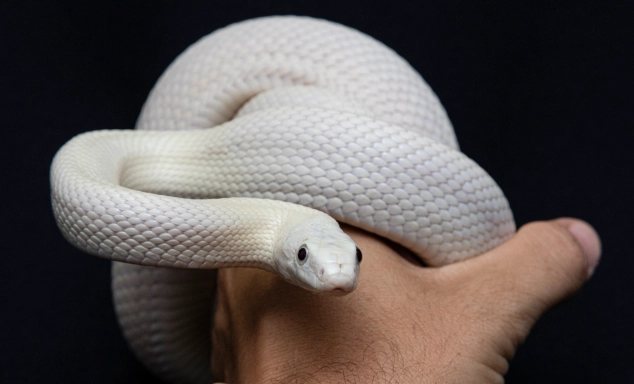
- Snow: A combination of Amel and Anery. Almost entirely white with hints of yellow.
- Normal/Wild Type: The classic look. Often the most affordable and just as healthy and personable.
My opinion? Don't get sucked into paying hundreds for a rare morph as your first snake. A healthy, well-started normal or common morph from a good breeder is worth more than a fancy, stressed-out snake from a bad source. The personality is the same.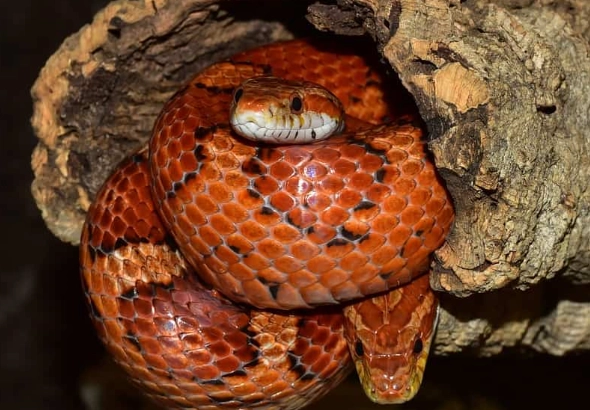
Age Matters: Hatchling vs. Juvenile/Adult
Hatchlings are tiny (8-12 inches) and adorable, but they can be more nervous and sometimes trickier to start feeding. A juvenile or young adult (1-2 years old) is often a better bet for corn snakes for beginners. They're established eaters, hardier, and you skip the ultra-fragile baby stage. You also get a better sense of their adult color and temperament.
Finding a Reputable Source
This is non-negotiable. Avoid big-chain pet stores if you can. Their snakes are often mass-bred, stressed, and can come with health issues.
- Reptile Expos: Fantastic places to meet breeders, see the animals in person, and ask questions.
- Specialist Breeders: Look online for breeders with good reviews. They should be able to tell you the hatch date, feeding history, and lineage of the snake.
- Rescue Societies: Sometimes adult corn snakes need rehoming. It's a wonderful option.
Always ask to see the snake feed before you buy it, if possible. A reputable source won't mind. For more on ethical acquisition and laws, the U.S. Fish & Wildlife Service has resources on wildlife regulations, though captive-bred corn snakes are rarely restricted.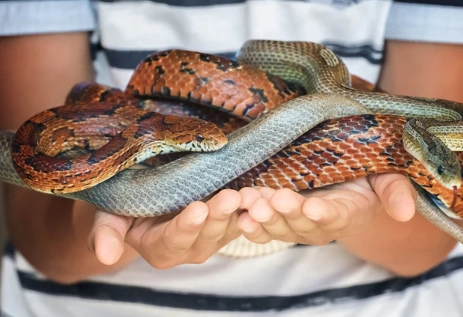
Setting Up the Perfect Corn Snake Enclosure (Before You Bring Them Home)
Get this 100% ready and running for at least 48 hours before your snake arrives. This lets you dial in the temperature and humidity. A beginner corn snake setup doesn't need to be fancy, but it needs to be correct.
The Tank: Size and Type
A 20-gallon long tank is the absolute minimum for an adult, but I'm a big advocate for starting with a 40-gallon breeder (36"x18"x16") or larger. More space allows for a better temperature gradient and more enrichment. Glass tanks with a secure, locking screen top are standard. Just ensure the lid clips on tightly—they are escape artists. Some people love front-opening PVC cages for better heat/humidity retention, but a glass tank works perfectly fine.
Heating: Creating the Vital Gradient
Snakes are ectothermic. They regulate their body temperature by moving between warm and cool areas. You must provide this gradient.
- Warm Side: 85-88°F (29-31°C). Use an under-tank heating pad (UTH) connected to a thermostat. This is the most important piece of equipment you'll buy. The thermostat probe goes between the UTH and the outside bottom of the tank. Never plug a heat mat directly into the wall—it can overheat and burn your snake.
- Cool Side: 70-75°F (21-24°C).
- Measure temperatures with digital probe thermometers placed on the substrate level inside the tank. Stick-on dials are useless.
I made the thermostat mistake once. The mat got way too hot. Luckily, I caught it before my snake was hurt, but it was a scary lesson.
Lighting and Day/Night Cycle
Corn snakes don't require special UVB lighting like some reptiles, but they do benefit from a consistent day/night cycle. A simple household LED light on a 12-hour timer works. At night, all lights should be off. If your room gets below 65°F at night, you might need a ceramic heat emitter (CHE) on the thermostat to provide heat without light.
Substrate: The Floor of Their World
Aspen shavings are the classic, easy choice for corn snake care. It holds burrows well, is cheap, and you can spot waste easily. Avoid cedar and pine (toxic), sand (can cause impaction), and overly moist substrates like coconut fiber unless you're battling low humidity.
Simple is best here.
Hides and Decor: Security and Enrichment
You need at least two identical hides: one on the warm end, one on the cool end. If they're different, the snake might choose security over thermoregulation. They should be snug—the snake should touch the sides when curled up. Add some fake plants, branches, and cork bark for climbing and exploring. A bored snake is a stressed snake.
A shallow, heavy water bowl big enough for the snake to soak in completes the setup. Place it on the cool side to avoid raising humidity too much on the warm side.
Feeding Your Corn Snake: The Simple Guide
This is the part that makes most new owners anxious. It doesn't need to be.
What to Feed: The Frozen/Thawed Rodent Diet
Frozen/thawed (F/T) prey is safer (no bites or parasites for your snake) and more humane. Buy from a reputable supplier. The prey item should be slightly wider than the snake's body at its widest point.
| Snake Size / Age | Prey Type | Feeding Frequency |
|---|---|---|
| Hatchling (8-15") | Pinky mouse | Every 5-7 days |
| Juvenile (1.5-3 ft) | Fuzzy or hopper mouse | Every 7 days |
| Sub-Adult (3-4 ft) | Adult mouse | Every 10-14 days |
| Adult (4-5 ft) | Large adult mouse or small rat | Every 14 days |
How Often to Feed: A Simple Schedule
Overfeeding is a common mistake. A fat snake is an unhealthy snake. Stick to the schedule above. You can tell a corn snake is a good weight if its body is rounded like a loaf of bread, not sharply triangular (underweight) or sagging like a sock of marbles (overweight).
The Feeding Process: Steps for Success
- Thaw Safely: Place frozen rodent in a sealed plastic bag in the refrigerator overnight, or in cool water for a few hours. Never microwave.
- Warm It Up: Before offering, warm the prey in hot tap water for a few minutes until it's body temperature. Dry it thoroughly.
- Use Tongs: Always use feeding tongs to present the prey, head first. This prevents accidental strikes at your hand (feeding response).
- Feed in the Enclosure: The old advice to feed in a separate tub is outdated and causes more stress. Just use the tongs.
- Leave Them Alone: After feeding, give your snake at least 48 hours of complete privacy to digest. Handling can cause regurgitation.
Handling and Bonding: Building Trust
Give your new snake a full week to settle in with no handling. Then, start with short, 5-10 minute sessions a few times a week.
- Approach calmly and confidently. Hesitant movements can make them nervous.
- Reach in from the side, not from above (like a predator). Gently scoop them up, supporting their body.
- Let them move through your hands. Don't restrain or grip tightly.
- Always wash your hands before and after handling.
What if they musk (release a stinky liquid) or rattle their tail? That's just baby talk for "I'm scared." Don't put them back immediately, or you teach them that musking makes the big scary thing go away. Hold them gently for just another minute or two, then return them. They'll learn you're not a threat.
Consistency is everything.
Health and Common Issues: What to Watch For
A healthy corn snake is alert, has clear eyes (except when in blue before a shed), a clean vent, and no audible wheezing or clicking when breathing.
Common Problems for Beginners to Catch Early
| Issue | Signs/Symptoms | Likely Cause & Action |
|---|---|---|
| Stuck Shed | Patches of old skin remaining, especially over eyes (eye caps) | Low humidity. Provide a humid hide (a hide box with damp sphagnum moss) during shed cycles. |
| Mites | Tiny black/red dots moving on snake or in water bowl, snake soaking excessively | Parasites from infested environment. Quarantine, deep clean enclosure, use reptile-safe mite treatment. |
| Regurgitation | Undigested prey brought back up | Handled too soon after eating, prey too large, temps too low for digestion. Wait 2 weeks, then offer a smaller meal. |
| Respiratory Infection (RI) | Wheezing, clicking sounds, mucus around nostrils, mouth gaping | Often due to low temps or high humidity. Requires a reptile veterinarian. |
The best thing you can do is find a reptile veterinarian before you have an emergency. The Association of Reptilian and Amphibian Veterinarians (ARAV) has a find-a-vet tool. A regular cat/dog vet often won't have the expertise.
Frequently Asked Questions (FAQs)
Look, diving into the world of corn snakes for beginners can feel like a lot. I get it. But if you take these steps—set up the right home first, get a healthy snake from a good person, feed appropriately, and handle with patience—you're going to be just fine. It's a deeply rewarding hobby. You're not just keeping an animal; you're learning to read the subtle cues of a fascinating creature. Start simple, do the research (you're already here!), and enjoy the journey. There's a great community out there, from forums to resources like Reptiles Magazine's care sheets, ready to help when you need it.
Got your tank set up? Double-checked those temperatures? Then you're more ready than you think.

Join the Conversation