Let's be honest. The idea of brushing your cat's teeth probably ranks somewhere between giving them a bath and a trip to the vet on the list of things they'll enjoy. But here's the thing I learned the hard way after a costly dental cleaning for my cat, Jasper: ignoring those little teeth is a fast track to big problems. Plaque turns to tartar, tartar leads to gingivitis, and before you know it, you're looking at painful tooth resorption or periodontal disease. The American Veterinary Medical Association (AVMA) states that most cats show signs of dental disease by age three. The good news? A solid routine with the right cat dental care products can change everything. It's not just about fresh breath; it's about preventing pain, infection, and protecting their overall health.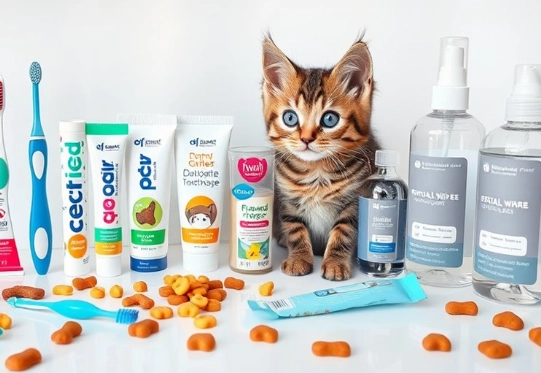
Your Quick Guide to Cat Dental Care
Understanding Your Cat's Dental Health Needs
Cats are masters of hiding discomfort. A cat with a sore tooth will often just eat more softly or on one side of its mouth. You might not notice anything until you catch a whiff of seriously foul breath or see a red line along their gums. That's gingivitis, the first stage of trouble.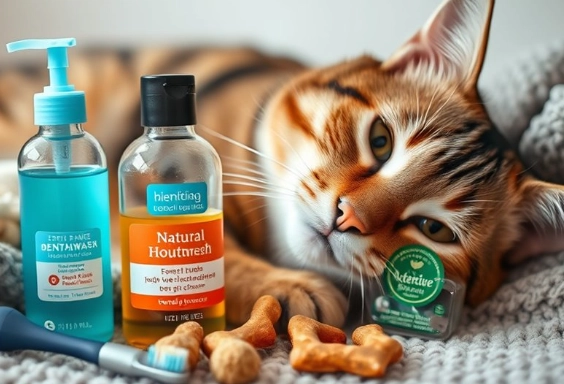
The goal of any dental product is to disrupt the plaque biofilm—that sticky film of bacteria that forms on teeth within hours after eating. If plaque isn't removed within about 24-48 hours, it mineralizes into tartar (calculus), which is like concrete on the teeth. You can't brush tartar off; it requires a professional veterinary scaling.
A subtle mistake I see: People think a few dental treats a week are enough. They're a great supplement, but they're like using mouthwash instead of brushing. Mechanical action—something physically scraping the tooth surface—is non-negotiable for breaking up plaque. That's why the Veterinary Oral Health Council (VOHC) seal is so important; it means the product has proven efficacy in trials, usually by reducing plaque or tartar by a significant percentage.
The Product Arsenal: From Brushes to Water Additives
Think of your cat's dental toolkit as a pyramid. At the base, you have daily or near-daily mechanical cleaning. In the middle, you have supporting products that help between brushings. At the top, you have professional care.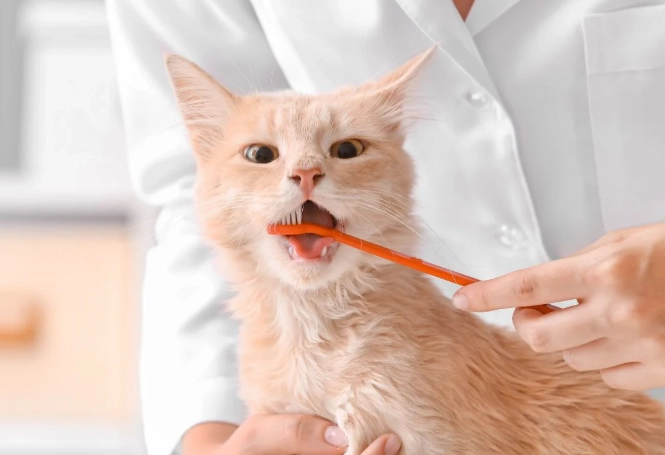
The Foundation: Brushes, Finger Brushes, and Wipes
This is the gold standard. Nothing beats physically wiping the gunk off.
- Toothbrushes: Look for ultra-soft, angled brushes made for cats or small dogs. The smaller the head, the better, especially for fussy felines. Some have dual-ended heads for different sized teeth.
- Finger Brushes: These silicone sleeves that fit over your fingertip are a fantastic starting point. They give you more control and feel less invasive to some cats than a long handle. The downside? Your finger is now within chomping distance if your cat has had enough.
- Dental Wipes: These are pre-moistened gauze pads, often with enzymes or mild flavors. They're excellent for cats who utterly refuse a brush. You wrap it around your finger and rub the teeth. It's less effective than bristles at getting into crevices, but it's vastly superior to doing nothing.
The Cleaning Agent: Cat Toothpaste
Never, ever use human toothpaste. The fluoride can be toxic if swallowed, and the foaming agents (SLS) are not meant for ingestion. Cat toothpaste is enzymatic and safe to swallow. They come in flavors like poultry, seafood, or malt—find one your cat likes, as it's a major incentive. The enzymes help break down plaque bacteria. You only need a pea-sized amount.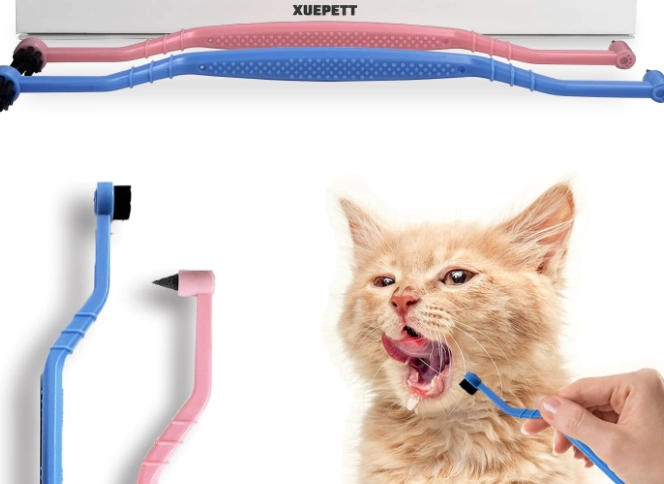
The Support Crew: Treats, Chews, and Water Additives
These are your helpers, not your main act.
- Dental Treats & Chews: The good ones have a specific texture designed to scrape teeth as the cat chews. Look for the VOHC seal. Be mindful of calories—these are treats. If your cat is overweight, these can add up quickly.
- Dental Diets: Prescription dental kibble (like Hill's t/d or Royal Canin Dental) is larger and has a fibrous matrix that scrubs the tooth as the cat bites through it. It requires a vet's prescription and should be your cat's main diet to work effectively.
- Water Additives: This is one of the easiest products to use. You add a capful of a colorless, odorless liquid to your cat's water bowl daily. It contains ingredients like zinc or enzymes that help reduce plaque-forming bacteria in the mouth. It's a brilliant low-effort boost, especially for multi-cat households. But it's a supplement, not a replacement for brushing.
- Oral Gels & Sprays: These are applied directly to the gums or teeth. They can contain antibacterial agents or enzymes. Useful for cats who won't tolerate any contact, but efficacy varies, and getting it applied correctly can be a challenge.
| Product Type | Best For | Effort Level | Key Consideration |
|---|---|---|---|
| Finger Brush & Toothpaste | Starting out, maximum control | Medium-High | Your finger's safety! Go slow. |
| Cat Toothbrush & Paste | Most effective cleaning | High | Finding a brush head small enough. |
| Dental Wipes | Cats terrified of brushes | Medium | Less effective in gum pockets. |
| VOHC Dental Treats | Daily supplementation, positive reinforcement | Low | Calorie content; not a substitute for brushing. |
| Cat Water Additive | Effortless daily support, multi-cat homes | Very Low | Ensure it's palatable so cats still drink. |
Building a Stress-Free Dental Routine Your Cat Will Tolerate
Forget the 2-minute brushing session you see for dogs. With cats, you measure success in seconds, not minutes. The goal is positive association, not perfection.
Here's what worked for my two cats (one tolerant, one demon):
Week 1: No products at all. Just sit with your cat during a calm time, gently lift their lip for a half-second, and immediately give a high-value treat (like a bit of chicken). Do this once a day. You're teaching them that lip-lifting leads to good things.
Week 2: Introduce the toothpaste. Let them lick a tiny bit off your finger as a treat. Do this for a few days.
Week 3: Put paste on your finger or a wipe. Lift lip, quickly smear a tiny bit of paste on a canine tooth, release, and treat. Canines are easiest. 5 seconds max.
Week 4+: Graduate to a finger brush or toothbrush. One or two teeth per session is a huge win. Focus on the outside surfaces; the tongue handles the inside reasonably well. The back teeth (molars) are where most plaque builds up, but they're also the hardest to reach. Be patient.
The best time? When they're sleepy and relaxed, maybe after a meal. Consistency matters more than duration. Even 10 seconds every other day is a game-changer compared to nothing.
Product Deep Dive: What to Look For (And What to Avoid)
Walking down the pet aisle is overwhelming. Let's simplify.
Toothpaste: The flavor is everything. If your cat hates the taste, you've lost. Poultry is usually a safe bet. Check the ingredients for enzymes (like glucose oxidase, lactoperoxidase) which do the chemical cleaning. Avoid pastes with artificial sweeteners like xylitol, which is highly toxic to dogs (less so for cats, but why risk it?). Sorbitol is a common safe sweetener.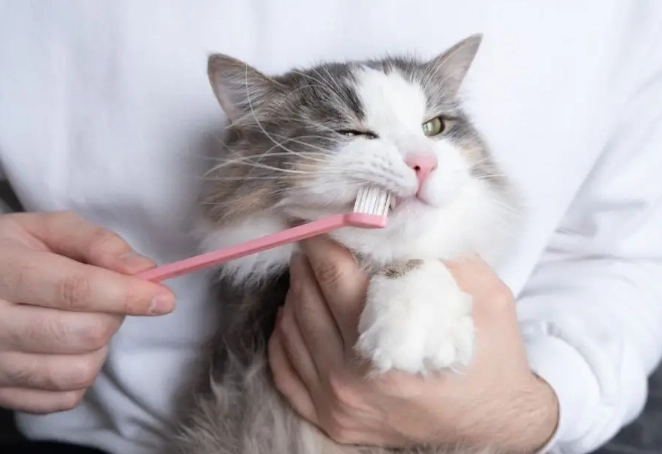
Treats & Chews: The VOHC seal is your best friend here. It's not a government stamp, but it's an independent acceptance based on clinical trials. No seal doesn't mean it's bad, but it means its claims aren't verified. Also, look at the texture. Is it hard and crunchy in a way that might splinter? Or is it porous and chewy, designed to flex around the tooth? The latter is generally better.
Water Additives: This is a category where you must avoid certain ingredients. Never use a water additive containing essential oils like tea tree oil, which is toxic to cats. Also, avoid those with chlorhexidine for long-term daily use, as it can stain teeth and alter taste. Look for enzyme-based or zinc-based additives. A key tip: introduce it gradually. Mix a quarter dose with their regular water for a few days to ensure they still drink.
Remember, the most expensive product isn't necessarily the best. The best product is the one you and your cat will actually use consistently.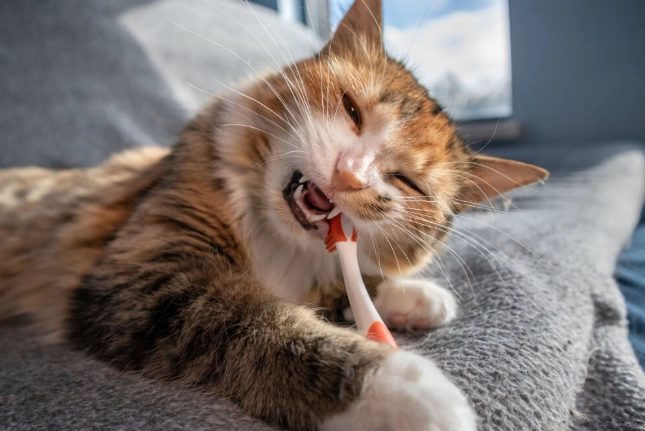
Your Cat Dental Care Questions, Answered





Join the Conversation